
بسم الله الرحمن الرحيم
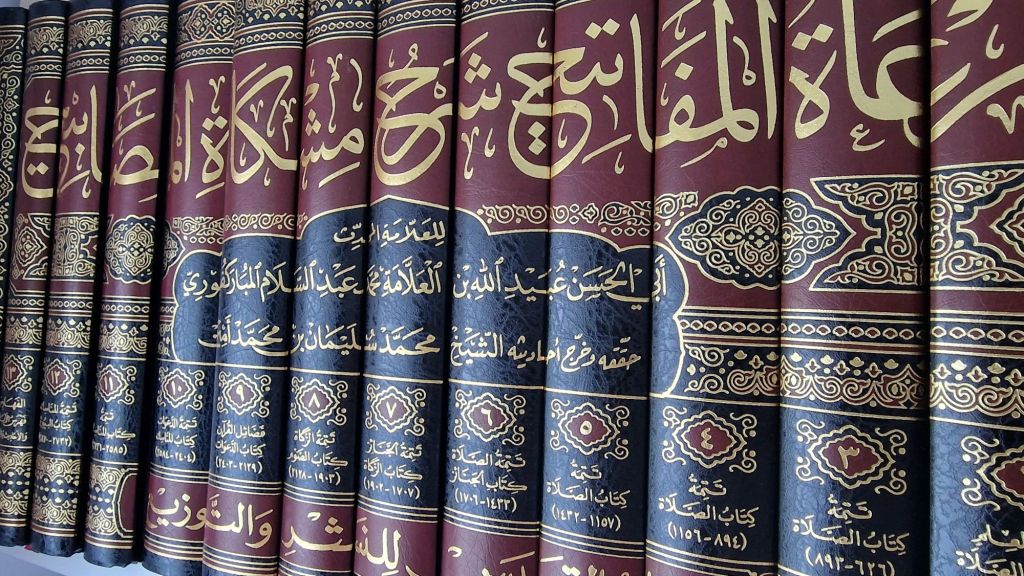
Abū Hurayrah narrated from the Messenger of Allāh (ﷺ):
إِذَا دَخَلَ رَمَضَانُ فُتِّحَتْ أَبْوَابُ السَّمَاءِ وَفِي رِوَايَةِ : فُتِحَتْ أَبْوَابُ الْجَنَّةِ وَغُلِّقَتْ أَبْوَابُ جَهَنَّمَ، وَسُلْسِلَتِ الشَّيَاطِينُ – وَفِي رِوَايَةٍ : فُتَّحَتْ أَبْوَابُ الرَّحْمَةِ
“When Ramadān enters, the gates of heaven are opened” — and in (another) narration: “the gates of Paradise are opened” — “and the gates of Jahannam are closed, and the devils are shackled” — and in (another) narration: “the gates of mercy are opened.” (al-Bukhārī 1898–1899, Muslim 2/1079)
Imām al-Mubārakfūrī said:
“His saying: (When Ramadān enters) – meaning: the month of Ramadān.
It is derived from al-ramadā‘ (intense/scorching heat). It is said: ramida al-nahār — (meaning) the heat became intense. And (they say) qadimahu — his feet stepped upon it — (meaning) his feet were scorched by al-ramadā‘, (which refers to) ground of intense heat. The month of Ramadān was named (thus): either because of the irtimād (burning sensation) endured by those fasting in it from the heat of hunger and thirst; or because of the irtimād of sins in it; or because of the ramad (scorching heat) and the intensity of its occurrence at the time of naming — because when (the Arabs) transferred the names of the months from the ancient language, they named them according to the seasons in which they fell, and so this month coincided with the days of ramad al-harr, meaning: its intensity.
It is also said: it was named so because it yarmidu al-dhunūb — i.e., burns away sins.
And in (this hadīth) there is evidence for the position held by the majority that it is permissible to say “Ramadān” without appending the word “month” (shahr) to it.
The followers of Mālik prohibited this based on the hadīth: “Do not say ‘Ramadān,’ for Ramadān is one of the names of Allāh, but (rather) say ‘the month of Ramadān‘” – reported by Ibn ‘Adī in “al-Kāmil” from Abū Hurayrah as a marfū’ narration (i.e. raised as a statement of the Messenger), and he weakened it due to (the narrator) Abū Ma’shar Najīh al-Madanī.
(The gates of heaven) – Ibn Battāl said: what is meant by “heaven” is Paradise, by virtue of the contextual pairing with Jahannam.
Al-‘Aynī said, drawing from Ibn al-‘Arabī: there is no contradiction in this, for the gates of heaven are (those) through which (one ascends) to Paradise, since Paradise is above the heavens and its ceiling is the Throne of the All-Merciful, as is established in the authentic (hadīth).
(And in (another) narration: the gates of Paradise are opened) – meaning: literally, for whoever dies in Ramadān or performs a deed that does not nullify (his fast for him).
(and the devils are shackled) — meaning: bound with chains, literally.
Al-Hāfidh (Ibn Hajr) said: ‘Iyād said: it is possible that — i.e., the opening of the gates of Paradise, the closing of the gates of Jahannam, and the shackling of the devils — all of this is (to be taken) upon its apparent and literal (meaning), and that all of this is a sign for the angels of the entry of the month and a glorification of its sanctity, and (a means) to prevent the devils from harming the believers.
Zayn ibn al-Munīr said: the first (view, i.e. interpreting the statements upon the literal, apparent meaning) is more appropriate, and there is no necessity compelling the turning of the wording away from its apparent meaning. As for the narrations containing “gates of mercy” and “gates of heaven,” they are from the discretion of the narrators, and the original is “gates of Paradise,” evidenced by what is paired with it — namely, the closing of the gates of the Fire.
Al-Qurtubī said: it is valid to take it literally, and its meaning would be: that Paradise has been opened and adorned for whoever dies in Ramadān, due to the excellence of this act of worship occurring in it; and the gates of the Fire are closed, so none of those who die in it enter it; and the devils are shackled so as not to corrupt (the deeds of) those fasting.
Al-Qurtubī said — after having preferred the literal interpretation (of the hadīth): If it is said: how do we see evils and sins occurring in Ramadān frequently — if the devils were shackled, that would not occur?
The answer is: their (diminishment) is only (with regard to) those fasting whose fast is maintained with its conditions and whose etiquette is observed — meaning: that (this benefit) is in relation to those fasting who maintained the conditions of the fast and observed its etiquette.
Or (another answer is that) what is shackled are some of the devils — namely, the rebellious ones (al-maradah) — not all of them; Ibn Khuzaymah titled a chapter for this in his “Sahīh” and cited the forthcoming hadīth of Abū Hurayrah in the second section. [The narration of Abū Hurayrah: “When the first night of Ramadān comes, the devils and the rebellious among the jinn are chained, and the gates of the Fire are locked — not a single gate of it is opened — and the gates of the gardens (of Paradise) are opened — not a single gate of them is closed — and a caller calls out: ‘O seeker of good, come forward! And O seeker of evil, desist!’ And Allāh has those whom He frees from the Fire.” Ibn Khuzaymah #1883, declared Hasan by Al-Albānī in his checking)
Or the intent is to reduce evils in it — and this is perceptible, for their occurrence in it is less than in other (months) — since the shackling of all of them does not necessitate that no evil or sin occur at all, because evil has causes other than the devils — such as wicked souls, ugly habits, and human devils.
And close to this meaning is what has been said: that the commission of sins in Ramadān is not from the effect of the devil, but rather from the effect of the commanding soul that has been saturated with the devil’s influence throughout the rest of the year — for when the soul has been colored with his color, his actions emanate from it. And the benefit, in that case, of shackling the devil is: the weakening of (his) influence in (inciting) the commission of sins — so whoever wishes to avoid that finds it easier (to do so).
Al-Sindī said: (the shackling of the devils) does not contradict the occurrence of sins, for the wickedness and vileness of souls suffices for the existence of sins, and it is not necessary that every sin be through the means of a devil — otherwise, every devil would require another devil (to have led him astray), leading to an infinite regress. Furthermore, it is well-known that no devil preceded Iblīs (in sin), and so his sin was none other than from his own soul.
al-Bājī said: it is possible that the devils are shackled literally, and are thereby prevented from some actions that they can only perform when free — and in that there is no evidence for the prevention of their activity altogether, because the shackled one is the one whose hands are bound to his neck, (yet) he still acts through speech, opinion, and much effort. End (of his words).”
(Abridged Mir’āt al-Mafātih Sharh Mishkāt al-Masābīh 8/130-145)
 fawaaids.com