
بسم الله الرحمن الرحيم
Abū Hurayrah narrated: The Messenger of Allāh (ﷺ) said:
مَنْ أَنْفَقَ زَوْجَيْنِ مِنْ شَيْءٌ مِنَ الْأَشْيَاءِ فِي سَبِيلِ اللَّهِ ؛ دُعِيَ مِنْ أَبْوَابِ الْجَنَّةِ، وَلِلْجَنَّةِ أَبْوَابٌ، فَمَنْ كَانَ مِنْ أَهْلِ الصَّلَاةِ ، دُعِيَ مِنْ بَابِ الصَّلَاةِ ، وَمَنْ كَانَ مِنْ أَهْلِ الْجِهَادِ، دُعِيَ مِنْ بَابِ الْجِهَادِ ، وَمَنْ كَانَ مِنْ أَهْلِ الصَّدَقَةِ ؛ دُعِيَ مِنْ بَابِ الصَّدَقَةِ ، وَمَنْ كَانَ مِنْ أَهْلِ الصِّيَامِ ؛ دُعِيَ مِنْ بَابِ الرَّيَّانِ ، فَقَالَ أَبُو بَكْرٍ : مَا عَلَى مَنْ دُعِيَ مِنْ تِلْكَ الْأَبْوَابِ مِنْ ضَرُورَةٍ ، فَهَلْ يُدْعَى أَحَدٌ مِنْ تِلْكَ الْأَبْوَابِ كُلِّهَا ؟ قَالَ : نَعَمْ، وَأَرْجُو أَنْ تَكُونَ مِنْهُمْ
“Whoever spends two of a pair from anything among things in the way of Allāh, shall be called from the gates of Paradise. And Paradise has gates — so whoever was among the people of prayer shall be called from the gate of prayer, and whoever was among the people of jihād shall be called from the gate of jihād, and whoever was among the people of charity shall be called from the gate of charity, and whoever was among the people of fasting shall be called from the gate of al-Rayyān.” So Abū Bakr said: “There is no hardship upon one who is called from any of those gates — but is anyone called from all of those gates?” He said: “Yes, and I hope that you will be among them.” (al-Bukhārī 3666 and Sahīh Muslim 85/1027)
Sahl ibn Sa’d narrated: The Messenger of Allāh (ﷺ) said:
فِي الْجَنَّةِ ثَمَانِيَةُ أَبْوَابٍ ، مِنْهَا بَابٌ يُسَمَّى الرَّيَّانَ، لَا يَدْخُلُهُ إِلَّا الصَّائِمُونَ
“In Paradise (there are) eight gates, among them a gate called al-Rayyān — none shall enter it except those who fast.“
In the version of al-Nasāʾī #2236:
لِلصَّائِمِينَ بَابٌ فِي الْجَنَّةِ يُقَالُ لَهُ الرَّيَّانُ لاَ يَدْخُلُ فِيهِ أَحَدٌ غَيْرُهُمْ فَإِذَا دَخَلَ آخِرُهُمْ أُغْلِقَ مَنْ دَخَلَ فِيهِ شَرِبَ وَمَنْ شَرِبَ لَمْ يَظْمَأْ أَبَدًا
“For those who fast there is a gate in Paradise called Al-Rayyān, through which no one but they will enter. When the last of them has entered it, it will be closed. Whoever enters through it will drink, and whoever drinks will never thirst again.“
Imām al-Mubārakfūrī said:
“(And Paradise has gates) — meaning: eight, as in the authentic hadīths.
Al-Hāfidh (Ibn Hajr) said: “the meaning of the hadīth is: whoever was a doer (of an act) shall be called from the gate of that act. And this has come explicitly from another chain from Abū Hurayrah: ‘For every doer (there is) a gate from the gates of Paradise through which he is called by that act.‘ Reported by Ahmad and Ibn Abī Shaybah with a sound chain.” End of (his words).
And in sum: whoever was abundant in a type of worship is singled out for a gate befitting it, through which he is summoned — recompense befitting the deed.
(Called al-Rayyān) — either because it itself is rayyān (saturated/lush) on account of the abundance of rivers flowing through it and the fresh flowers and fruits beside it, or because whoever reaches it, the thirst of the Day of Resurrection is removed from him, and freshness endures for him in the Abode of Permanence.
Al-Zarkashī said: “al-Rayyān is on the pattern fa’lān, (meaning) abundant in satiation, al-riyy, the opposite of thirst. It was so named because it is the recompense of those who fast for their thirst and hunger, and mention of satiation suffices over (the mention of) satiation from hunger, because it points to it insofar as it necessitates it.”
And it is said (it was so named) because (thirst) is more difficult upon the fasting person than hunger, since one often endures hunger but not thirst.
(None shall enter it) — meaning: none shall enter through it, i.e. through that gate.
(Except those who fast) — as a recompense for them for the thirst that would afflict them during their fasting. And what is intended by them is: those in whom fasting predominates among (all their) acts of worship.
Al-Sindī said: “His statement (al-sā’imūn) — meaning those who fast abundantly, like al-‘ādil (the just) and al-dhālim (the unjust) — it is said of one who habitually does something, not of one who does it once. And it is apparent that abundance is not achieved by the fast of Ramadān alone, but rather by adding to it what has been reported (to carry) the equivalent of fasting perpetually. And Allāh knows best.” End of (his words).
Al-Hāfidh (Ibn Hajr) said: “As for what Muslim reported from ‘Umar: ‘Whoever performs ablution then says: I bear witness that there is none worthy of worship but Allāh… the hadīth, and within it: ‘the gates of Paradise are opened for him, he enters from whichever of them he wishes‘ — this does not contradict what has preceded, even if its apparent meaning seems to be in opposition to it, because it is interpreted as: they are opened for him as an honouring, then at the time of his entry he does not enter except from the gate of the deed that most predominates in him — as has preceded.” End of (his words).
Al-Hāfidh (Ibn Hajr also) said: In the hadīth there is an indication of the scarcity of those called from all those gates. And in it is an indication that what is intended is the voluntary acts from among the mentioned deeds — not their obligations — because of the abundance of those for whom fulfilment of all the obligatory acts is combined, as opposed to the voluntary acts: for few are those for whom the performance of all types of voluntary acts is combined. Then of those for whom this is combined, they are only called from all the gates as a manner of honouring them — otherwise their entry is through only one gate, which is the gate of the deed that most predominates in them.”
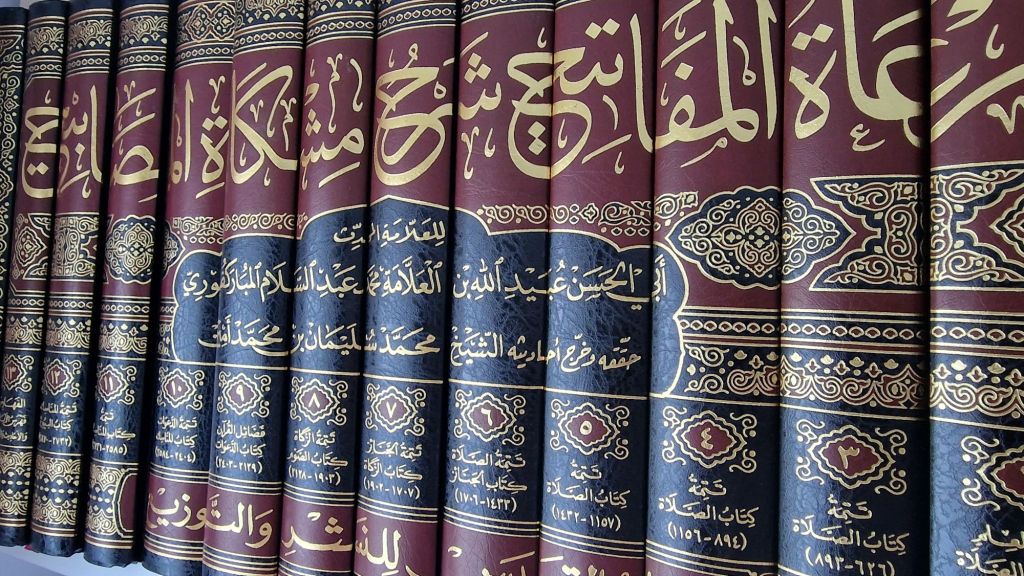
(Abridged, Mir’āt al-Mafātīh Sharh Mishkāt al-Masābīh 8/5-8 and 8/135-137)
Imam al-‘Ithyūbī said:
“Zayn ibn al-Munīr, may Allāh have mercy upon him, said: “He said only ‘fī al-jannah’ (in Paradise) and did not say ‘lil-jannah‘ (for Paradise), so as to indicate that within the mentioned gate there is (such) bliss and ease as (is found) in Paradise (itself) — making it more eloquent in (stirring) longing toward it.” End of (his words).
(Whoever enters it shall drink) — al-Sindī, may Allāh have mercy upon him, said: “meaning: at the gate, and in direct connection with (the moment of) entry. And perhaps those who enter from the other gates do not drink at the moment of entry in direct connection with it. And Allāh, The Most-High, knows best.” End of (his words).
Regarding Its Benefits
-A clarification of the greatness of the virtue of fasting.
– Aclarification of the honour of those who fast, in that Allāh, The Most-High singled them out over all other people by their entering through the gate of al-Rayyān.
-And among them: the affirmation of gates for Paradise, and among those gates is the gate of al-Rayyān, designated specifically for those who fast — such that when they have entered through it, it is closed and none other than them enters through it.
-And among them: the superiority of the gate of al-Rayyān over other gates, in that whoever enters through it drinks at the moment of entry and then never thirsts again thereafter.”
(Sharh Sunan al-Nasā’ī 21/107-108)
 fawaaids.com