
بسم الله الرحمن الرحيم
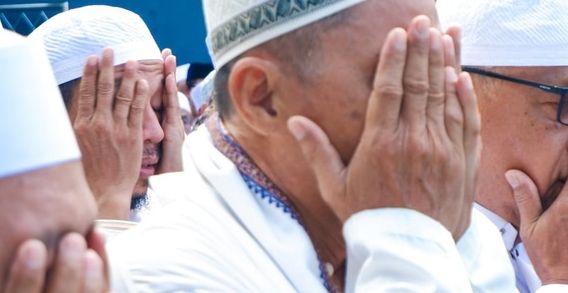
Narration of ‘Umar
Abū Mūsā Muḥammad ibn al-Muthannā > Ibrāhīm ibn Ya’qūb > Hammād ibn ʿĪsā al-Juhanī > Handhalah ibn Abī Sufyān al-Jumahīyyu > Sālim ibn ʿAbdillāh > his father > ‘Umar ibn Al-Khattāb who narrated:
انَ رَسُولُ اللَّهِ صلى الله عليه وسلم إِذَا رَفَعَ يَدَيْهِ فِي الدُّعَاءِ لَمْ يَحُطَّهُمَا حَتَّى يَمْسَحَ بِهِمَا وَجْهَهُ
“Whenever the Messenger of Allāh (ﷺ) would raise his hands in supplication, he would not lower them until he had wiped his face with them.”
(al-Tirmidhī 3386, ibn Humayd 39, al-Hākim 1/536, Ibn ʿAsākir 7/24)
Shu’ayb Al-Arnāūt said: The isnād (chain of narration) is weak. Hammād ibn ʿĪsā al-Juhanī is weak in hadīth, and all the Imāms of hadīth have declared him weak, none regarded him positively except for Ibn Ma’īn. (Sunan al-Tirmidhī, Risālah print 6/16)
Al-Albānī said: (The hadīth is) weak…Hammād ibn ‘Isā is considered weak, as mentioned in Taqrīb al-Tahdhīb. In Tahdhīb al-Kamāl, it’s mentioned:
Ibn Ma‘īn said: “A righteous shaykh.”
Abū Hātim said: “(He is) weak in hadīth.”
Abū Dāwūd said: “(He is) weak, he narrated manakīr (objectionable/denounced narrations).”
Al-Hākim and al-Naqqāsh said: “He narrates fabricated hadīth from Ibn Jurayj and Ja‘far al-Sādiq.”
Al-Dāraqutnī weakened him.
Ibn Hibbān said: “He narrated reversed reports from Ibn Jurayj and ʿAbd al-ʿAzīz ibn ʿUmar ibn ʿAbd al-ʿAzīz, which make one familiar with this discipline know that (such reports) are flawed. It is not permissible to use (his narrations) as evidence.”
Ibn Mākūlā said: “His hadīth are deemed weak.”
I (Al-Albānī) say: The likes of this (narrator) is (considered) extremely weak, so his narrations are not suitable for improvement (i.e. to Hasan level), let alone Sahīh. Even al-Hākim, known for his leniency, did not authenticate this hadīth when he included it in his Mustadrak (1/536) and remained silent about it. Al-Hāfidh al-Dhahabī followed him in that. (Irwā 2/187)
Yāsir al-Fathī said: Abū Zurʿah said: “This is a munkar hadīth. I fear it has no basis.” [al-ʿIlal by Ibn Abī Hātim (5/453/2106)].
Al-Tabarānī noted: “This hadīth is not narrated from ʿUmar except through this chain. It is uniquely reported by Hammād ibn ʿĪsā al-Juhanī.”
Ibn al-Jawzī commented: “This hadīth is not authentic,” and quoted Yahyā ibn Maʿīn who said: “It is a munkar hadīth.” [al-ʿIlal al-Mutanāhiya (2/840-841)].
Al-Nawawī said: “This is a weak hadīth.” [Khilāsat al-Ahkām (1/462)].
Al-Dhahabī stated: “It is not established because they (i.e. scholars of hadīth) have weakened Hammād.” [Tadhkirah al-Huffādh (3/68)].
He also said: “Al-Hākim included it in his Mustadrak, but he was mistaken; Hammād is weak.” [Siyar Aʿlām al-Nubalāʾ (16/67)].
I (al-Fathī) say: This is a hadīth which is bātil (false). Neither Handhala ibn Abī Sufyān nor Sālim ibn ʿAbdillāh narrated it. It is solely reported by Hammād ibn ʿĪsā al-Wāsitī, or as some say, al-Basrī. Al-Bukhārī labeled him “munkar in hadīth”. (Takhrīj Sunan Abū Dawūd 18/293)
Narration of Yazīd ibn Sa’īd
Qutaybah ibn Sa’īd > ibn Lahī’ah > Hafs ibn Hāshim ibn ʿUtbah ibn Abī Waqqās > as-Sā’ib ibn Yazīd > Yazīd ibn Sa’īd al-Kindī who narrated:
أَنَّ النَّبِيَّ صلى الله عليه وسلم كَانَ إِذَا دَعَا فَرَفَعَ يَدَيْهِ مَسَحَ وَجْهَهُ بِيَدَيْهِ
“When the Prophet (ﷺ) made supplication he would raise his hands and wipe his face with his hands.”
(Abū Dawūd 1492, Musnad of Imām Ahmad 17943, al-Bayhaqī in al-Du’ā 184)
Shu’ayb Al-Arnāūt said: And its chain of narration is weak, as it contains ‘Abdullāh ibn Lahī’ah, who has poor memory and Hafs ibn Hāshim ibn ʿUtbah ibn Abī Waqqās, who is unknown and not recognised. (Sunan al-Tirmidhī, Risālah print 6/16)
Yāsir al-Fathī said (after mentioning the different chains through ibn Lahī’ah): Thus, ‘Abdullāh ibn Lahī’ah demonstrated confusion in both the chain of transmission and the text of this hadīth. Ibn Lahī’ah is considered weak, and this hadīth is one of the signs of his weakness, poor memory, and confusion in both chains of transmission and text.
Ibn Lahi‘ah is known for numerous fabrications due to his: many errors, poor memory, confusion, acceptance of suggestions from others, and his practice of tadlīs (concealing flaws in narrations – i.e. discontinuity in the isnād). (Takhrīj Sunan Abū Dawūd 18/291)
Yāsir al-Fathī said: Hafs ibn Hāshim ibn ‘Utbah ibn Abī Waqqās al-Qurashī al-Zuhrī: A person who is unknown, it is not known who he is; his name only appears in this chain of narration, which was uniquely transmitted by Ibn Lahī’ah, and he may not even have existed at all… and al-Mughlatāy said in Ikmāl al-Tahdhīb: “I have not seen his mention in any book of genealogy or history, and Allāh knows best.” (Takhrīj Sunan Abū Dawūd 18/290)
Al-Albānī said: This is a weak chain of narration, due to Hafs ibn Hāshim being unknown and the weakness of Ibn Lahīʿah.
The hadīth cannot be strengthened (i.e. to the level of Hasan) by combining the two chains because of the severe weakness of the first chain, as you have observed. (Irwā 2/179)
Narration of Ibn ‘Abbās
Abū Kurayb > Muhammad ibn as-Sabbāh > ʻĀʾid ibn Habīb > Sālih ibn Hassān al-Ansārī > Muhammad ibn Kaʻb al-Qurādhī > Ibn ʻAbbās narrated that the Prophet (ﷺ) said:
إِذَا دَعَوْتَ اللَّهَ فَادْعُ بِبَاطِنِ كَفَّيْكَ وَلاَ تَدْعُ بِظُهُورِهِمَا فَإِذَا فَرَغْتَ فَامْسَحْ بِهِمَا وَجْهَكَ
“When you call upon Allāh, then do so with the palms of your hands upwards. Do not do so with the back of your hands upwards. And when you finish, then wipe your face with them.”
(Ibn Mājah 1181, 3866)
Shu’ayb Al-Arnāūt said: Its chain is da’īf jiddan (very weak); Sālih ibn Hassān al-Ansārī is matrūk (abandoned). (Takhrīj Ibn Mājah, Risālah print 2/254)
Al-Albānī said: This is a weak chain due to Ibn Hassān, for he is Munkar in hadīth, as al-Bukhārī said. An-Nasā’ī said: “He is abandoned (matrūk) in hadīth.” Ibn Hibbān said: “He was a companion of female musicians and singers, and he used to narrate fabricated hadīth from reliable narrators.” Ibn Abī Hātim said in his al-ʻIlal (2/351): “I asked my father (i.e. Abū Hātim) about this hadīth, and he said: It is Munkar.” (Irwā 2/179)
Al-Albānī continues: I say: ‘Īsā ibn Maymūn followed on the hadīth from Muhammad ibn Ka’b with the same wording. It was reported by Ibn Nasr [Kitāb al-Witr pg. 169].
I (Al-Albānī) say: There is no joy (to be found) with this corroboration, because Ibn Maymūn’s condition is similar to that of Ibn Hassān. Ibn Hibbān said: “He narrates hadīths, all of which are Mawdū (fabricated).” Al-Nasā’ī said: “He is not trustworthy.” (Irwā 2/180)
Imām Ahmad said: ‘As for ‘Īsā ibn Maymūn, who narrated the hadīth of Ibn ‘Abbās, he is not someone whose narrations can be relied upon, and the same applies to Sālih ibn Hassān.'” (Masāil Abī Dawūd no. 486)
Bakr Abū Zayd said:… despite the multiplicity of narrators and the numerous routes (of the above hadīth), the narration ultimately revolves around both Sālih ibn Hassān, who is matrūk and ʿĪsā ibn Maymūn, who is munkar in hadīth. Thus, one does not strengthen the other.
Accordingly, this hadīth is not valid even as supportive evidence, due to the defect in the fundamental pillar of narration that cannot be remedied, namely, ʿadālah (integrity). (Juz Fī Mash al-Wajh Ba’dā Du’ā pg. 12)
Another narration of Ibn ‘Abbās
ʿAbdullāh ibn Maslamah > ʿAbd al-Malik ibn Muhammad ibn Ayman > ʿAbdillāh ibn Yaʿqūb ibn Ishāq > From someone (i.e. unspecified narrator) > Muhammad ibn Kaʿb al-Quradhī > ʿAbdullāh ibn ʿAbbās narrated that the Prophet (ﷺ) said:
… سَلُوا اللَّهَ بِبُطُونِ أَكُفِّكُمْ وَلاَ تَسْأَلُوهُ بِظُهُورِهَا فَإِذَا فَرَغْتُمْ فَامْسَحُوا بِهَا وُجُوهَكُمْ
“… Supplicate to Allāh with the palms of your hands; do not supplicate Him with their backs upwards. When you finish supplication, wipe your faces with them.”
(Abū Dawūd 1485)
Abū Dawūd said: This hadīth has been narrated through various chains from Muhammad ibn Ka‘b, all of which are weak. This chain is the best among them, but it is also weak. (Sunan Abū Dawūd #1485)
Shu’ayb Al-Arnāūt said: Its chain is weak due to the anonymity of the narrator who reported from Muhammad ibn Kaʿb al-Quradhī. (Takhrīj Sunan Abū Dawūd, Risālah print 2/607)
Al-Albānī said: This chain is weak. ‘Abd al-Mālik is weak as stated by Abū Dawūd.
It also includes the Shaykh (Unspecified narrator) of ʿAbdullāh ibn Ya’qūb, whose identity is not specified, so he is unknown. It is possible that he is the same Ibn Hassān from the first chain, or Ibn Maymūn from the second chain. (Irwā 2/180)
Narration of Walīd ibn ‘Abdullāh
Abū Muslim al-Kashī > Al-Qaʿnabī > ʿĪsā ibn Yūnus > Ibrāhīm ibn Yazīd > al-Walīd ibn ʿAbd Allāh who narrated that the Prophet (ﷺ) said:
إِذَا رَفَعَ أَحَدُكُمْ يَدَيْهِ يَدْعُو فَإِنَّ اللَّهَ عَزَّ وَجَلَّ جَاعِلٌ فِيهِمَا بَرَكَةً وَرَحْمَةً، فَإِذَا فَرَغَ مِنْ دُعَائِهِ فَلْيَمْسَحْ بِهِمَا وَجْهَهُ
“When one of you raises his hands in supplication, Allāh, The Mighty and Majestic, places blessing and mercy in them. When he has finished his supplication, let him wipe his face with them.“
(Al-Tabarānī in al-Du’ā 214)
Yāsir al-Fathī said: This hadīth is munkar (rejected), along with it being mursal (a chain with a missing link). Ibrāhīm ibn Yazīd al-Khūzī is deemed abandoned (matrūk) and is munkar in hadīth. (Takhrīj Sunan Abū Dawūd 18/293)
Regarding Ibrāhīm ibn Yazīd al-Khūzī:
Al-Nasā’ī said: “(He is) Matrūk in hadīth.”
Yahyā ibn Ma’īn said: “He is not trustworthy.” Elsewhere he said “he is nothing”. Elsewhere he said “he is weak”.
Al-Bukhārī said: “They were silent about him (sakatū ‘anhu).”
[TN: Ibn Kathīr said:… When al-Bukhārī says about a person: “They were silent about him” it means that he is in the lowest and worst position in his view. However, he used gentle phrasing when critiquing… “(Ikhtisār ‘Ulūm al-Hadīth pg. 105)]
‘Alī ibn al-Madīnī said: “(He is) weak.”
Al-Darāqutnī said: “(He is) munkar in hadīth.”
(Jāmi’ Li-Kutub al-Du’afā wal-Matrūkīn 1/326-331)
Narration of al-Zuhrī
Ma’mar ibn Rashīd > Al-Zuhrī who narrated that:
كان رسول الله – صلى الله عليه وسلم – يرفع يديه عند صدره في الدعاء، ثم يمسح بهما وجهه
“The Messenger of Allāh (ﷺ) used to raise his hands to the level of his chest while making supplication, and then he would wipe them over his face.”
(Abd al-Razzāq in al-Musannaf, 2/247/3234 and 3/122/5003)
Yāsir al-Fathī said: This is from the mursal narrations of Al-Zuhrī, and the mursal narrations of Al-Zuhrī are among the weakest of such narrations. They are like the wind—amounting to nothing. (Takhrīj Sunan Abū Dawūd 18/293-294)
Yahyā ibn Sa’īd al-Qattān said: “The mursal of Al-Zuhrī is worse than the mursal of others because he was a hāfidh (i.e. a meticulous memoriser) . Whenever he wanted to name (a narrator), he would do so, and verily he refrained from naming those whom he did not deem permissible/appropriate to name.” (Takhrīj Sunan Abū Dawūd 11/371 of al-Fathī referencing Tarīkh Dimashq 55/368, As-Siyar 5/338, Jāmi’ at-Tahsīl 90)
Yahyā ibn Ma’īn said: “The mursal narrations of Al-Zuhrī are nothing.” (Marāsīl of Ibn Abī Hātim 2)
Al-Shāfi’ī said: “The mursal narrations of Al-Zuhrī are considered nothing to us, because we find that he narrates from Sulaymān ibn Arqam (i.e. who was weak/matrūk)” (Sharh ‘Ilal at-Tirmidhī 1/535)
Narration of ‘Ibn Umar and Ibn al-Zubayr
Ibrāhīm ibn al-Mundhir > Muhammad ibn Fulayh > His father (Fulayh ibn Sulaymān) > Abū Nu‘aym, Wahb who narrated:
رَأَيْتُ ابْنَ عُمَرَ وَابْنَ الزُّبَيْرِ يَدْعُوَانِ، يُدِيرَانِ بِالرَّاحَتَيْنِ عَلَى الْوَجْهِ
“I saw Ibn ‘Umar and Ibn al-Zubayr supplicating, yudīrān (moving/cupping) their palms over their faces.”
(Adab al-Mufrad 609)
Meaning of the hadīth
Bakr Abū Zayd said: Al-Bukhārī titled this section: “Chapter on raising the hands in supplication.”
This title indicates that the intended meaning of this narration is the act of raising the hands in supplication, not wiping the face with them. (Juz Fī Mash al-Wajh Ba’dā Du’ā pg. 42)
Authenticity
Al-Albānī declared it da’īf (weak) in his checking of Adab al-Mufrad #93.
Muhammad ibn Sa’īd Raslān said: The isnād is weak, it includes Muhammad ibn Fulayh and his father (i.e. Fulayh ibn Sulaymān), and in them both there is weakness. (Sharh Adab al-Mufrad 3/2669)
Yāsir al-Fathī said: Its chain is not strong; Fulayh ibn Sulaymān is not strong, as he has many mistakes and gharīb (odd/unique) narrations. And his son, Muhammad ibn Fulayh: there is no harm in him, but he is not particularly strong. (Takhrīj Sunan Abū Dawūd 18/294)
Fulayh ibn Sulaymān:
Abū Zur’ah said: “(He is) weak (da’īf) in hadīth.”
Abū Hātim said: “He is not strong.”
Al-Nasā’ī said: “He is not strong.”
Al-‘Uqaylī included him in al-Du’afā (the weak ones) (5/112).
Yahyā ibn Ma’īn said: “(He is) weak.” Elsewhere he said: “He is nothing.” Elsewhere he said: “He is not strong, and his hadīth is not used as evidence.” Elsewhere he said: “Fulayh ibn Sulaymān is not trustworthy, nor is his son.”
Abū Hātim said: “(Yahyā) ibn Ma’īn was critical of Muhammad ibn Fulayh.”
Abū Dawūd said: “Fulayh is not relied upon as evidence.”
(Jāmi’ Li-Kutub al-Du’afā wa al-Mutrakīn 12/142-145)
Al-Dhahabī said: Al-Sājī said: “He makes mistakes despite being among the truthful.”
The most severe accusation against him is what was mentioned by Ibn Ma’īn, on the authority of Abū Kāmil, who said: “We used to suspect him (i.e. his integrity/reliability) because he would speak against the companions of the Prophet (ﷺ).” (Mīzān al-I’tidāl 3/363)
Clarification on those who deem the hadīth as hasan when gathered together
‘Abdullāh al-Fawzān said: As for Al-Hafidhs (Ibn Hajr) statement: “The gathering of them (i.e. narrations of Ibn Abbās and ‘Umar) warrant that it is a hasan (good) hadīth,” there is no doubt that he means hasan lighayrihi (good due to supporting evidence), not hasan lidhātihi (good in its own merit/in and of itself). However, this does not apply here, as the hadīth of Ibn Abbās is weak… Furthermore, Abū Hātim classified it as munkar, and such a narration is not suitable for corroboration or for supporting evidence. (Minhatul-A’lām 10/429-430)
Bakr Abū Zayd said: The statement of al-Hāfidh, despite his high status, does not hold up under critical analysis… (the narration of ‘Umar) contains Hammād ibn ‘Īsā al-Juhanī who is considered weak…and was declared weak by Ibn Hajr also… moreover he (i.e narrator – Hammād) has no corraborators. As for the supporting evidence, such as the narration from Ibn ʿAbbās and others, they are significantly inferior to this hadīth. (Summarised, Juz Fī Mash al-Wajh Ba’dā Du’ā pg. 27)
Summary
Yāsir al-Fathī said: In conclusion: No hadīth regarding wiping the face with the hands after supplication is proven, nor do the (narrations) strengthen one another. (Takhrīj Sunan Abū Dawūd 18/294)
Al-Albānī said: As for wiping the hands over the face after the qunūt (i.e. in the prayer), nothing has been reported —neither from him (the Prophet (ﷺ)) nor from any of his companions. Therefore, it is undoubtedly a bid’ah (innovation).
As for wiping the hands over the face outside of prayer, there is no evidence except for this hadīth [i.e. of Ibn ‘Abbās] and the one before it [i.e. of ‘Umar]. It cannot be said that one strengthens the other by combining their chains of narration—as Al-Manāwī did—due to the severe weakness in these chains…
…what supports its lack of legitimacy is that many authentic hadīth have been reported about raising the hands in supplication, and none of them mention wiping them over the face. This indicates, insha’Allāh, its critical nature and lack of legitimacy. (Irwā 2/181-182)
Statements from the scholars
Ibn ‘Abd al-Salām said: “Raising the hands in supplication is not recommended except in instances where the Prophet (ﷺ) raised his hands. As for wiping the face with the hands after supplication, it is only done by the jāhil (ignorant).” (Fatāwā pg. 47)
Ibn Marzūq said in some lines of poetry: And from our Imām Ibn ‘Arafah comes his stance: it (i.e. wiping the face) is an innovation, so do not oppose him. (Juz Fī Mash al-Wajh Ba’dā Du’ā pg. 47 of Bakr Abū Zayd)
Ibn Taymiyyah said: “The raising of the Prophet’s (ﷺ) hands in supplication is supported by many authentic hadīth. However, as for wiping the face with his hands, only one or two hadīth mention it, and they do not constitue evidence. And Allāh knows best.” (Al-Majmū’ 22/519)
Ibn al-Qāsim narrated from (Imām) Mālik, regarding one who wipes his face with his hands at the end of his supplication after having raised his hands, he criticised that and said: ‘I do not know of it.’ (Al-Nawādir wal-Ziyādāt 1/530)
Ibn al-Mubārak was asked regarding wiping the face with the hands after supplication, he replied: ‘I have not found any established evidence for it.'” (Sunan al-Kubrā of al-Bayhaqī 2/212)
Al-Nawawī said: (after explaining the different opinions in the Shāfi madhab) “whats correct is that one raises his hands and does not wipe his face.” (Sharh Madhāhib 3/501)
Ibn ‘Uthaymīn said: “What I see regarding wiping the face with the hands after supplication is that it is not a Sunnah. The Prophet (ﷺ), as is well-known, supplicated during the Friday sermon for rain (istisqā) and raised his hands, yet it was not reported that he wiped his face with them. Similarly, there are several other hadith where the Prophet (ﷺ) is mentioned with supplicating and raising his hands, and yet it has not been established that he wiped his face. (Al-Majmū 14/781)
‘Abd al-Razzāq al-Badr said: This issue of wiping the face with the hands cannot be turned to except with an evidence; it cannot be accepted except with an established evidence. Therefore, what is necessary and foremost is that a person does not wipe his face after supplication, indeed he (should) raise his hands and lower them without wiping.’ (Link)
 fawaaids.com