Al-Sakhāwī said: “(al-hadīth) linguistically: the opposite of ancient (qadīm), and technically: what is attributed to the Prophet (ﷺ) as his statement, action, approval, or description – even movements and stillness during wakefulness and sleep.” (Fath al-Mughīth 1/36)
The linguistic meaning of Sahīh
al-Sahīh is derived from al-sihhah (soundness), which is the opposite of al-saqam (illness). And it is that which is free from every defect and doubt.
A “Sahīh land” is one with no epidemic in it, where illnesses and diseases do not abound.
Al-Sahīh in poetry is that which is safe from deficiency, and al-Sahīh in statements is that which can be relied upon.
Hāfidh ibn al-Mulaqqin said: “The Sahīh (hadīth) is that which is free from criticism in its chain of transmission (isnād) and its text (matn).” (Sharh Mutqin Li-Tadhkirah pg. 52)
Al-Nawawī said: “It is that (hadīth) whose chain of transmission (sanad) is connected (mutassil) [1] through trustworthy and precise narrators (al-‘udūl al-dābitīn) [2,3] without irregularity/contradiction (shudhūdh) [4] or defect (‘illah) [5].” (al-Taqrīb pg. 51)
Hāfidh ibn Kathīr said: “It (i.e. the Sahīh hadīth) may be mashhūr (i.e. well-known – via multiple routes) or gharīb (rare/odd – via a isolated/single route).” (al-Hāshiyah ‘Alā Ikhtisār ‘Ulūm al-Hadīth by al-Khudayr pg. 27)
[1] Mutassil: (the connected): It is that whose isnād is free from al-inqitā’ (disconnection/break), such that all the men of the isnād heard from those above them.
[2] Adl (i.e. the just/upright person): the scholars defined (a person) as one who has the quality that disposes him to adhere to al-taqwā (piety) and al-murū’ah (probity/dignity) and avoids fisq (sinfulness).
Hāfidh ibn Hajr said: “and what is intended by taqwā – is avoidance of evil deeds: from shirk (polytheism), or fisq (sinfulness), or bidʿah (innovation).”
Al-Laknawī said: “And what violates murūʾah (is) of two types:
One: minor sins indicating baseness, like stealing a morsel (of food) and the like. And from it (is) stipulating payment for listening to a hadīth.
Second: some permissible things indicating lowliness, like eating in the marketplace and urinating on the road, and like excessive joking leading to (one) being treated lightly, and (playing with) pigeons, and engaging in lowly crafts like dyeing, weaving, and the like.” (Dhafarul-Amānī pg. 127-128)
[T.N: a point of benefit regarding the commonly accepted definition of ‘adālah mentioned above: Imām al-San’ānī said: “There is no doubt that this is a strictness in (the definition of) ʿadālah that can only be fulfilled in the case of the infallible, and (a few) individuals from among the pure believers. Rather, it has come in the hadīth: “Every son of Ādam commit sins, and the best of those who sin are those who repent”…And the hadīth: “If you did not sin, Allāh would take you away and bring a people who would sin, then seek forgiveness, and He would forgive them”…
al-Shāfiʿī said regarding ʿadālah a statement that many of the intelligent people after him found excellent. He said: “If al-ʿadl (the upright one) were one who does not sin, we would not find anyone upright, and if every sin did not prevent ʿadālah, we would not find anyone impugned. But one who abandons major sins and whose good qualities are more than his faults—he is upright (‘adl).” End (of quote).
(I say – i.e. Al-San’ānī:) And this is a good statement, and it is supported by the interpretation of the people of language for al-ʿadl as being the opposite of al-jawr; one whose oppression/wrongdoing overcomes his uprightness and his evil overcomes his good.
Al-ʿadl then is one who approximates/comes close to (near perfection) and aims correctly (i.e. strives and is upright) and whose good is more than his evil.” (Summarised, Nukhbatul-Fikr with al-San’ānīs commentary pg. 220-223)]
[3] Dabt (i.e. precision): the careful preserver who preserves and masters what he hears from the time of hearing until transmission.
The meaning of this is not that he never errs in his narrations, for that is an impossible matter. Rather, what is intended by precision is that his errors be few, and that he not be negligent.
Ibn al-Salāh said: “The narrator being precise is known by comparing his narrations with the narrations of reliable and trustworthy narrators (al-thiqāt) known for preservation and precision. If his narrations are found to be in agreement with them in terms of meaning, or in agreement with them mostly and disagreement is rare, then we know at that point that he is precise and reliable. But if we find him frequently contradicting them, we know his precision is defective, and his hadīth is not used as proof.” (Dhafarul-Amānī pg. 129 of al-Laknawī, Muqaddimah of Ibn Salāh pg. 116)
[4] Shādh (i.e. irregular/contradictory): that it is the lone narration of the trustworthy/reliable (narrator) with contradiction of one who is more trustworthy/realiable than him, or a group of trustworthy narrators.
[5] ‘Illah (hidden damaging defect): an obscure, hidden cause that undermines the authenticity of the hadīth, even though the apparent state is authenticity.
Al-Laknawī said: “Then the defect (ʿillah) is either in the chain (isnād) – and it is the most (common) – or (it may be) in the text (matn). And that which (is) in the chain may be disqualifying (of authenticity) in the text also, or it may be disqualifying (of authenticity) in the chain alone, while the text is known (to be) authentic…” (Dhafarul-Amānī pg. 133)
In the Sahīh hadīth there are three conditions to be met which are positive, meaning: requiring their establishment.
And two conditions are negative, meaning: requiring their negation.
If any one of these five conditions is lacking, then the hadīth is not called Sahīh (authentic).
It is obligatory to act upon it by consensus (ijmā’) of the people of Hadīth and those who are recognised from among the scholars of usūl (fundamental principles) and the jurists. So it is a proof (hujjah) from among the proofs of the Sharī’ah, and it is not permissible for a Muslim to abandon acting upon it. (Mustalah al-Hadīth pg. 439, Taysir Mustalah al-Hadīth pg. 34-36, al-Hadīth al-Da’īf wa-Hukm al-Ihtāj Bihī pg. 43)
Sahīh li-dhātihī
Sahīh li-dhātihī (authentic in itself): It is that which reached the level of authenticity by itself without needing anything to strengthen it…it is not a condition that it be ‘Azīz’ (i.e., that it be narrated from another chain). (Mu’jam Mustalah al-Hadīth pg. 441)
Sahīh li-ghayrihī
Sahīh li-ghayrihī (authentic due to others): It is the hadīth that is hasan li-dhātihi (good in itself), and when it is narrated from another chain similar to it or stronger than it, with its wording or its meaning. Then it becomes strengthened and rises from the level of (hasan) to (Sahīh), and it is called Sahīh li-ghayrihī. (Mu’jam Mustalah al-Hadīth pg. 442)
Shaykh al-Khudayr said: “It is what a trustworthy and reliable narrator whose precision is light narrated with a connected chain, and was followed by another similar or stronger chain or by more chains, and it was not defective nor anomalous.
Sahīh li-ghayrihī ranks below Sahīh li-dhātihi and above hasan li-dhātihi. So it is accepted and used as proof, even though it is below Sahīh li-dhātihī in strength.” (al-Hadīth al-Da’īf wa-Hukm al-Ihtāj Bihī pg. 49-50)
Sources of Sahīh hadīth
The sources of Prophetic hadīth are very numerous – they number in the hundreds, and almost all of them contain authentic hadīths. The Examples of sources where Sahīh hadīth may be found:
1 – Sahīh al-Bukhārī: by Imām Muhammad ibn Ismā’īl al-Bukhārī (died 256H).
2 – Sahih Muslim: by Imām Muslim ibn al-Hajjāj al-Qushayrī (died 261H).
[Note: Hāfidh ibn Kathīr said: “Indeed al-Bukhārī and Muslim did not commit to bringing out all that is judged authentic from the hadīths, for indeed they authenticated hadīths that are not in their books, as al-Tirmidhī transmits from al-Bukhārī the authentication of hadīths that are not with him.”]
3 – Al-Muwatta: by Imām Mālik ibn Anas (died 179H).
4 – Sahīh Ibn Khuzaymah: by Imām Muhammad ibn Ishāq ibn Khuzaymah (died 311H)
5 – Sahīh Ibn Hibbān: by Imām Abū Hātim Muhammad ibn Hibbān al-Bustī (died 354H).
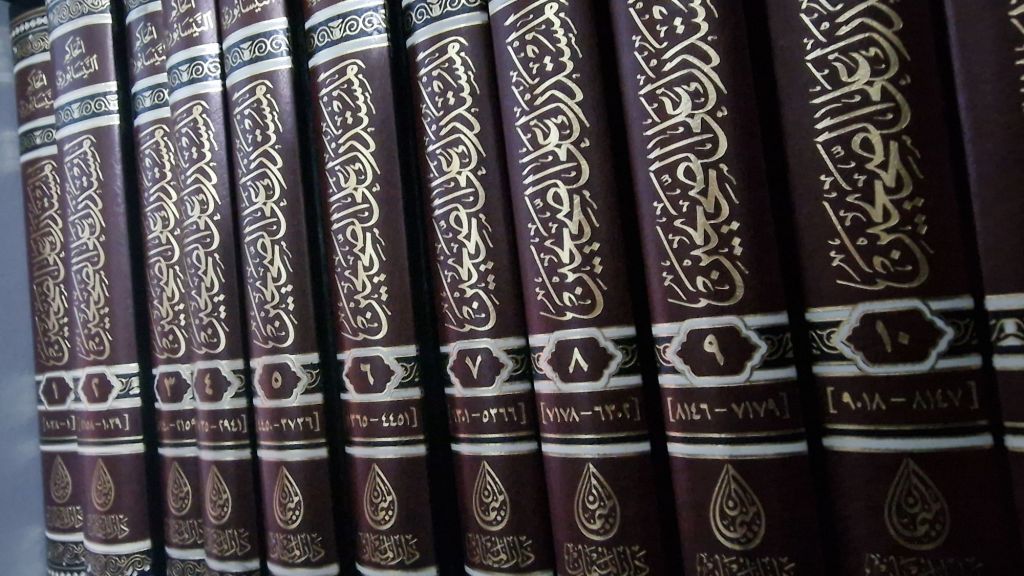
6 – Al-Mustadrakāt ʿalā al-Sahihayn (Supplements to the Two Sahīhs): by al-Hākim Abū ʿAbdullāh al-Naysābūrī (died 405H).
7 – Al-Mustakhrajāt ʿalā al-Sahihayn (Extracts from the Two Sahīhs) by Abū Bakr al-Ismāʿīlī on al-Bukhārī, and by Abū ʿAwānah al-Isfarāyīnī on al-Muslim, and by Abū Nuʿaym al-Asbahānī on both.
8 – Al-Sunan al-Arbaʿah [i.e. Abū Dāwūd, al-Tirmidhī, Ibn Mājah, al-Nasā’ī] and Musnad of Ahmad.
Abū ‘Abd Allāh al-Bukhārī, Muhammad ibn Ismā’īl ibn Ibrāhīm ibn al-Mughīrah ibn Bardizbah, and it is (also) said Badhdizbah, which is a Bukhāran word meaning “the farmer.”
Bardizbah was a Persian [Magian] who followed his people’s religion, then embraced Islām at the hands of al-Yamān al-Ju’fī – the governor of Bukhārah – along with his son Al-Mughīrah, and came to Bukhārah.
Al-Bukhārī was called ‘al-Juʿfī’ because his great-grandfather accepted Islām at the hands of the great-grandfather of ʿAbd Allāh al-Musnadī (i.e. Al-Yamān). And al-Yamān was a Juʿfī, so he (al-Bukhārī) was affiliated to him. And ʿAbd Allāh was called ‘al-Musnadī’ because he used to seek the musnad (connected chains of narration to the Prophet) from his youth.
And Ismā’īl ibn Ibrāhīm (i.e. Imām al-Bukhārīs father) was a seeker of knowledge. Ismāʿīl died when Muhammad was young, so he grew up under his mother’s care.
Ishāq ibn Ahmad ibn Khalaf narrated to us that he heard al-Bukhārī say: “My father heard from Mālik ibn Anas, and he met Hammād ibn Zayd, and he shook hands with Ibn al-Mubārak…”
al-Hasan ibn al-Husayn al-Bazzāz in Bukhārāh said: I saw Muhammad ibn Ismāʿīl ibn Ibrāhīm – a thin-bodied shaykh, neither tall nor short. He was born on Friday after the Friday prayer, on the thirteenth night that had passed of the month of Shawwāl in the year one hundred and ninety-four (194H). He died on Saturday night at the time of the ʿIshāʾ prayer, the night of [ʿĪd] al-Fitr, and was buried on the day of al-Fitr after the Dhuhr prayer on Saturday, the first of Shawwāl in the year two hundred and fifty-six (256H). He lived sixty-two years minus thirteen days.
The restoration of his eyesight
Muhammad ibn Ahmad ibn al-Fadl al-Balkhī narrated to us, (saying): I heard my father say: “The eyes of Muhammad ibn Ismā’īl went (blind) in his childhood, so his mother saw in a dream Ibrāhīm al-Khalīl (the Friend of Allāh, i.e. Prophet Abraham) and he said to her: ‘O woman, Allāh has restored your son’s eyesight because of the abundance of your weeping,’ or ‘the abundance of your supplication’—al-Balkhī was uncertain. So we awoke and (found that) Allāh had restored his eyesight to him.”
The beginning of his quest for knowledge/hadīth and writings
Muhammad ibn Abī Hātim narrated: I said to Abū ‘Abd Allāh: “How was the beginning of your affair (i.e. your life in seeking hadīth)?” He said: “I was inspired to memorise hadīth while I was in the kuttāb (schools, i.e. Qur’ān schools).” So I said: “How old were you?” He said: “Ten years old, or less.
Then I left the school after (turning) ten, and I began frequenting (the gatherings of) al-Dākhilī and others. One day he said, among what he was reading to the people: ‘Sufyān (narrated), from Abū al-Zubayr, from Ibrāhīm.’ So I said to him: ‘Indeed, Abū al-Zubayr did not narrate from Ibrāhīm.’ So he scolded me. I said to him: ‘Return to the source (manuscript).’ So he entered and looked at it, then came out and said to me: ‘How is it, O boy?’ I said: ‘It is al-Zubayr ibn ‘Adī, from Ibrāhīm.’ So he took the pen from me, corrected his book, and said: ‘You are correct.’ So it was said to al-Bukhārī: ‘How old were you when you corrected him?’ He said: ‘Eleven years old.’
When I reached sixteen years (of age), I had memorised the books of Ibn al-Mubārak and Wakī’, and I knew the speech (i.e. teachings) of these (scholars). Then I went out with my mother and my brother Ahmad to Makkah. When I performed Hajj, my brother returned with her (to Khurāsān), and I stayed behind seeking hadīth.”
Al-Bukhārī said: “I used to go to the jurists in Marw while I was a boy. When I would come, I was shy to greet them. So a teacher from among its people said to me: How many (hadīths) did you write today? I said: Two – and I meant by that two hadīths. So those present in the gathering laughed. A shaykh among them said: Do not laugh, for perhaps he will laugh at you one day!”
Al-Bukhārī said: “I entered upon (Imām) al-Humaydī when I was eighteen years old, and there was a disagreement between him and another about a hadīth. When al-Humaydī saw me, he said: One has come who will decide between us. So they presented (the matter) to me, and I decided in favor of al-Humaydī (for the truth was with him) over the one who disagreed with him. If his opponent had persisted in his disagreement and then died upon his claim, he would have died as a disbeliever.”
Abū Bakr al-A’yan narrated to us. He said: “We wrote from al-Bukhārī at the door of Muhammad ibn Yūsuf al-Firyābī, and there was not a hair on his face. So we said: How old are you?” He said: “Seventeen years old.”
Al-Bukhārī said: “When I entered eighteen (years of age), I compiled the book ‘Judgments/Verdicts of the Companions and Successors’ (Qadāyā al-Sahābah wa-l-Tābiʿīn), then compiled ‘The History’ (al-Tārīkh) in Madīnah at the Prophet’s grave and I would write it on moonlit nights.” He said: “”Rarely is there a name in the History except that it has a story, but I disliked making the book too long.”
Hāni’ ibn al-Nadr narrated: “We were with Muhammad ibn Yūsuf – meaning al-Firyābī – in Syria, and we would do what young men do in eating berries and the like. Muhammad ibn Ismā’īl was with us, but he would not compete with us in anything we were doing, and he would devote himself to knowledge.”
Sahl ibn al-Sirrī said: Al-Bukhārī said: “I entered Syria (al-Shām), Egypt (Misr), and al-Jazīrah (largely modern day Irāq/Syria and Turkey) twice, Basrah (city in Irāq) four times, and stayed in the Hijāz (Western Saudi Arabia) for six years. I cannot count how many times I entered Kūfah and Baghdād with the hadīth scholars.”
His teachers
Muhammad ibn Abī Hātim narrated from him [al-Bukhārī], he said: “I wrote from one thousand and eighty people, and there was not among them except (that they were) a person of hadīth.” He also said: “I did not write except from one who said: Faith (al-īmān) is statement and action.”
Hāfidh ibn Hajr said: His tachers are confined to 5 levels/classes:
(The First Class): Those who narrated to him from the Successors (al-Tābiʿīn), such as Muhammad ibn ʿAbd Allāh al-Ansārī – he narrated to him from Humayd; and such as Makkī ibn Ibrāhīm – he narrated to him from Yazīd ibn Abī ʿUbayd; and such as Abū ʿĀsim al-Nabīl – he narrated to him from Yazīd ibn Abī ʿUbayd also; and such as ʿUbayd Allāh ibn Mūsā – he narrated to him from Ismāʿīl ibn Abī Khālid; and such as Abū Nuʿaym – he narrated to him from al-Aʿmash; and such as Khallād ibn Yahyā – he narrated to him from ʿĪsā ibn Tahmān; and such as ʿAlī ibn ʿIyāsh and ʿIsām ibn Khālid – they both narrated to him from Hurayz ibn ʿUthmān. The shaykhs of all of these [people] were from among the Successors (al-Tābiʿīn).
(The Second Class): Those who were in the era of these [first generation] but did not hear from the reliable Successors, such as Ādam ibn Abī Iyās, Abū Mushir ʿAbd al-Aʿlā ibn Mushir, Saʿīd ibn Abī Maryam, Ayyūb ibn Sulaymān ibn Bilāl, and their likes.
(The Third Class): This is the middle [generation] of his shaykhs, and they are those who did not meet the Successors but rather took from the senior Successors of the Successors, such as Sulaymān ibn Harb, Qutaybah ibn Saʿīd, Nuʿaym ibn Hammād, ʿAlī ibn al-Madīnī, Yahyā ibn Maʿīn, Ahmad ibn Hanbal, Ishāq ibn Rāhawayh, Abū Bakr and ʿUthmān the two sons of Abī Shaybah, and the likes of these. This generation – Muslim shared [with al-Bukhārī] in taking from them.
(The Fourth Class): His companions in seeking [knowledge] and those who heard [from the shaykhs] a little before him, such as Muhammad ibn Yahyā al-Dhuhlī, Abū Hātim al-Rāzī, Muhammad ibn ʿAbd al-Rahīm Sāʿiqa, ʿAbd ibn Humayd, Ahmad ibn al-Nadr, and a group of their peers. He only brings out [narrations] from these [people] what escaped him from his shaykhs or what he did not find with others.
(The Fifth Class): A people in the category of his students in age and chain [of transmission]. He heard from them for benefit, such as ʿAbd Allāh ibn Hammād al-Āmulī, ʿAbd Allāh ibn Abī al-ʿĀs al-Khwārizmī, Husayn ibn Muhmmad al-Qabbānī, and others. He narrated from them [only] a few things.
He acted in narrating from them according to what ʿUthmān ibn Abī Shaybah narrated from Wakīʿ, [who] said: “A man is not [considered] a scholar until he narrates from one who is above him, and from one who is his equal, and from one who is below him.”
From al-Bukhārī, that he said: “The hadīth scholar is not complete until he writes from one who is above him, and from one who is his equal, and from one who is below him.”
His students
Al-Dhahabī said: “A great multitude narrated from him, among them: Abū ‘Īsā al-Tirmidhī, and Abū Hātim, and Ibrāhīm ibn Ishāq al-Harbī, and Abū Bakr ibn Abī al-Dunyā, and Abū Bakr Ahmad ibn ‘Amr ibn Abī ‘Āsim, and Sālih ibn Muhammad Jazarah, and Muhammad ibn ‘Abd Allāh al-Hadramī Mutayyan, and Ibrāhīm ibn Ma’qil al-Nasafī, and ‘Abd Allāh ibn Nājiyah, and Abū Bakr Muhammad ibn Ishāq ibn Khuzaymah, and ‘Umar ibn Muhammad ibn Bujayr, and Abū Quraysh Muhammad ibn Jum’ah, and Yahyā ibn Muhammad ibn Sā’id, and Muhammad ibn Yūsuf al-Firabrī the narrator of the “Sahīh,” and Mansūr ibn Muhammad Mizbazdah, and Abū Bakr ibn Abī Dāwūd, and al-Husayn and al-Qāsim the two sons of al-Muhāmilī, and ‘Abd Allāh ibn Muhammad ibn al-Ashqar, and Muhammad ibn Sulaymān ibn Fāris, and Mahmūd ibn ‘Anbar al-Nasafī, and multitudes (who) cannot be enumerated.
And Muslim narrated from him in other than his “Sahīh.” And it was said that al-Nasā’ī narrated from him in (the chapter on) fasting from his “Sunan,” but (this) was not authenticated, however al-Nasā’ī did relate in his book “al-Kunā” (The Kunyahs) some things from ‘Abd Allāh ibn Ahmad al-Khaffāf, from al-Bukhārī.”
His memory and other virtues
Hāshid ibn Ismāʿīl said: “Al-Bukhārī used to attend with us the circles of the scholars of Basrah when he was a youth, but he would not write. This went on for some days. We reproached him after sixteen days, and he said: ‘You have criticised me much, so present to me what you have written.’ We brought it out to him – more than fifteen thousand hadīths – and he recited them all from memory, so that we began verifying and correcting our books from his memorisation.”
Abū Bakr ibn Abī ʿAyyāsh al-Aʿyan said: “We wrote from Muhammad ibn Ismāʿīl when he was a beardless youth (amrad) at the door of Muhammad ibn Yūsuf al-Firyābī.” Ibn Hajr said: Al-Firyābī died in the year 212H, and al-Bukhārī was then about eighteen years old or less.
Muhammad ibn al-Azhar al-Sijistānī said: “I was in the gathering of Sulaymān ibn Harb, and al-Bukhārī was with us listening but not writing. Someone said to one of them: ‘What is wrong with him that he doesn’t write?’ He said: ‘He will return to Bukhārah and write from his memory.'”
The scribe/copyist of al-Bukhārī said: I saw him lie down while we were in Qarbūr during the compilation of his Book on the chapter of Qurʾānic Commentary (Tafsīr), and he had tired himself that day in extracting and verifying [hadīths]. I said to him: “I heard you say: ‘I never did anything without knowledge,’ so what is the benefit in lying down?” He said: “I tired myself today, and this is a frontier region. I feared that some incident might occur from the enemy’s affair, so I wanted to rest and take precautions, so that if the enemy attacked us suddenly, we would have strength.”
His scribe said: “He used to ride out to archery frequently, and I do not know that I saw him, in all the time I accompanied him, miss his arrow from the target except twice. Rather, he would hit every time and not be surpassed.”
He said: “We rode out one day to archery while we were in Qarbūr, and we went out to the lane that leads to the port. We began shooting, and Abū ʿAbd Allāh’s arrow hit a stake of the bridge that was over the river, and the stake split. When he saw that, he dismounted from his mount, extracted the arrow from the stake, abandoned archery, and said to us: “Return.” So we returned. He said to me: “O Abā Jaʿfar, I have a need from you,” while sighing deeply. I said: “Yes.” He said: “Go to the owner of the bridge and say: ‘We have damaged the stake, and we would like you to permit us to set up a replacement for it, or [that] you take its price, and make us lawful (halāl) (i.e. forgive and absolve us) regarding what [damage] came from us.'” The owner of the bridge was Humayd ibn al-Akhdar. He said to me: “Convey greetings (salām) to Abū ʿAbd Allāh and say to him: ‘You are absolved regarding what came from you, for all of my property is a ransom for you.'” So I conveyed the message to him, and his face became cheerful, and he showed much happiness, and he read that day to the visitors five hundred hadīths and gave in charity three hundred dirhams.”
His scribe said: I heard al-Bukhārī say: “I have not backbitten anyone ever since I knew that backbiting is forbidden (harām).”
I [Ibn Hajr] say: Al-Bukhārī has in his speech about men excessive caution and profound care, [which] appears to whoever contemplates his words regarding criticism (jarh) and authentication (taʿdīl). Most often he says: “They were silent about him,” “There is consideration [regarding] him,” “They abandoned him,” and the like. Rarely does he say: “Liar” or “Fabricator”. Rather, he says: “So-and-so declared him a liar,” “[So-and-so] accused [him],” meaning of lying.
Abū Bakr ibn Munīr, he said: Muhammad ibn Ismāʿīl al-Bukhārī was one day praying, and a hornet stung him seventeen times. When he finished his prayer, he said: “Look [to see] what this thing is that harmed me in my prayer.” They looked, and behold, the hornet had caused him to swell in seventeen places, yet he did not interrupt his prayer.
I [Ibn Hajr] say: We also narrated it from Muhammad ibn Abī Hātim, his scribe, and he said at its end: “I was in the (middle of) a (Qur’ānic) verse, and I loved to complete it.”
His scribe said: He was very little in eating, very generous in kindness to students, and excessively generous (in giving charity).
Abū al-Hasan Yūsuf ibn Abī Dharr al-Bukhārī related that Muhammad ibn Ismāʿīl fell ill, and they presented his urine to the physicians. They said: “This urine resembles the urine of some of the Christian monks, for they do not eat condiments. ” Muhammad ibn Ismāʿīl confirmed them and said: “I have not eaten condiments for forty years.” They asked about his treatment, and they said: “His treatment is condiments.” He refused until the shaykhs and people of knowledge pressed him, so he responded to them by eating a piece of sugar with bread.
Muhammad ibn Abī Hātim al-Warrāq said: When I was with Abū ʿAbd Allāh on a journey, we would be gathered in one house, except in extreme heat. I would see him rise during one night fifteen to twenty times. In all of that, he would take the flint, strike fire with his hand, light [a lamp], bring out hadīths, mark them, then put his head down [to sleep]. I said to him: “You burden yourself with all this and do not wake me?” He said: “You are young, so I do not like to spoil your sleep.”
He said: He would pray at the time of pre-dawn thirteen units (rakʿah), performing the odd-numbered prayer (witr) with one of them.
Al-Khatīb said: ʿAlī ibn Muhammad al-Jurjānī wrote to me from Isfahān that he heard Muhammad ibn Makkī say: I heard al-Firabrī say: “I saw the Prophet (ﷺ) in sleep, and he said to me: ‘Where are you going?’ I said: ‘I intend [to go to] Muhammad ibn Ismāʿīl.’ He said: ‘Convey my greetings (salām) to him.'”
Statements of scholars regarding him
Sulaymān ibn Harb said, looking at him one day: “This one will have fame.” Likewise, Ahmad ibn Hafs said something similar. Al-Bukhārī said: “When I would enter upon Sulaymān ibn Harb, he would say: ‘Clarify for us the errors of Shuʿbah.'”
Hāshid ibn Ismāʿīl said: Abū Mus’ab Ahmad ibn Abī Bakr al-Zuhrī said to me: “Muhammad ibn Ismāʿīl is more learned in jurisprudence with us and more knowledgeable of hadīth than Ahmad ibn Hanbal.” A man from his companions said to him: “You have exceeded the limit.” Abū Mus’ab said to him: “If you had met Mālik and looked at his face (Ibn Hajr said: i.e. contemplated his knowledge) and the face of Muhammad ibn Ismāʿīl, you would say both of them are one in hadīth and jurisprudence.”
ʿAbdān ibn ʿUthmān al-Marwazī said: “I have not seen with my own eyes a youth more knowledgeable than this one,” and he pointed to Muhammad ibn Ismāʿīl.
Qutaybah ibn Saʿīd said: “I sat with the jurists, the ascetics, and the worshippers, but I have not seen since I gained reason [anyone] like Muhammad ibn Ismāʿīl. He is in his time like ʿUmar among the Companions (of the Prophet (ﷺ)).”
Muhammad ibn Yūsuf al-Hamdānī said: We were with Qutaybah (ibn Sa’īd)… Qutaybah was asked about the divorce of the intoxicated person. Muhammad ibn Ismāʿīl entered, and Qutaybah said to the questioner: “This is Ahmad ibn Hanbal, Ishāq ibn Rāhawayh, and ʿAlī ibn al-Madīnī – Allāh has brought them to you,” and he pointed to al-Bukhārī.
Abū ʿAmr al-Kirmānī said: “Qutaybah spoke truthfully. I saw him with Yahyā ibn Maʿīn, and the two of them would go together to Muhammad ibn Ismāʿīl, and I saw Yahyā compliant to him in knowledge.”
Ahmad ibn Hanbal said: “Khurāsān has not produced [anyone] like Muhammad ibn Ismāʿīl.”
Yaʿqūb ibn Ibrāhīm al-Dawraqī and Nuʿaym ibn Hammād al-Khuzāʿī said: “Muhammad ibn Ismāʿīl al-Bukhārī – in him is this community (ummah).” Bundār – Muhammad ibn Bashshār – said: “He is the most learned in jurisprudence of Allāh’s creation in our time.”
Salīm ibn Mujāhid said: “I was with Muhammad ibn Salām, and he said to me: ‘If you had come before, you would have seen a youth who memorises seventy thousand hadīths.'”
Hāshid ibn Ismāʿīl said: I saw Ishāq ibn Rāhawayh sitting on the pulpit, and al-Bukhārī was sitting with him, and Ishāq was narrating (hadīth). He passed by a hadīth, and Muhammad rejected it. Ishāq returned to his [al-Bukhārī’s] statement and said: “O group of companions of hadīth, look at this young man and write from him, for if he had been in the time of al-Hasan ibn Abī al-Hasan al-Basrī, [people] would have needed him for his knowledge of hadīth and his jurisprudence.”
Abū Bakr al-Madīnī said: “We were one day with Ishāq ibn Rāhawayh, and Muhammad ibn Ismāʿīl was present. Ishāq passed by a hadīth and mentioned its Companion as ʿAtāʾ al-Kīkhārānī. Ishāq said to him: ‘O Abā ʿAbd Allāh, what is Kīkhārān?’ He said: ‘A village in Yemen. Muʿāwiyah had sent this man, the Companion, to Yemen, and this ʿAtāʾ heard from him two hadīths.’ Ishāq said to him: ‘O Abā ʿAbd Allāh, it is as if you witnessed the people.'”
Hāshid said: I saw ʿAmr ibn Zurārah and Muhammad ibn Rāfiʿ with Muhammad ibn Ismāʿīl, and they were asking him about the defects (ʿilal) of hadīth. When they stood up, they said to those who were present at the gathering: “Do not be deceived about Abī ʿAbd Allāh, for he is more learned in jurisprudence than us, more knowledgeable, and more victorious.” He said: “We were one day with Ishāq ibn Rāhawayh and ʿAmr ibn Zurārah, and he was dictating to Abī ʿAbd Allāh, and the companions of hadīth were writing from him, and Ishāq was saying: ‘He is more knowledgeable than me.’ Abū ʿAbd Allāh at that time was a young man.”
Al-Bukhārī said: “I did not consider myself small in the presence of anyone except in the presence of ʿAlī ibn al-Madīnī, though sometimes I would surprise him [with knowledge].” Hāmid ibn Ahmad said: “This statement was mentioned to ʿAlī ibn al-Madīnī, and he said to me: ‘Leave his statement. He has not seen [anyone] like himself.'”
Al-Bukhārī said: “The companions of ʿAmr ibn ʿAlī al-Fallās discussed a hadīth with me, and I said: ‘I do not know it.’ They were pleased by that and went to ʿAmr ibn ʿAlī. They said to him: ‘We discussed a hadīth with Muhammad ibn Ismāʿīl, but he did not know of it.’ ʿAmr ibn ʿAlī said: ‘A hadīth that Muhammad ibn Ismāʿīl does not know is not a hadīth.'”
Al-Husayn ibn Hurayth said: “I do not know that I have seen [anyone] like Muhammad ibn Ismāʿīl. It is as if he was not created except for hadīth.”
Ahmad ibn al-Dawʾ said: I heard Abū Bakr ibn Abī Shaybah and Muhammad ibn ʿAbd Allāh ibn Numayr saying: “We have not seen [anyone] like Muhammad ibn Ismāʿīl.” Abū Bakr ibn Abī Shaybah used to call him: “Al-bāzil,” meaning the complete one (al-kāmil).
Ibrāhīm ibn Muhammad ibn Salām said: “Indeed, a group from the people of hadīth, such as Sa’īd ibn Abī Maryam, Nu’aym ibn Hammād, al-Humaydī, Hajjāj ibn Minhāl, Ismā’īl ibn Abī Uways, al-‘Adanī, al-Hasan al-Hulwānī in Makkah, Muhammad ibn Maymūn the companion of Ibn ‘Uyaynah, Muhammad ibn al-‘Alā’, al-Ashajj, Ibrāhīm ibn al-Mundhir al-Hizāmī, and Ibrāhīm ibn Mūsā al-Farrā’ – they used to revere Muhammad ibn Ismā’īl and give him preference over themselves in knowledge and examination (of Hadīth).”
Abd Allāh ibn ‘Abd al-Rahmān al-Dārimī said: “Muhammad ibn Ismā’īl is the most knowledgeable of us, the most learned in jurisprudence of us, the most probing of us, and the most abundant of us in seeking (knowledge). And “Muhammad’s seeking of hadīth was not like our seeking. When he examined the hadīth of a man, he would exhaust it.”
Muhammad ibn Ishāq ibn Khuzaymah said: “I have not seen under the sky of heaven anyone more knowledgeable of the hadīth of the Messenger of Allāh (ﷺ) and more memorising of it than Muhammad ibn Ismā’īl.”
Muslim ibn al-Hajjāj said to al-Bukhārī: “Only an envious person hates you. I bear witness that there is no one in the world like you.”
The testing of him by the people of Baghdād
Abū ʿAlī Sālih ibn Muhammad al-Baghdādī said: “Muhammad ibn Ismāʿīl used to sit [and teach] in Baghdād, and I would dictate for him, and more than twenty thousand would gather in his gathering.”
Muhammad ibn Yūsuf ibn ʿĀsim said: “I saw Muhammad ibn Ismāʿīl have three dictators in Baghdād, and there gathered in his assembly more than twenty thousand men.”
Abū Ahmad ibn ʿAdī say: I heard several shaykhs relate that Muhammad ibn Ismāʿīl al-Bukhārī came to Baghdad. The companions of hadīth heard about him, so they gathered and took one hundred hadīths, reversed their texts and chains, made the text of this chain (in place) for another chain, and the chain of this text (in place) for another text. They gave [these] to ten persons – to each man ten hadīths – and commanded them when they attended the gathering to present that to al-Bukhārī.
They set an appointment for the gathering. The gathering was attended by a group of people of hadīth from the visitors from the people of Khurāsān and others, and from the Baghdādīs. When the gathering settled with its people, one man from the ten came forward and asked him about a hadīth from those hadīths. Al-Bukhārī said: “I do not know it.” He asked him about another, and he said: “I do not know it.” He kept presenting to him one after another until he finished his ten, and al-Bukhārī was saying: “I do not know it.”
The scholars/jurists among those present at the gathering would turn to one another and say: “The man understands (what’s happening).” Those who were otherwise among them would judge al-Bukhārī as incapable, deficient, and of little understanding.
Then another man from the ten came forward and asked him about a hadīth from those reversed hadīths. Al-Bukhārī said: “I do not know it.” He asked him about another, and he said: “I do not know it.” He asked him about another, and he said: “I do not know it.” He kept presenting to him one after another until he finished his ten, and al-Bukhārī was saying: “I do not know it.”
Then the third and fourth came forward to him, up to the completion of the ten, until they all finished the reversed hadīths, and al-Bukhārī would not add to them more than “I do not know it.”
When al-Bukhārī knew that they had finished, he turned to the first of them and said: “As for your first hadīth, it is such-and-such; your second hadīth is such-and-such; the third and fourth” – in order – until he came to the completion of the ten. He returned each text to its chain, and each chain to its text. He did with the others likewise, and returned all the texts of the hadīths to their chains, and their chains to their texts.
The people acknowledged his memorisation and submitted to him in virtue. Ibn Sāʿid, when he would mention Muhammad ibn Ismāʿīl, would say: “The charging ram!”
The compilation of Sahīh al-Bukhārī
Khalaf al-Hayyām said: I heard Ibrāhīm ibn Ma’qil (say): I heard Abū ‘Abd Allāh say: “I was with Ishāq ibn Rāhawayh, and some of our companions said: If only you would compile an abridged book of the Sunan of the Prophet (ﷺ). This fell into my heart, so I began compiling this book.” – meaning the book al-Jāmi’ (i.e. Sahīh al-Bukhārī).
Al-Firabrī say: I heard Muhammad ibn Ismāʿīl al-Bukhārī say: “I did not place a hadīth in the book al-Sahīh except that I performed ghusl (ritual bath) before that and prayed two rakʿahs (units of prayer).”
ʿUmar ibn Muhammad ibn Bujayr al-Bujīrī said: I heard Muhammad ibn Ismāʿīl say: “I compiled my book al-Jāmiʿ in the Sacred Mosque (al-Masjid al-Harām), and I did not include a hadīth in it until I sought guidance from Allāh, The Most-High, prayed two rakʿahs, and became certain of its authenticity.”
Al-Bukhārī said: “I compiled al-Jāmiʿ from six hundred thousand hadīths over sixteen years, and I made it a proof between me and Allāh.”
Abū Jaʿfar al-ʿUqaylī said: When al-Bukhārī compiled the book al-Sahīh, he presented it to Ibn al-Madīnī, Ahmad ibn Hanbal, Yahyā ibn Maʿīn, and others. They approved of it and testified to its authenticity except for four hadīths. Al-ʿUqaylī said: And the [correct] statement regarding them is the statement of al-Bukhārī, and they are authentic.
Abū al-Hasan al-Dāraqutnī the said: “Were it not for al-Bukhārī, Muslim would neither have come nor gone.” He also said: “Muslim only took the book of al-Bukhārī and made from it a mustakhraj (extractedwork), and added to it hadīths.”
Why Sahīh al-Bukhārī is considered the most authentic book after the Qur’ān
Hāfidh (Ibn Hajr) said: “The qualities upon which authenticity revolves in the book of al-Bukhārī are more complete than those in the book of Muslim, and more rigorous. His conditions regarding them are stronger and more stringent.
As for its superiority with regard to chain connection (ittisāl): (Al-Bukhārī) stipulated that the narrator must have proven meeting with the one from whom he narrates, even if only once, whereas Muslim was satisfied with mere contemporaneity (between narrators).
As for its superiority with regard to uprightness/integrity (ʿadālah) and precision (dabt): The men (i.e. narrators) who were criticised among the men of Muslim are greater in number than the men who were criticised among the men of al-Bukhārī. Moreover, al-Bukhārī did not narrate abundantly from them [the criticised ones]; rather, most of them are from his shaykhs from whom he took [directly] and whose hadīth he practiced [evaluating], unlike Muslim in both these matters.
As for its superiority with regard to the absence of irregularity (shudhūdh) and defects (iʿlāl): The hadīths criticised from al-Bukhārī are fewer in number than those criticised from Muslim.
This, [combined] with the agreement of the scholars that al-Bukhārī was more eminent than Muslim in the sciences (of Hadīth), more knowledgeable of the craft of hadīth than him, and that Muslim was his student and his graduate. [Muslim] continued to benefit from him and follow his traces, to the point that al-Dāraquṭnī used to say: “Were it not for al-Bukhārī, Muslim would neither have come nor gone.” (Nukhbatul-Fikr Fī Mustalah Ahlul-Athar with explanation of al-San’ānī pg. 229)
Imām al-Bukhārīs death
Muslim ibn al-Hajjāj say: “When Muhammad ibn Ismā’īl came to Naysābūr, I did not see a governor or scholar (receive treatment like) what the people of Naysābūr did to him – they received him (at a distance of) two or three stations. Muhammad ibn Yahyā said in his gathering: ‘Whoever wants to receive Muhammad ibn Ismā’īl tomorrow, let him receive him.’ So Muhammad ibn Yahyā and most of the scholars received him. He stayed at the house of the Bukhāriyyīn (people from Bukhārāh).”
Muhammad ibn Muhammad ibn Ya’qūb al-Hāfidh said: “When al-Bukhārī settled in Naysābūr, Muslim ibn al-Hajjāj frequented him much. When what occurred between al-Dhuhlī and al-Bukhārī occurred regarding the matter of lafdh, and he proclaimed against him and prevented people from him, most people cut off from him except (Imām) Muslim…And Ahmad ibn Salamah followed him…
…when Muslim and Ahmad ibn Salamah stood up from al-Dhuhlī’s gathering, al-Dhuhlī said: ‘This man (i.e. Imām al-Bukhārī) shall not dwell with me in the town.’ So al-Bukhārī feared and traveled.”
Bakr ibn Munīr ibn Khalīd ibn ‘Askar said: “The Amīr Khālid ibn Ahmad al-Dhuhlī, the governor of Bukhārāh, sent to Muhammad ibn Ismā’īl (saying): ‘Bring to me the book “al-Jāmi'” (i.e. Sahīh al-Bukhārī) and “al-Tārīkh” and others so I may hear from you.’ He said to his messenger: ‘I do not humiliate knowledge, nor do I carry it to the doors of people. If you have need of something from it, then come to my masjid or my house. If this does not please you, then you are a ruler (sultān), so prevent me from the gathering, so that I may have an excuse before Allāh on the Day of Resurrection, because I do not conceal knowledge due to the statement of the Prophet (ﷺ): “Whoever is asked about knowledge and conceals it will be bridled with a bridle of fire.”‘ So this was the cause of the estrangement between them.”
Sahl ibn Shādhawayh narrated: “Muhammad ibn Ismā’īl used to dwell in Sikkat al-Dahqān, and a group would frequent him, showing the signs of the People of Hadīth such as singular iqāmah (call to prayer), raising the hands in prayer, and other than that. So Hurayth ibn Abī al-Warqā’ and others said: ‘This is a divisive man, and he is corrupting this city for us. Muhammad ibn Yahyā has expelled him from Naysābūr, and he is the imām of the People of Hadīth.’ So they used ibn Yahyā as proof against him and sought help from the ruler in expelling him from the town, so he was expelled. Muhammad ibn Ismā’īl was pious, avoiding the ruler and not entering upon them.”
Abū Bakr ibn Abī ‘Amr al-Hāfidh al-Bukhārī said: “The cause of the disagreement with Abū ‘Abd Allāh was that Khālid ibn Ahmad al-Dhuhlī, the Amīr and khalīfah (deputy) of the Tāhirids in Bukhārāh, asked that he come to his house and read “al-Jāmi'” and “al-Tārīkh” to his children. He refused to attend at his place, so he corresponded with him to hold a gathering for his children that none other than them would attend. He refused and said: ‘I do not single out anyone [for knowledge].’ So the Amīr sought the help of Hurayth ibn Abī al-Warqā’ and others, until they spoke about his madhhab (doctrine), and expelled him from the town.
Ibn ‘Adī said: I heard ‘Abd al-Quddūs ibn ‘Abd al-Jabbār al-Samarqandī say: “Muhammad ibn Ismā’īl came to Khartank – a village two farsakhs from Samarqand – and he had relatives there, so he stayed with them. We heard him one night supplicating after he had finished the night prayer: ‘O Allāh, indeed the earth has become narrow for me despite its vastness, so take me to You.’ The month had not ended until he died, and his grave is at Khartank.”
Muhammad ibn Abī Hātim said: I heard Abū Mansūr Ghālib ibn Jibrīl, and he is the one at whose place Abū ‘Abd Allāh stayed, say: “He stayed with us for days, then he became ill, and the illness intensified upon him, until he sent a messenger to the city of Samarqand regarding the departure of Muhammad. When (the messenger) arrived, he prepared to mount, so he put on his khuffs (leather socks), and put on his turban. When he had walked about twenty steps or so – and I was holding his upper arm, and a man with me was leading him to the mount to ride it – he said, may Allāh have mercy on him: ‘Release me, for I have weakened.’ So he supplicated with supplications, then he lay down, and passed away, may Allāh have mercy on him. Sweat flowed from him in a way that cannot be described, and the sweat did not cease from him until we wrapped him in his garments. Among what he said to us and advised us: ‘Shroud me in three white garments, with neither a shirt nor a turban.’ So we did that. When we buried him, a fragrance emanated from the dust of his grave more pleasant than musk – that continued for days…”
Ibn ‘Adī said: I heard al-Hasan ibn al-Husayn al-Bazrār al-Bukhārī say: “Al-Bukhārī died on Saturday night, the night of (Eid) al-Fitr, at the time of ‘Ishā’ prayer, and was buried on the day of (Eid) al-Fitr after Dhuhr prayer, in the year two hundred and fifty-six, and he lived sixty-two years minus thirteen days.”
(Unless stated otherwise in the text, all the above has been taken from Introduction to Sahīh al-Bukhārī by Ibn Hajr pg. 861-886. Siyar al-‘Alām al-Nubalā of Imām Al-Dhahabī 10/77-119. Tārīkh al-Baghdād of Imām al-Khātīb al-Baghdādī 2/322-357)
Nga Abū Xhuhayfah Wahb ibn ʿAbd Allāh al-Suwāʾī (رضي الله عنه) i cili tha:
“Erdha tek i Dërguari (ﷺ) ndërsa ai ishte në një çadër të kuqe (të bërë) prej lëkure. Ai tha: Bilāl doli me ujin e abdesit të tij – disa morën drejtpërdrejt nga uji dhe disa të tjerë u spërkatën me ujë.” (al-Bukhārī 185, Muslim 503)
Ibn Daqīq al-‘Īd tha: “Nga ky hadith kuptohet lejueshmëria e kërkimit të bekimit përmes gjërave me të cilat të drejtët kanë pasur kontakt… sepse është transmetuar se sahabët morën bekim nga uji i abdesit me të cilin i Dërguari (ﷺ) kishte marrë abdes. Kjo çështje, zgjerohet me anallogji për gjithçka tjetër me të cilën të drejtët kanë pasur kontakt. Dhe Allahu e di më mirë.”
Imami al-San’ānī tha duke komentuar deklaratën e mësipërme: “(Kërkimi i bekimit në atë me çka të drejtët kanë qenë në kontakt)” – Unë them: [Kjo është] bazuar në faktin se ai (ﷺ) i miratoi ata në atë, dhe kjo dihet nga ky hadith dhe nga [prova] të tjera.
Megjithatë, zgjerimi i saj në atë me çka të tjerët nga njerëzit e drejtësisë janë në kontakt është çështje hezitimi, sepse ky zgjerim është me anallogji (qiyās), dhe nuk dihet se ndonjë nga të drejtët është në rangun/gradën e tij (ﷺ) në mënyrë që ai të mund të bashkohet me të siç [do të kërkonte] kërkesa e anallogjisë.” (Sharh al-‘Umdah 3/14-18)
Shejkh ‘Abdul-‘Azīz al-Rājihī tha: “Me të vërtetë, pasha Allahun, Sahabët përdornin të kërkonin bekim përmes sekrecioneve të tij (trupore): kur ai kryente abdest, ata merrnin (nga) pikëzat (e ujit); kur ai pështynte, do të ishte në dorën e njërit [prej tyre] i cili do ta lëshonte trupin e tij me të; dhe kur ai rruajti kokën e tij – si në Haxhin e Lamtumirës – ai ua shpërndau flokët njerëzve, një flok ose dy flokë, [dhe] ata kërkonin bekim përmes tyre.
Kjo është diçka specifike/veçantë vetëm për të, dhe askush tjetër nuk krahasohet me të në anallogji (qiyās), prandaj bekimi nuk kërkohet përmes tjetërkujt veç tij.” (Sharh Sahīh al-Bukhārī 1/526)
Imami Ibn Raxhab al-Hanbalī tha: “ʿUmeri dhe të tjerë prej Sahabët dhe Pasardhësit (Allahu qoftë i kënaqur me ta) përdornin të mos pëlqenin që lutja (duʿāʾ) të kërkohej prej tyre, dhe ata do të thoshin: ‘A jemi ne profetë?’ Kjo tregon se ky rang/gradë nuk i përshtatet përveçse Profetëve (ﷺ).
Po ashtu, kërkimi i bekimit (tabarruk) përmes gjurmëve/relikeve (āthār) – Sahabët (Allahu qoftë i kënaqur me ta) e bënin këtë vetëm me Profetin (ﷺ), dhe nuk e bënin këtë me njëri-tjetrin. As Tābi’īnët (Pasardhësit) nuk e bënë këtë me Sahabët, pavarësisht statusit të tyre të lartë.
Kjo tregon se ky veprim bëhet vetëm me Profetin (ﷺ), si kërkimi i bekimit përmes ujit të abdesit të tij (wudūʾ), sekrecioneve të tij trupore, flokëve të tij, pirjes së mbetjes së pijës dhe ushqimit e pijes së tij.
Në përmbledhje: Këto çështje janë një sprovë (fitnah) për atë që nderon dhe atë që nderohet, për shkak të asaj që frikësohet për të nga ekzagjerimi që çon në risi (bidʿah), dhe ndoshta ngrihet në një lloj idhujtarie (shirk). E gjithë kjo erdhi vetëm nga imitimi i Njerëzve të Librit dhe idhujtarëve, nga [imitimi i] së cilës kjo ummet është ndaluar.
Paraardhësit e drejtë (al-salaf al-sālih) përdornin të ndalonin nderimin e tyre në ndalimin më të madh, si al-Hasan [al-Basrī], [Sufyān] al-Thawrī, dhe Ahmad [ibn Hanbal].
Një njeri erdhi tek ai (d.m.th. Imami Ahmad) dhe fërkoi dorën e tij në rrobën e tij [të Ahmadit] dhe fërkoi fytyrën e tij me to. Imami Ahmad u zemërua dhe u kundërshtua ndaj asaj në kundërshtimin më të fortë, dhe tha: “Nga kë e more këtë çështje?” (Sharh al-‘Umdah 3/18 shënime poshtë, duke iu referuar al-Hikam al-Jadīra bi-l-Idhāʿa fq. 46-47)
From Abū Juhayfah Wahb ibn ʿAbd Allāh al-Suwāʾī (رضي الله عنه) who said:
“I came to the Prophet (ﷺ) while he was in a red dome of his made of leather. He said: Bilāl came out with (his) ablution water – some took directly from the water and some were sprinkled with the water.” (al-Bukhārī 185, Muslim 503)
Ibn Daqīq al-‘Īd said: “It is taken from the hadīth [the permissibility of] seeking blessing through what the righteous have been in contact with…for indeed, it came [in the report] regarding the ablution water from which the Prophet (ﷺ) performed ablution. It is extended by analogy to all else that the righteous are in contact with. And Allāh knows best.”
Imām al-San’ānī said commenting on the above statement: “(Seeking blessing in what the righteous have been in contact with)” – I say: [This is] based on the fact that he (ﷺ) approved them in that, and it is known from this and from other [evidence].
However, extending it to what others from the people of righteousness are in contact with is a matter of hesitation, because this extension is by analogy (qiyās), and it is not known that any of the righteous are in his rank (ﷺ) so that he could be joined to him as the requirement of analogy [would demand].” (Sharh al-‘Umdah 3/14-18)
Shaykh ‘Abdul-‘Azīz al-Rājihī said: “Indeed, by Allāh, the Companions used to seek blessing through his (bodily) excretions: when he performed ablution, they would take (from) the drops (of water); when he expectorated, it would be in the hand of one [of them] who would rub his body with it; and when he shaved his head – as in the Farewell Pilgrimage – he distributed the hair to the people, a hair or two hairs, [and] they would seek blessing through it.
This is specific to him, and no one else is compared to him in analogy (qiyās), so blessing is not sought through other than him.” (Sharh Sahīh al-Bukhārī 1/526)
Imām ibn Rajab al-Hanbalī said: “ʿUmar and others among the Companions and Successors (may Allāh be pleased with them) used to dislike that supplication (duʿāʾ) be requested from them, and they would say: “Are we prophets?” This indicates that this rank is not befitting except for the Prophets (ﷺ).
Likewise, seeking blessing (tabarruk) through the traces/relics (āthār) – the Companions (may Allāh be pleased with them) only used to do this with the Prophet (ﷺ), and they did not do it with one another. Nor did the Tābi’īn (Successors) do it with the Companions, despite their lofty status.
This indicates that this is only done with the Prophet (ﷺ), such as seeking blessing through his ablution water (wudūʾ), his bodily excretions, his hair, drinking the remainder of his drink and food.
In summary: These matters are a trial (fitnah) for the one who venerates and the one who is venerated, due to what is feared for him of exaggeration that leads into innovation (bidʿah), and perhaps rises to a type of polytheism (shirk). All of this only came from imitating the People of the Book and the polytheists, which this ummah has been forbidden from [imitatin].
The righteous predecessors (al-salaf al-sālih) used to forbid venerating them in the utmost prohibition, such as al-Hasan [al-Basrī], [Sufyān] al-Thawrī, and Ahmad [ibn Hanbal].
A man came to him (i.e. Imām Ahmad) and wiped his hand on his [Ahmad’s] garment and wiped his face with them. Imām Ahmad became angry and objected to that in the strongest objection, and said: “From whom did you take this matter?” (Sharh al-‘Umdah 3/18 footnotes, referencing al-Hikam al-Jadīra bi-l-Idhāʿa pp. 46-47)
Shaykh al-Islām Taqī al-Dīn Abū al-ʿAbbās Ahmad ibn Taymiyyah al-Harrānī (may Allāh be pleased with him and grant him contentment) was asked:
What do you say about two men who differed in creed, where one of them said: “Whoever does not believe that Allāh is in the heaven is misguided,” and the other said: “Indeed Allāh, Free from imperfection, is not confined to a place,” and they are both Shāfiʿīs [in madhdhab]. So clarify for us what we should follow from the creed of al-Shāfiʿī (may Allāh be pleased with him), and what is correct in (this matter)?
He answered:
All praise is due to Allāh. The creed of al-Shāfiʿī (may Allāh be pleased with him) is the creed of the Salaf (predecessors), the Imāms of Islām, such as Mālik, al-Thawrī, al-Awzāʿī, Ibn al-Mubārak, Ahmad ibn Hanbal, and Ishāq ibn Rāhawayh, and it is the creed of the Mashāyikh (religious leaders) who are followed (and taken as examplars), such as al-Fudayl ibn ʿIyād, Abū Sulaymān al-Dārānī, Sahl ibn ʿAbdullāh al-Tustarī, and others (like them). For indeed there is no dispute among these Imāms and their likes in the fundamentals of the religion (usūl al-dīn)…and the creed of these (Imāms) is what the Companions (al-Sahābah) and those who followed them in goodness (al-Tābiʿūn) adhered to, and it is what the Book and the Sunnah have expressed.
Al-Shāfiʿī said in the opening sermon of “al-Risālah”: “All praise is due to Allāh, who is as He has described Himself, and above what His creation describes Him as.” Thus he (may Allāh have mercy on him) clarified that Allāh is described by what He has described Himself with in His Book and upon the tongue of His Messenger (ﷺ).
Likewise, Ahmad ibn Hanbal said: Allāh is not to be described except by what He has described Himself with or His Messenger has described Him with, not going beyond the Qurʾān and the Hadīth.
And this is the methodology of all of them – that they describe Allāh (only) with what He has described Himself with and what His Messenger has described Him with, without distortion (tahrīf) or negation (taʿtīl), and without asking how (takyīf) or likening (tamthīl). Rather, they affirm for Him what He has affirmed for Himself of the Beautiful Names (al-Asmāʾ al-Husnā) and the Lofty Attributes (al-Sifāt al-ʿUlā), and they know that there is nothing like Him – not in His Essence, nor in His Attributes, nor in His Actions. For just as His Essence is not like created essences, His Attributes are not like created attributes. Rather, He, Free from imperfection, is described with attributes of perfection, high above every deficiency and fault.
He, Free from imperfection, in (His) attributes of perfection, nothing resembles Him. He is Ever-Living (Hayy), Self-Sustaining (Qayyūm), All-Hearing (Samīʿ), All-Seeing (Basīr), All-Knowing (ʿAlīm), All-Powerful (Qadīr), Most Kind (Raʾūf), Bestower of Mercy (Rahīm), and He is the One who created the heavens and the earth and what is between them in six days, then He rose over (istawā ʿalā) the Throne (al-ʿArsh), and He is the One who spoke to Mūsā with speech, and manifested Himself to the mountain and made it collapse (and crumble to dust).
And nothing from among things resembles Him in anything from His attributes. His knowledge is not like anyone’s knowledge, nor His power like anyone’s power, nor His mercy like anyone’s mercy, nor His rising over (istiwāʾ) like anyone’s rising over, nor His hearing and seeing like anyone’s hearing or seeing, nor His speaking like anyone’s speaking, nor His manifestation like anyone’s manifestation.
And Allāh, free from imperfection and Most High, has informed us that in Paradise (al-Jannah) there is meat, milk, honey, water, silk, and gold. And Ibn ʿAbbās said: There is nothing in the world from what is in the Hereafter except the names. So if the absent (unseen) created things are not like these (worldly created things) despite their agreement in names, then the Creator’s Highness above and separateness from His creation is greater than the separateness of the created from the created, even if the names are in agreement.
And He, free from imperfection and Most High, has said in His Book:
“Do you feel secure that He who is in the heaven (fī al-samāʾ) will not cause the earth to swallow you and suddenly it would sway? Or do you feel secure that He who is in the heaven will not send against you a storm of stones? Then you will know how (severe) was My warning.” (al-Mulk:16-17)
And it is established in the Sahīh from the Prophet (ﷺ) that he said to the slave-girl: “Where is Allāh?” She said: “In the heaven.” He said: “Who am I?” She said: “You are the Messenger of Allāh.” He said: “Free her, for indeed she is a believer.” This hadīth was narrated by Mālik, al-Shāfiʿī, Ahmad ibn Hanbal, Muslim in his Sahīh, and others.
However, the meaning of this is not that Allāh is inside the interior of the heaven, and that the heavens confine Him and encompass Him, for no one from the Salaf of the Ummah and its Imāms has said this. Rather, they are in agreement that Allāh is above His heavens, upon His Throne, separate from His creation. There is nothing of His Essence in His creation, nor anything of His creation within His Essence.
So whoever believes that Allāh is inside the heaven, confined and encompassed by it, or that He is in need of the Throne or other than the Throne from creation, or that His rising over (istiwāʾ) His Throne is like the rising over of the created being upon his chair – then he is misguided, an innovator, and ignorant.
And whoever believes that there is no deity (ilāh) above the heavens to be worshipped, and no Lord (Rabb) upon the Throne to be prayed to and prostrated to, and that Muhammad was not ascended to his Lord [i.e. during the Isrā wal-Mi’rāj], and the Qurʾān did not descend from His presence – then he is a negator (muʿattil), Pharaonic, misguided, an innovator. For Pharaoh (Firʿawn) denied Mūsā regarding his Lord being above the heavens, and said:
“O Hāmān, construct for me a tower that I might reach the ways – the ways into the heavens – so that I may look at the deity of Mūsā; but indeed, I think he is a liar.” (al-Ghāfir:36-37)
And Muhammad (ﷺ) affirmed what Mūsā (said) that his Lord is in the heavens. So when it was the night of the ascension (al-Miʿrāj) and he was ascended to Allāh, The Most-High, and his Lord obligated upon him fifty prayers, he mentioned that when he returned to Mūsā, he (Mūsā) said to him:
“Return to your Lord and ask Him for lessening for your nation, for indeed your nation cannot endure that.” (Agreed upon – Sahīh al-Bukhārī 349 and Sahīh Muslim 163)
So he returned to his Lord and He lessened ten from him. Then he returned to Mūsā and informed him of that, so he said:
“Return to your Lord and ask Him for lessening for your nation.”
So whoever agrees with Pharaoh and opposes Mūsā and Muhammad is misguided, and whoever likens Allāh to His creation is misguided.
Nuʿaym ibn Hammād said: Whoever likens Allāh to His creation has disbelieved, and whoever denies what Allāh has described Himself with has disbelieved. And what Allāh has described Himself with and His Messenger (has described Him with) is not likening (tashbīh).
Allāh The Most-High has said:
“To Him ascends the good word, and righteous work raises it.” (al-Fātir:10)
And He said:
“O ʿĪsā, indeed I will take you and raise you to Myself.” (al-‘Imrān:55)
The one who said: “Whoever does not believe that Allāh is in the heaven is misguided” – if he intended by that whoever does not believe that Allāh is inside the interior of the heaven such that it confines Him and encompasses Him, then he has erred.
But if he intended by that whoever does not believe what the Book and Sunnah have conveyed and what the Salaf of the Ummah and its Imāms agreed upon – that Allāh is above His heavens, upon His Throne, separate from His creation – then he has spoken correctly. For whoever does not believe that becomes a denier of the Messenger (ﷺ), following other than the way of the believers. Rather, he becomes in reality a negator (muʿattil) of his Lord, denying Him. So he does not in reality have a deity to worship nor a Lord to ask and seek. And this is the statement of the Jahmiyyah and their likes from the followers of Pharaoh, the negator.
And the one who said: “Indeed Allāh is not confined to a place” – if he intended by it that Allāh is not confined inside the creation, or that He is not in need of anything from it – then he has spoken correctly. But if he intended that Allāh is not above the heavens, and He is not upon the Throne, and there is no deity there to be worshipped, and Muhammad did not ascend to Allāh – then this is a Jahmī, Pharaonic negator.
The source of misguidance is the assumption that the Lord’s attributes are like the attributes of His creation, so one supposes that Allāh, free from imperfection, is upon His Throne like the created king upon his chair. This is likening (tamthīl) and misguidance. That is because the (created) king is in need of his chair, and if his chair were removed he would fall. But Allāh is Independent/Self-Sufficient of the Throne and of everything, and the Throne and all besides Him are in need of Allāh. He is the Sustainer of the Throne and the bearers of the Throne, and His Highness above it does not necessitate His need for it.
The fundamental principle in this topic is that everything established in the Book of Allāh or the Sunnah of His Messenger is obligatory to believe in it, such as the Lord’s Highness (ʿulū) and His rising over (istiwāʾ) His Throne and similar matters.
As for innovated expressions in negation and affirmation, such as the statement of one saying: “He is in a direction (jihah)” or “He is not in a direction,” and “He takes a defined space” or “He doesn’t take a defined space,” and similar expressions which people have disputed about, while none of them has a specific text – neither from the Messenger, nor from the Companions, nor from the Tābiʿūn in goodness, nor from the Imāms of the Muslims – for none of them said: “Indeed Allāh is in a direction,” nor did they say: “He is not in a direction”; nor did they say: “He takes a defined space,” nor did they say: “He does not take a defined space”; nor did they say: “He is a body (jism) or substance (jawhar),” nor did they say: “He is not a body nor a substance.” These expressions are not stated in the Book, nor in the Sunnah, nor in the consensus (ijmāʿ). Those who use them may intend a correct meaning, and they may intend a corrupt meaning. So whoever intends a correct meaning that agrees with the Book and Sunnah, that meaning is accepted from him. And if he intends a corrupt meaning that contradicts the Book and Sunnah, that meaning is rejected from him.
So when someone says: “Indeed Allāh is in a direction,” it is said to him: What do you intend by that? Do you intend by it that He is in an existing direction that confines Him and encompasses Him, such as being inside the interior of the heaven? Or do you intend by “direction” something non-existent, which is what is above the world? For there is nothing from creation above the world. If you intend the existential direction and make Allāh confined within creation, then this is false. But if you intend the non-existent direction and intend that Allāh alone is above creation, separate from it, then this is true, and there is nothing in that from creation that confines Him or encompasses Him or is elevated above Him. Rather, He is The One who is above them, encompassing of them.
The people regarding this are of three categories: the people of indwelling and unification, the people of negation and denial, and the people of faith (īmān), tawhīd, and the Sunnah.
The people of indwelling say: He is by His Essence in every place, and they may say (the doctrine of) union and oneness, so they say: The existence of creation is the existence of the Creator, as is the doctrine of Ibn ʿArabī, author of “al-Fusūs,” and Ibn Sabʿīn and their likes.
As for the people of negation and denial, they say: He is neither inside the world nor outside it, neither separate from it nor indwelling in it, neither above the world nor in it, nothing descends from Him and nothing ascends to Him, nothing draws near to Him and nothing approaches Him, He does not manifest to anything and no one sees Him, and similar (statements).
This is the statement of the theologians (mutakallimah) of the Jahmiyyah, just as the first (view) is the statement of the worshippers (ʿubbād) of the Jahmiyyah. The theologians of the Jahmiyyah worship nothing, and the worshippers of the Jahmiyyah worship everything. Both of them return to negation and denial, which is the statement of Pharaoh.
It is known that Allāh existed before He created the heavens and earth, then He created them. So either He entered into them – and this is indwelling which is false; or they entered into Him – and this is even more false; or He is separate from them, not entering into them nor they into Him – and this is the statement of the people of truth, tawhīd, and the Sunnah.
The people of indwelling, negation and denial have many specious arguments…the source of their misguidance is their speaking with ambiguous general terms that have no basis in the Book of Allāh or the Sunnah of His Messenger, nor did any of the Imāms of the Muslims say them – like the terms “taking a defined space” (mutahayyiz), “body” (jism), “direction” (jihah), and similar terms. So whoever is knowledgeable in resolving their specious arguments/doubts should clarify (the truth to) them, and whoever is not knowledgeable in that should turn away from their speech, and not accept except what the Book and Sunnah convey, as The Most-High said:
“And when you see those who engage in false talk concerning Our verses, then turn away from them until they enter into another conversation.” (al-An’ām:67)
And whoever speaks about Allāh, His Names, and His Attributes with what contradicts the Book and Sunnah, he is among those who engage in false talk concerning the signs of Allāh with falsehood.
Many of these people attribute to the Imāms of the Muslims what they did not say. They attribute to al-Shāfiʿī, Ahmad ibn Hanbal, Mālik, and Abū Hanīfah beliefs they did not state, and they say to those who follow them: “This is the creed of Imām so-and-so.” But when they are challenged for authentic transmission from the Imāms, their lying in that becomes clear, just as their lying becomes clear in what they transmit from the Prophet (ﷺ) regarding many innovations and false statements.
For mentioning the term “body” (jism) regarding Allāh’s Names and Attributes is an innovation; no Book or Sunnah has uttered it, nor did any of the Salaf of the Ummah and its Imāms say it. None of them said: “Indeed Allāh is a body,” nor “Indeed Allāh is not a body,” nor “Indeed Allāh is a substance,” nor “Indeed Allāh is not a substance.”
Abū al-‘Abbās Qāsim ibn al-Qāsim al-Sayyārī informed us in Marw, Abū al-Muwajjih [informed] us, ‘Abdān [informed] us, al-Fadl ibn Mūsā [informed] us, ‘Abd Allāh ibn Kaysān narrated to us, ‘Ikrimah narrated to us, from Ibn ‘Abbās (may Allāh be pleased with them both) that:
The Prophet (ﷺ) and Abū Bakr and ‘Umar (may Allāh be pleased with them both) came to the house of Abū Ayyūb. When they ate and were satisfied, the Prophet (ﷺ) said: “Bread and meat and dates and pieces [of food/bread] and fresh dates. When you obtain the like of this and you strike with your hands [to partake], then eat in the name of Allāh (bismillah) and with the blessing of Allāh (wa-barakatillah).” (al-Mustadrak of al-Hākim #7261 and a different version in #7357. Mu’jam al-Saghīr of al-Tabarānī #185)
Declared weak by Al-Albānī in Da’īf al-Targhīb #1303, and Ta’liqāt al-Hisān #5193.
Abd Allāh ibn Kaysān: Al-Bukhārī said about him in al-Tārīkh al-Kabīr 5/178 (561): “Rejected/objectionable (munkar), not from the people of hadīth.”
Abū Hātim said about him in al-Jarh wa al-Ta’dīl 5/143: “Weak in hadīth.”
Al-Nasā’ī said about him in al-Du’afā 329: “He is not strong.”
Ibn ‘Adīy said about him in al-Kāmil 5/385: “And ‘Abd Allāh ibn Kaysān has from ‘Ikrimah from Ibn ‘Abbās – hadīths other than what I have dictated that are not preserved…”.
In al-Iktifā 2/187 it’s mentioned: “Al-‘Uqaylī said: “In his hadīth there are many errors.” Ibn al-Jārūd mentioned him among the weak [narrators].”
In Qānūn al-Du’afā pg. 273, it’s mentioned: “(‘Abd Allāh ibn Kaysān is) matrūk (abandoned).”
Imām al-Shawkānī said: “What has been explicitly declared authentic (Sahīh) or good (Hasan) is permissible to be acted upon, and what has been explicitly declared weak is not permitted to be acted upon.” (Nayl al-Awtār 1/15)
Imām Al-Shawkānī also said: “The legal (Sharī’ah) rulings are equal in footing, there is no difference between them, so it is not lawful to establish anything from them (i.e. legal rulings) except by what establishes evidence, otherwise it would be speaking about Allāh regarding what He did not say, and in it is the punishment that is well-known” (al-Fawā’id al-Majmū’ah fī al-Ahādīth al-Mawdū’ah p. 283)
Shaykh Siddīq Hasan Khān al-Qanūjī said: “The correct [position] that there is no escape from – is that legal rulings are equal in footing, so one should not act upon a hadīth until it is [established to be] authentic (Sahīh) or good (hasan) in itself (li-dhātihī) or due to external factors (li-ghayrihī), or its weakness is remedied so it rises to the level of good (hasan) in itself (li-dhātihī) or due to external factors (li-ghayrihī).” (Nuzul al-Abrār pp. 7-8)
Shaykh Salīm Al-Hilālī said: “Using weak hadīth as evidence – whether in beliefs (‘aqā’id), or [legal] rulings (ahkām), or encouragement and warning (targhīb wa tarhīb) – after the principles of the sciences of hadīth have been established – is not permitted absolutely, because in using it as evidence is establishing worship (‘ibādah) with what Allāh did not legislate.” (al-Mutqin Sharh Tadhkirah of Ibn Mulaqqin pg. 61)
Jalāl al-Dīn al-Dawānī said: “They agreed that weak hadīth do not establish legal rulings (al-ahkām ash-shar’iyyah).
Then they mentioned that it is permissible, rather recommended, to act upon weak hadīth in virtues of actions. Among those who explicitly stated this is al-Nawawī in his books, especially the book ‘al-Adhkār’.
There is a problem in this, because the permissibility of action and its recommendation are both among the five legal rulings [i.e. obligation, recommendation, permission, dislike, prohibition].
So when action according to weak hadīth becomes recommended, its establishment is by weak hadīth, and that contradicts what has been established regarding the non-establishment of rulings by weak hadīth.” (Unmūdhaj al-‘Ulūm pg. 2)
Ibn Taymiyyahs and Ahmad Shākirs position on acting upon weak hadith
Shaykh al-Islām Ibn Taymiyyah said: “It is not permissible to rely in the Sharī’ah on weak hadīth that are neither authentic (sahīh) nor good (hasan)” (Qā’idah Jalīlah fī at-Tawassul wa al-Wasīlah p. 84)
Shaykh Ahmad Shākir said: “What I hold is…that there is no difference between rulings (ahkām) and virtues of actions (fadā’il al-a’māl) and such, in not taking to the weak narration. Rather, there is no proof/evidence for anyone except with what is authentic from the Messenger of Allāh (ﷺ) from authentic (Sahīh) or good (Hasan) hadīth.” (al-Bā’ith al-Hathīth p. 76)
Clarifying what the Imāms meant by allowing acting upon weak hadīth
Shaykh al-Islām ibn Taymiyyah said: “This is the meaning of (Imām) Ahmad’s use of weak hadīth as evidence, and his saying: “Sometimes we take the weak hadīth” and other such statements of his – he means by it the hasan (hadīth).” (Sharh al-‘Umdah 1/143)
Shaykh al-Islām also said: “The weak [hadith] according to them [is of] two types: weak that is not used as evidence, which is the weak according to al-Tirmidhī’s terminology, and the second: weak that is used as evidence, which is the hasan in al-Tirmidhī’s terminology.” (Mabtū’ Ma’a al-Majmū’ 20)
He also said: “The first person known to have divided hadīth into Sahīh, hasan, and da’īf was Abū ʿĪsā al-Tirmidhī.” (al-Majmū al-Fatāwā 18/23)
Imām ibn al-Qayyim said: “So the weak hadīth according to him [i.e. Imām Ahmad] is a counterpart to the authentic, and a division among the divisions of the hasan, and he did not used to divide hadīth into Sahīh, hasan, and da’īf, but rather (only) into authentic (Sahīh) and (Da’īf) weak.” (I’lām Muwaqi’īn 1/31-32)
Ibn ‘Allān: “Then what is transmitted from Imām Ahmad ibn Hanbal regarding acting upon weak hadīth absolutely when nothing else is found, and that it is better than opinion (raʾī) – the weak in it is interpreted as the opposite of authentic (Sahīh) according to his custom and the custom of the predecessors, since reports according to them [were either] authentic (Sahīh) or weak (Daʿīf), because it [the latter] is weak from the rank of Sahīh, so it includes Hasan [the good hadīth].
As for the weak according to the famous/well-known terminology – meaning what does not gather the conditions of acceptance [and is rejected] – this is not what is intended. Ibn al-ʿArabī transmitted this from his teacher, and it is good – by it what was mentioned of criticism regarding this imām is repelled.
Al-Zarkashī said: “Close to this is the statement of Ibn Hazm: ‘The Hanafīs are agreed that the school of Abū Hanīfah [holds that] weak hadīth according to him takes precedence over opinion.’ The apparent [meaning] is that their intention by ‘weak’ is what preceded.”” (al-Futuhāt al-Rabbāniyyah 1/86)
Shaykh Ahmad Shākir said: “As for what Ahmad ibn Hanbal, ‘Abd ar-Rahmān ibn Mahdī, and ‘Abd Allāh ibn al-Mubārak said: “When we narrate concerning al-halāl wa al-harām (the lawful and unlawful), we are strict, and when we narrate concerning al-fadā’il (virtues) and similar matters, we are lenient” – what they mean by this – in what I consider most likely, and Allāh knows best – is that the leniency is only (a reference to) taking the hadīth (which is) hasan – that has not reached the level of sihhah (Sahīh – highest level of authenticity).
For indeed the terminology in the distinction between al-Sahīh and al-Hasan (the authentic and the good) was not established and clear in their era. Rather, most of the early scholars would not describe the hadīth except as having authenticity (i.e. Sahīh) or weakness (i.e. Da’īf) only.” (al-Bā’ith al-Hathīth pg. 138)
“I have not found until now any evidence indicating its establishment from [the] Book [of Allāh], nor Sunnah, nor consensus (ijmāʿ), nor analogy (qiyās), nor any legal reasoning/inference (istidlāl).
Rather, all Muslims are in agreement that it did not exist in the era of the best generations, nor those who followed them, nor those who followed them.
They agreed that the one who invented it was the Sultān al-Mudhaffar Abū Saʿīd Kawkabūrī ibn Zayn ad-Dīn ʿAlī ibn Sabaktīn, the ruler of Irbil and [he was the] builder of al-Jāmiʿ al-Mudhaffarī at the foot of Qāsiyūn.
[Ibn Kathīr mentioned in “al-Bidāyah wa al-Nihāyah,” quoting Sibt Ibn al-Jawzī, that he said regarding what he mentioned about the Sultān of Irbil: that he would organise for the Sūfīs during the Mawlid a samāʿ (musical/mystical gathering) from noon until dawn and would dance with them himself].
So take note that the Mawlid was introduced in the seventh century [Hijrī]…and no one among the Muslims denied that it was an innovation (bidʿah).
When this is established, it becomes clear to the one who contemplates that whoever says it is permissible – after accepting that it is an innovation and that every innovation (bidʿah) is misguidance according to the explicit text of the Chosen One (ﷺ) – has said only what is contrary to the purified Sharīʿa. He has not held onto anything except his blind following (taqlīd) of those who divided innovation (al-bidʿah) into categories that have no traces from knowledge.
The conclusion is that we do not accept any statement from the one who says it is permissible except after he establishes evidence that specifically exempts this innovation [i.e. the Mawlid] from that generality which cannot be denied [i.e. every innovation is misguidance].
As for merely saying ‘so-and-so said’ and ‘so-and-so wrote,’ this is of no value. The truth is greater than any individual. Moreover, if we were to rely only on the sayings of men and cling to the tails of hearsay, then the claim of permissibility would be nothing more than a rare oddity among Muslims.
As for the Purified Household (ʿItra al-Mutahharah – the Prophet’s family) and their followers, we have not found a single word from them indicating its permissibility.
The spread of innovations is swifter than the spread of fire, especially the innovation of Mawlid, for the souls of the common people long for it with utmost yearning, particularly after the attendance of a group of people of knowledge, nobility, and leadership with them. For it will seem to them after that that this innovation is among the most confirmed of the Sunnah practices.”(Exerpts taken from Fath al-Rabbānī 2/1087-1089)
From ‘Ā’ishah: that the Prophet (ﷺ) said: “Whoever does a deed that is not according to our affair, it is rejected.”
In Ahmads version: “Whoever does a matter according to other than our matter, it is rejected.” (al-Bukhārī 3187, Muslim 178, and Ahmad 1389)
Imām al-Shawkānī said: “what is meant by affair here is one of the affairs, which is what the Prophet (ﷺ) and his companions were upon.
This hadīth is among the foundations of the religion, because under it fall rulings that cannot be enumerated. Nothing is clearer or more explicit in invalidating what the jurists have done in dividing innovations (bid’ah) into categories, and restricting the rejection to some of them without any specifier from reason or transmitted (evidence).
So when you hear someone say: “This is a good innovation (bidʿah hasanah),” you should take a stance of prohibition, supporting [your position] with this universal (principle) and similar (statements) such as his (ﷺ) saying:
كل بدعة ضلالة
“Every innovation is misguidance,”
seeking evidence for the specification of that particular innovation which has become a matter of dispute after agreement that it is [originally] an innovation. If he brings you [such evidence], accept it, but if he fails, you will have silenced him with a stone and found rest from argumentation.” (Nayl al-Awtār 1/641)



 fawaaids.com