The Ruling on Cupping for the Fasting Person – ‘Abdullāh al-Fawzān

بسم الله الرحمن الرحيم

Hadīth 1: Narrated by a group of Sahābah, among them Shaddād ibn Aws (رضي الله عنه) who narrated:

أَنَّ رَسُولَ اللَّهِ ﷺ أَتَى عَلَى رَجُلٍ – بِالْبَقِيعِ – وَهُوَ يَحْتَجِمُ فِي رَمَضَانَ ، فَقَالَ:أَفْطَرَ الْحَاجِمُ وَالمَحْجُومُ

that the Messenger of Allāh (ﷺ) came upon a man — at al-Baqīʿ — who was undergoing cupping during Ramadān, and said: “The one who performs the cupping and the one upon whom it is performed have both broken their fast.” (Abū Dawūd 2369, Al-Nasā’ī in al-Kubrā 3/319, Ibn Mājah 1681, Ahmad 28/235, Ibn Hibbān 3534.

Ibn Hajr said in Bulūgh al-Marām: “Authenticated by Ahmad, Ibn Khuzaymah and Ibn Hibbān.” Declared Sahīh by Al-Albānī in al-Irwā #931. Al-Arnāūt declared it Sahīh upon the conditions of Muslim in his checking of Ibn Hibbān 8/304.

‘Abdullāh al-Fawzān said: “The majority (of scholars of Hadīth) have authenticated it. Among those who authenticated it is Imām al-Bukhārī, the shaykh of al-Bukhārī, ʿAlī ibn al-Madīnī; Ishāq ibn Ibrāhīm; ʿUthmān al-Dārimī; Ibn Khuzaymah; al-ʿUqaylī; Ibn Hibbān; al-Nawawī; and others.” (Minhatul-‘Allām 5/43))

Hadīth 2: Ibn ‘Abbās narrated:

أَنَّ النَّبِيَّ ﷺ احْتَجَمَ وَهُوَ مُحْرِمٌ، وَاحْتَجَمَ وَهُوَ صَائِمٌ

That the Prophet (ﷺ) underwent cupping while he was in a state of ihrām, and (also) underwent cupping while he was fasting.” (Sahīh al-Bukhārī 1938, 1939)

Hadīth 3: Anas ibn Mālik narrated:

أَوَّلُ مَا كُرِهَتْ الحِجَامَةُ لِلصَّائِمِ، أَنَّ جَعْفَرَ بْنَ أَبِي طَالِبٍ احْتَجَمَ وَهُوَ صَائِمٌ، فَمَرَّ بِهِ النَّبِيُّ ﷺ فَقَالَ: «أَفْطَرَ هَذَانِ» ، ثُمَّ رَخَّصَ النَّبِيُّ ﷺ بَعْدُ فِي الحِجَامَةِ لِلصَّائِمِ، وَكَانَ أَنَسٌ يَحْتَجِمُ وَهُوَ صَائِمٌ

“The first (occasion) on which cupping became disliked for the fasting person was when Jaʿfar ibn Abī Tālib underwent cupping while he was fasting, and the Prophet (ﷺ) passed by him and said: “These two have broken their fast.” Then the Prophet (ﷺ) subsequently granted a dispensation (rukhsa) for cupping for the fasting person, and Anas used to undergo cupping while he was fasting.” (al-Dāraqutnī 2260, who said: “All of (the narrators) are trustworthy and reliable, and I don’t know of (it having) a defect.” Al-Albānī agreed with al-Dāraqutnī in al-Irwā 4/73 and further added: “This hadīth of Anas is explicit in (establishing) the abrogation of the preceding hadīths (i.e. Hadīth 1).”)

In a different narration from Anas:

سئل أنس بن مالك رضي الله عنه: أكنتم تكرهون الحجامة للصائم؟ قال : لا ، إلا من أجل الضعف، وزاد شبابة : حدثنا شعبة : على عهد النبي

Thābit al-Bunānī narrated: Anas ibn Mālik (رضي الله عنه)  was asked: “Did you consider cupping disliked for the fasting person?” He said: “No, except on account of (the resulting) weakness.” And Shabābah added: Shuʿbah narrated to us: “during the time of the Prophet (ﷺ).” (Sahīh al-Bukhārī 1940)

Hadīth 4: Abū Sa’īd al-Khudrī narrated:

رخص رسول الله ﷺ في القبلة للصائم ، والحجامة

The Messenger of Allāh (ﷺ) granted a dispensation (rukhsa) for the kiss for the fasting person, and for cupping.” (Ibn Khuzaymah 1967, al-Dāraqutnī 2262 and 2267 – both routes as marfū’ and who said after narration 2267: “all the narrators are trustworthy and reliable and others besides al-Mu’tamir narrated it as mawqūf (a statement of a companion).”, declared Sahīh by Al-Albānī in al-Irwā 4/75 and his checking of Ibn Khuzaymah, declared Sahīh by Al-Arnāūt in his checking of Ibn Hibbān 8/304 – and they (i.e. Al-Albānī and al-Arnāūt added:

Al-Muʿtamir has been corroborated in his raising of (the narration to the Prophet) — (as found) in al-Tabarānī’s al-Awsat — where it is narrated from Ibrāhīm ibn Hāshim, from Umayya, from ʿAbd al-Wahhāb ibn ʿAtāʾ, from Humayd, from Anas. This isnād is Sahīh: Ibrāhīm ibn Hāshim was declared trustworthy and reliable by al-Dāraqutnī, and those above him are trustworthy narrators of the Two Shaykhs (i.e., al-Bukhārī and Muslim) — except for ʿAbd al-Wahhāb, who is among the narrators of Muslim.

And it has another route from Abū al-Mutawakkil [narration collected by al-Dāraqutnī 2262]

And it has a supporting witness from the hadīth of Anas [see hadīth 3])

Hadīth 5: Ibn Abī Laylah narrated from a man from the Sahābah:

نهى عن الحجامة للصائم، وعن المواصلة ولم يحرمهما إبقاء على أصحابه

He (the Prophet ﷺ) prohibited cupping for the fasting person and continuous fasting, but did not make them forbidden — (doing so) out of concern for his Companions.” (Abū Dawūd 2374, declared Sahīh by Al-Arnāūt)


‘Abdullāh al-Fawzān said: “The hadīth of Ibn ʿAbbās (رضي الله عنه) is evidence for the permissibility of cupping for the fasting person, and that it does not affect the fast — because the Prophet (ﷺ) underwent cupping while he was fasting. This is the position of the majority (of scholars) including the three Imāms: Abū Hanīfah, Mālik, and al-Shāfiʿī. It is also the apparent choice of al-Bukhārī, and Ibn Hazm gave it preponderance.

This is further supported by what was narrated previously via the route of ʿAbd al-Rahmān ibn Abī Laylāh — (who said): a man from the Companions of the Prophet (ﷺ) narrated to me that the Messenger of Allāh (ﷺ) prohibited cupping and continuous fasting (al-wisāl), but did not forbid them — (doing so) out of concern for his Companions.

Al-Bukhārī also narrated with his isnād from Shuʿbah, who said: I heard Thābit al-Bunānī say: Anas ibn Mālik (رضي الله عنه)  was asked: “Did you consider cupping disliked for the fasting person?” — and in one narration: “during the time of the Messenger of Allāh (ﷺ)?” — He said: “No, except on account of (the resulting) weakness.” [Sahīh al-Bukhārī 1940]

The hadīth of Shaddād ibn Aws is evidence that cupping invalidates the fast, on account of his (the Prophet’s ﷺ) saying: “The one who performs the cupping and the one upon whom it is performed have both broken their fast” — the one upon whom cupping is performed breaks his fast due to the exiting of blood, because it weakens him; and as for the one who performs the cupping, (he breaks his fast) because he sucks the blood.

This is the madhhab (legal school) of Imām Ahmad, and it was chosen by Shaykh al-Islām Ibn Taymiyyah and his student Ibn al-Qayyim. It is also the position of some of the Shāfiʿīs, such as Ibn al-Mundhir, Ibn Khuzaymah, and others.”

What appears (to be correct) — and Allāh knows best — is the position of the majority: that cupping does not break the fast of the fasting person. Rather, it (only) used to break the fast in the beginning (of the legislation), then this ruling was abrogated.

They said: And what indicates the abrogation is the hadīth of Abū Saʿīd… [Hadīth 4]…Al-Hāfidh (Ibn Hajr) said: Ibn Hazm said: “Its isnād is Sahīh (authentic), so it is obligatory to act upon it — because a dispensation (rukhsa) only (comes into existence) after a binding ruling so this indicates the abrogation of breaking the fast through cupping, whether (one is) the one who performs it or the one upon whom it is performed.”

And the apparent (indication) of the hadīths of permissibility is that they are later than the hadīths of prohibition.

Many subsidiary issues branch off from the question of cupping, among them: phlebotomy, blood donation, and the taking of blood for medical analysis;

– on the position that cupping breaks the fast of the fasting person: blood donation, or the taking of a large amount of blood for analysis, would (likewise) break the fast; though if it is a small amount it would not have an effect.

– As for the position that cupping does not break the fast: the taking of blood does not break the fast at all, whether it is a large amount or a small amount.

As for nosebleeds and blood exiting from a wound or a tooth — so long as one does not swallow it — this does not break the fast at all, whether it is a large amount or a small amount, because it exited without his choice (i.e., involuntarily). And the foundational principle is the validity of the fast, unless there is a sound evidence indicating its invalidity.” (Slightly Abridged, Minhatul-‘Allām 5/44-46)

The Gate of Al-Rayyān: Hadīth Commentary on The Distinction of the Fasting in Paradise – al-Mubārakfūrī, Al-Ithyūbī

بسم الله الرحمن الرحيم

Abū Hurayrah narrated: The Messenger of Allāh (ﷺ) said:

مَنْ أَنْفَقَ زَوْجَيْنِ مِنْ شَيْءٌ مِنَ الْأَشْيَاءِ فِي سَبِيلِ اللَّهِ ؛ دُعِيَ مِنْ أَبْوَابِ الْجَنَّةِ، وَلِلْجَنَّةِ أَبْوَابٌ، فَمَنْ كَانَ مِنْ أَهْلِ الصَّلَاةِ ، دُعِيَ مِنْ بَابِ الصَّلَاةِ ، وَمَنْ كَانَ مِنْ أَهْلِ الْجِهَادِ، دُعِيَ مِنْ بَابِ الْجِهَادِ ، وَمَنْ كَانَ مِنْ أَهْلِ الصَّدَقَةِ ؛ دُعِيَ مِنْ بَابِ الصَّدَقَةِ ، وَمَنْ كَانَ مِنْ أَهْلِ الصِّيَامِ ؛ دُعِيَ مِنْ بَابِ الرَّيَّانِ ، فَقَالَ أَبُو بَكْرٍ : مَا عَلَى مَنْ دُعِيَ مِنْ تِلْكَ الْأَبْوَابِ مِنْ ضَرُورَةٍ ، فَهَلْ يُدْعَى أَحَدٌ مِنْ تِلْكَ الْأَبْوَابِ كُلِّهَا ؟ قَالَ : نَعَمْ، وَأَرْجُو أَنْ تَكُونَ مِنْهُمْ

Whoever spends two of a pair from anything among things in the way of Allāh, shall be called from the gates of Paradise. And Paradise has gates — so whoever was among the people of prayer shall be called from the gate of prayer, and whoever was among the people of jihād shall be called from the gate of jihād, and whoever was among the people of charity shall be called from the gate of charity, and whoever was among the people of fasting shall be called from the gate of al-Rayyān.” So Abū Bakr said: “There is no hardship upon one who is called from any of those gates — but is anyone called from all of those gates?” He said: “Yes, and I hope that you will be among them.” (al-Bukhārī 3666 and Sahīh Muslim 85/1027)

Sahl ibn Sa’d narrated: The Messenger of Allāh (ﷺ) said:

فِي الْجَنَّةِ ثَمَانِيَةُ أَبْوَابٍ ، مِنْهَا بَابٌ يُسَمَّى الرَّيَّانَ، لَا يَدْخُلُهُ إِلَّا الصَّائِمُونَ

In Paradise (there are) eight gates, among them a gate called al-Rayyān — none shall enter it except those who fast.

In the version of al-Nasāʾī #2236:

لِلصَّائِمِينَ بَابٌ فِي الْجَنَّةِ يُقَالُ لَهُ الرَّيَّانُ لاَ يَدْخُلُ فِيهِ أَحَدٌ غَيْرُهُمْ فَإِذَا دَخَلَ آخِرُهُمْ أُغْلِقَ مَنْ دَخَلَ فِيهِ شَرِبَ وَمَنْ شَرِبَ لَمْ يَظْمَأْ أَبَدًا

For those who fast there is a gate in Paradise called Al-Rayyān, through which no one but they will enter. When the last of them has entered it, it will be closed. Whoever enters through it will drink, and whoever drinks will never thirst again.


Imām al-Mubārakfūrī said:

(And Paradise has gates) — meaning: eight, as in the authentic hadīths.

Al-Hāfidh (Ibn Hajr) said: “the meaning of the hadīth is: whoever was a doer (of an act) shall be called from the gate of that act. And this has come explicitly from another chain from Abū Hurayrah: ‘For every doer (there is) a gate from the gates of Paradise through which he is called by that act.‘ Reported by Ahmad and Ibn Abī Shaybah with a sound chain.” End of (his words).

And in sum: whoever was abundant in a type of worship is singled out for a gate befitting it, through which he is summoned — recompense befitting the deed.

(Called al-Rayyān) — either because it itself is rayyān (saturated/lush) on account of the abundance of rivers flowing through it and the fresh flowers and fruits beside it, or because whoever reaches it, the thirst of the Day of Resurrection is removed from him, and freshness endures for him in the Abode of Permanence.

Al-Zarkashī said: “al-Rayyān is on the pattern fa’lān, (meaning) abundant in satiation, al-riyy, the opposite of thirst. It was so named because it is the recompense of those who fast for their thirst and hunger, and mention of satiation suffices over (the mention of) satiation from hunger, because it points to it insofar as it necessitates it.”

And it is said (it was so named) because (thirst) is more difficult upon the fasting person than hunger, since one often endures hunger but not thirst.

(None shall enter it) — meaning: none shall enter through it, i.e. through that gate.

(Except those who fast) — as a recompense for them for the thirst that would afflict them during their fasting. And what is intended by them is: those in whom fasting predominates among (all their) acts of worship.

Al-Sindī said: “His statement (al-sā’imūn) — meaning those who fast abundantly, like al-‘ādil (the just) and al-dhālim (the unjust) — it is said of one who habitually does something, not of one who does it once. And it is apparent that abundance is not achieved by the fast of Ramadān alone, but rather by adding to it what has been reported (to carry) the equivalent of fasting perpetually. And Allāh knows best.” End of (his words).

Al-Hāfidh (Ibn Hajr) said: “As for what Muslim reported from ‘Umar: ‘Whoever performs ablution then says: I bear witness that there is none worthy of worship but Allāh… the hadīth, and within it: ‘the gates of Paradise are opened for him, he enters from whichever of them he wishes‘ — this does not contradict what has preceded, even if its apparent meaning seems to be in opposition to it, because it is interpreted as: they are opened for him as an honouring, then at the time of his entry he does not enter except from the gate of the deed that most predominates in him — as has preceded.” End of (his words).

Al-Hāfidh (Ibn Hajr also) said: In the hadīth there is an indication of the scarcity of those called from all those gates. And in it is an indication that what is intended is the voluntary acts from among the mentioned deeds — not their obligations — because of the abundance of those for whom fulfilment of all the obligatory acts is combined, as opposed to the voluntary acts: for few are those for whom the performance of all types of voluntary acts is combined. Then of those for whom this is combined, they are only called from all the gates as a manner of honouring them — otherwise their entry is through only one gate, which is the gate of the deed that most predominates in them.”

(Abridged, Mir’āt al-Mafātīh Sharh Mishkāt al-Masābīh 8/5-8 and 8/135-137)


Imam al-‘Ithyūbī said:

“Zayn ibn al-Munīr, may Allāh have mercy upon him, said: “He said only ‘fī al-jannah’  (in Paradise) and did not say ‘lil-jannah‘ (for Paradise), so as to indicate that within the mentioned gate there is (such) bliss and ease as (is found) in Paradise (itself) — making it more eloquent in (stirring) longing toward it.” End of (his words).

(Whoever enters it shall drink) — al-Sindī, may Allāh have mercy upon him, said: “meaning: at the gate, and in direct connection with (the moment of) entry. And perhaps those who enter from the other gates do not drink at the moment of entry in direct connection with it. And Allāh, The Most-High, knows best.” End of (his words).

Regarding Its Benefits

-A clarification of the greatness of the virtue of fasting.
– Aclarification of the honour of those who fast, in that Allāh, The Most-High singled them out over all other people by their entering through the gate of al-Rayyān.
-And among them: the affirmation of gates for Paradise, and among those gates is the gate of al-Rayyān, designated specifically for those who fast — such that when they have entered through it, it is closed and none other than them enters through it.
-And among them: the superiority of the gate of al-Rayyān over other gates, in that whoever enters through it drinks at the moment of entry and then never thirsts again thereafter.”

(Sharh Sunan al-Nasā’ī 21/107-108)

When Ramadān Enters: Hadīth Commentary on the Opening of the Gates, the Shackling of the Devils, and Why Sin Still Occurs – al-Mubārakfūrī

بسم الله الرحمن الرحيم

Abū Hurayrah narrated from the Messenger of Allāh (ﷺ):

إِذَا دَخَلَ رَمَضَانُ فُتِّحَتْ أَبْوَابُ السَّمَاءِ وَفِي رِوَايَةِ : فُتِحَتْ أَبْوَابُ الْجَنَّةِ وَغُلِّقَتْ أَبْوَابُ جَهَنَّمَ، وَسُلْسِلَتِ الشَّيَاطِينُ – وَفِي رِوَايَةٍ : فُتَّحَتْ أَبْوَابُ الرَّحْمَةِ

When Ramadān enters, the gates of heaven are opened” — and in (another) narration: “the gates of Paradise are opened” — “and the gates of Jahannam are closed, and the devils are shackled” — and in (another) narration: “the gates of mercy are opened.” (al-Bukhārī 1898–1899, Muslim 2/1079)

Imām al-Mubārakfūrī said:

“His saying: (When Ramadān enters) – meaning: the month of Ramadān.

It is derived from al-ramadā‘ (intense/scorching heat). It is said: ramida al-nahār — (meaning) the heat became intense. And (they say) qadimahu — his feet stepped upon it — (meaning) his feet were scorched by al-ramadā‘, (which refers to) ground of intense heat. The month of Ramadān was named (thus): either because of the irtimād (burning sensation) endured by those fasting in it from the heat of hunger and thirst; or because of the irtimād of sins in it; or because of the ramad (scorching heat) and the intensity of its occurrence at the time of naming — because when (the Arabs) transferred the names of the months from the ancient language, they named them according to the seasons in which they fell, and so this month coincided with the days of ramad al-harr, meaning: its intensity.

It is also said: it was named so because it yarmidu al-dhunūb — i.e., burns away sins.

And in (this hadīth) there is evidence for the position held by the majority that it is permissible to say “Ramadān” without appending the word “month” (shahr) to it.

The followers of Mālik prohibited this based on the hadīth: “Do not say ‘Ramadān,’ for Ramadān is one of the names of Allāh, but (rather) say ‘the month of Ramadān‘” – reported by Ibn ‘Adī in “al-Kāmil” from Abū Hurayrah as a marfū’ narration (i.e. raised as a statement of the Messenger), and he weakened it due to (the narrator) Abū Ma’shar Najīh al-Madanī.

(The gates of heaven) – Ibn Battāl said: what is meant by “heaven” is Paradise, by virtue of the contextual pairing with Jahannam.

Al-‘Aynī said, drawing from Ibn al-‘Arabī: there is no contradiction in this, for the gates of heaven are (those) through which (one ascends) to Paradise, since Paradise is above the heavens and its ceiling is the Throne of the All-Merciful, as is established in the authentic (hadīth).

(And in (another) narration: the gates of Paradise are opened) – meaning: literally, for whoever dies in Ramadān or performs a deed that does not nullify (his fast for him).

(and the devils are shackled) — meaning: bound with chains, literally.

Al-Hāfidh (Ibn Hajr) said: ‘Iyād said: it is possible that — i.e., the opening of the gates of Paradise, the closing of the gates of Jahannam, and the shackling of the devils — all of this is (to be taken) upon its apparent and literal (meaning), and that all of this is a sign for the angels of the entry of the month and a glorification of its sanctity, and (a means) to prevent the devils from harming the believers.

Zayn ibn al-Munīr said: the first (view, i.e. interpreting the statements upon the literal, apparent meaning) is more appropriate, and there is no necessity compelling the turning of the wording away from its apparent meaning. As for the narrations containing “gates of mercy” and “gates of heaven,” they are from the discretion of the narrators, and the original is “gates of Paradise,” evidenced by what is paired with it — namely, the closing of the gates of the Fire.

Al-Qurtubī said: it is valid to take it literally, and its meaning would be: that Paradise has been opened and adorned for whoever dies in Ramadān, due to the excellence of this act of worship occurring in it; and the gates of the Fire are closed, so none of those who die in it enter it; and the devils are shackled so as not to corrupt (the deeds of) those fasting.

Al-Qurtubī said — after having preferred the literal interpretation (of the hadīth): If it is said: how do we see evils and sins occurring in Ramadān frequently — if the devils were shackled, that would not occur?

The answer is: their (diminishment) is only (with regard to) those fasting whose fast is maintained with its conditions and whose etiquette is observed — meaning: that (this benefit) is in relation to those fasting who maintained the conditions of the fast and observed its etiquette.

Or (another answer is that) what is shackled are some of the devils — namely, the rebellious ones (al-maradah) — not all of them; Ibn Khuzaymah titled a chapter for this in his “Sahīh” and cited the forthcoming hadīth of Abū Hurayrah in the second section. [The narration of Abū Hurayrah: “When the first night of Ramadān comes, the devils and the rebellious among the jinn are chained, and the gates of the Fire are locked — not a single gate of it is opened — and the gates of the gardens (of Paradise) are opened — not a single gate of them is closed — and a caller calls out: ‘O seeker of good, come forward! And O seeker of evil, desist!’ And Allāh has those whom He frees from the Fire.” Ibn Khuzaymah #1883, declared Hasan by Al-Albānī in his checking)

Or the intent is to reduce evils in it — and this is perceptible, for their occurrence in it is less than in other (months) — since the shackling of all of them does not necessitate that no evil or sin occur at all, because evil has causes other than the devils — such as wicked souls, ugly habits, and human devils.

And close to this meaning is what has been said: that the commission of sins in Ramadān is not from the effect of the devil, but rather from the effect of the commanding soul that has been saturated with the devil’s influence throughout the rest of the year — for when the soul has been colored with his color, his actions emanate from it. And the benefit, in that case, of shackling the devil is: the weakening of (his) influence in (inciting) the commission of sins — so whoever wishes to avoid that finds it easier (to do so).

Al-Sindī said: (the shackling of the devils) does not contradict the occurrence of sins, for the wickedness and vileness of souls suffices for the existence of sins, and it is not necessary that every sin be through the means of a devil — otherwise, every devil would require another devil (to have led him astray), leading to an infinite regress. Furthermore, it is well-known that no devil preceded Iblīs (in sin), and so his sin was none other than from his own soul.

al-Bājī said: it is possible that the devils are shackled literally, and are thereby prevented from some actions that they can only perform when free — and in that there is no evidence for the prevention of their activity altogether, because the shackled one is the one whose hands are bound to his neck, (yet) he still acts through speech, opinion, and much effort. End (of his words).”

(Abridged Mir’āt al-Mafātih Sharh Mishkāt al-Masābīh 8/130-145)

Weak hadīth: Seating of the Prophet on Allahs Throne

بسم الله الرحمن الرحيم

Narration 1: of ‘Abdullāh ibn Mas’ūd

…Salamah al-Ahmar from Ash’ath ibn Tulīq from ‘Abdullāh ibn Mas’ūd who said:

بينا أنا عند رسول الله صلى الله عليه وسلم أقرأ عليه حتى بلغت {عسى أن يبعثك ربك مقاما محمودا} قال يجلسني على العرش

“While I was with the Messenger of Allah (ﷺ) reciting to him until I reached {‘Perhaps your Lord will raise you to a praised station’} he said: ‘He seats me upon the Throne (al-‘arsh).'” (al-‘Ulū of Al-Dhahabī #202)

Imām Al-Dhahabī said: “This is a rejected hadīth (hadīth munkar) – do not rejoice in it. This Salamah is abandoned in hadīth (matrūk al-hadīth) and Ash’ath did not meet Ibn Mas’ūd.” (al-‘Ulū pg. 94)

Salamah al-Ahmar:

Salamah ibn Sālih al-Ahmar al-Ju’fī, al-Kūfī.

He held the position of judge in Wāsit during the time of al-Rashīd. Ibn Ma’īn said: “Weak (da’īf)”, and he said: “Not trustworthy and reliable.” Al-Nasā’ī said: “Matrūk in hadīth”. And he said: “(He is) Weak (da’īf)”. Abū Dāwūd said: “(He is) Abandoned (matrūk) in hadīth.” al-Dāraqutnī said: “Weak” and he included him in “the weak and abandoned (narrators).” He died in the year 180H. – see Jāmi’ Likutub al-Du’afā wal-Matrukīn #5149.

Ash’ath ibn Tulīq [in al-Mīzan: “ibn Tābiq“]

Ibn Abī Hātim mentioned:

“982 – Ashʿath ibn al-Tulīq narrated from al-Hasan al-ʿUranī, Khallād ibn Muslim al-Saffār Abū Muslim narrated from him. He is counted among the people of Kūfah. I heard my father and Abū Zurʿah say that.

983 – Ashʿath ibn Tulīq al-Nahdī: He heard (from) Ibn ʿUmar, Ibn ʿUyaynah narrated from him. He is counted among the people of the Hijāz. I heard my father and Abū Zurʿah say that. ʿAbd al-Rahmān narrated to us, he said: My father mentioned it from Ishāq ibn Mansūr, from Yahyā ibn Maʿīn, that he said: Ashʿath ibn Tulīq al-Nahdī is trustworthy and reliable.” (Jarh wa Ta’dīl 2/200)

Ibn Hajr said: “He [Ibn Abī Hātim] differentiated between him and the first [Ashʿath] and did not mention authentication/praise nor disparagement/criticism regarding this one. And Allāh knows best.

In my view, they [both] are one [and the same person].” (Lisān al-Mīzān 2/201)

Al-Dhahabī said: “Ashʿath ibn Tābiq, (narrated) from Murrah al-Tayyib.

His hadīth is not sound said al-Azdī.

Then he [al-Azdī] cited for him the hadīth of Murrah from Ibn Masʿūd, who said: The Messenger of Allāh (ﷺ), announced…

Then I saw that in the second part of the hadīth of Ahmad ibn Shabīb al-Hubtī… [isnād]…from Ashʿath ibn Tulīq, that he heard al-Hasan al-ʿArabī narrate more than once from Ibn Masʿūd, who said: Our Prophet and our beloved announced…” (Mīzān al-Iʿtidāl 1/255).


Narration 2: of ‘Abdullāh ibn Salām

…Sa’īd al-Jurīrī from Sayf al-Sadūsī from ‘Abdullāh ibn Salām who said:

إذا كان يوم القيامة جيء بنبيكم صلى الله عليه وسلم فأقعد بين يدي الله على كرسيه فقلت للجريري يا أبا مسعود إذا كان على كرسيه أليس هو معه قال ويلكم هذا أقر حديث في الدنيا لعيني

“When it is the Day of Resurrection, your Prophet (ﷺ) will be brought and seated before Allāh upon His kursī.” So I said to al-Jurīrī: “O Abū Mas’ūd, if he is upon His kursī, is he not with Him?” He said: “Woe to you! This is the most beloved hadīth in the world to my eyes!” (al-‘Ulū of Al-Dhahabī #204 and #425, Kitāb al-Sunnah of Ibn Abī ‘Āsim ##786)

Imām Al-Dhahabī said: “This is stopped (mawqūf – statement of a companion) and its chain is not established.” (al-‘Ulū pg. 94)

Also weakened by Ibn Kathīr in al-Bidāyah wa al-Nihāyah 8/205.

Shaykh Al-Albānī said: “The narrators in its chain are trustworthy and reliable (thiqah) except for Sayf al-Sadūsī, whom I did not find [details in the biographical sources]. In his generation/class there is: Sayf Abū ‘Ā’id al-Sa’dī. He narrated from Yazīd ibn al-Barā’ (a Tābi’ī [Successor]). Al-Jurayrī narrated from him. Al-Bukhārī, Ibn Abī Hātim, and Ibn Hibbān wrote biographies of him, and he is among the unknown [narrators], so perhaps he is the one [in question], and it is possible that “al-Sadūsī” was a scribal error [corrupted] from “al-Sa’dī.” And Allah knows best.” (Takhrīj Kitāb al-Sunnah of Ibn Abī Āsim pg. 326)


Narration 3: of Ibn ‘Abbās

…from al-Dahhāk from Ibn ‘Abbās:

قوله تعالى {عسى أن يبعثك ربك مقاما محمودا} قال يقعده على العرش

regarding His saying, The-Most High: {‘Perhaps your Lord will raise you to a praised station’}, he said: “He seats him upon the Throne (al-‘arsh).” (al-‘Ulū of Al-Dhahabī #204 and #329)

Imām Al-Dhahabī said: “Its chain is sāqit (fallen, i.e. very weak and not suitable for using as evidence nor for consideration), and this ‘Umar al-Rāzī is abandoned (matrūk) and in it is Juwaybar who has been spoken about (i.e. criticised).” (al-‘Ulū pg. 131)

Umar ibn Mudrik, Abū Hafs al-Qāss al-Rāzī:

Ibn Ma’īn said: “(he is) a liar (kadhdhāb).” (Mīzān 3/232)

Al-Dhahabī declared him weak in Mughnī fī al-Du’afā 2/128 and Dīwān al-Du’afā pg. 297.

Juwaybir ibn Sa’īd:

Ibn Hajr said in al-Taqrīb #1089: “(He is) very weak”.

Ibn Ma’īn said: “He is nothing”. Al-Nasā’ī said: “Abandoned.” al-Dāraqutnī said: “Abandoned.” Ibn Junayd said: “Abandoned.” (Tārīkh al-Dūrī 2/89, Mīzān 1/427, al-Du’afā 147)

Al-Dahhāk ibn Muzāhim

He was declared thiqah by Yahyā ibn Ma’īn in one narration, Ahmad, Abū Zur’ah, al-Ijlī (who said: “Thiqah, but he wasn’t a Tābi’ī”), al-Dāraqutnī, and included in al-Thiqāt by Ibn Hibbān (Dīwān al-Du’afā pg. 198, al-Mughnī 1/494, Mīzān 2/299, Tahdhīb al-Tahdhīb 2/226-227)

from ‘Abd al-Malik ibn Maysarah, who said: I said to al-Dahhāk: “Did you hear anything from Ibn ‘Abbās?” He said: “No.” (Su’ālāt al-Bardhā’ī 1/385)

Mishshāsh, who said: “Al-Dahhāk did not hear anything from Ibn ‘Abbās.” (Su’ālāt al-Bardhā’ī 1/383)

Salm ibn Qutaybah, he said: Shu’bah narrated to me, he said: I said to al-Mishshāsh: “Did al-Dahhāk hear from Ibn ‘Abbās?” He said: “No, not even a word.” [al-Du’afā’ al-‘Uqaylī 3/141)

‘Alī Ibn al-Madīnī said: “Shu’bah would not narrate from him, and he used to deny that he [al-Dahhāk] ever met Ibn ‘Abbās.” ‘Abd al-Malik ibn Maysarah said: “He did not meet Ibn ‘Abbās. He only met Sa’īd ibn Jubayr and took Quranic commentary (tafsīr) from him in al-Rayy.” Ibn ‘Adī said: “Al-Dahhāk is known for [Quranic] commentary (tafsīr). As for his narration from Ibn ‘Abbās, Abū Hurayrah, and all those he narrated from, there is an issue with that (i.e. that requires examination).” (Mukhtasar al-Kāmil pg. 435)

Ibn Abī Hātim said, from his father: “He narrated from Abū Sa’īd, but it is not authentic, and [from] Ibn ‘Abbās, but it is not authentic.” Abū Hātim ibn Hibbān said in the book al-Thiqāt [The Trustworthy Narrators]: “He met a group of the Successors (tābi’īn) but did not directly encounter any of the Companions. Whoever claims that he met Ibn ‘Abbās has erred.” (al-Iktifā’ fī Tanqīh Kitāb al-Du’afā’ 1/469)

Al-Khalīlī said: “He did not hear from Ibn ‘Abbās, the scholars of Kūfah said: He heard it from Ikrimah during the time of al-Mukhtar ibn Abi Ubayd.” (al-Irshād pg. 134)

The above narration was also collected by al-Khallāl #295 in al-Sunnah via: Muhammad ibn Bishr ibn Sharīk. Al-Dhahabī said: “he is not reliable.” and Ahmad ibn al-Faraj, and ‘Ubādah ibn Abī Rawq al-Hamadānī who are unknown. And alDahhāk from Ibn ‘Abbās – see the verifiers comments on Kitāb al-‘Ulū 2/797, Dār al-‘Aqīdah)

Also collected by al-Tabarānī in “al-Mu’jam al-Kabīr” #12474 via Abdullāh ibn Sālih, ‘Abdullāh ibn Laī’ah, Atā ibn Dīnār, Sa’īd ibn Jubayr, from Ibn Abbās:

أَنَّهُ قَالَ فِي قَوْلِ اللَّهِ : ﴿ عَسَى أَن يَبْعَثَكَ رَبُّكَ مَقَامًا تَحَمُودًا ، قَالَ : يُجْلِسُهُ بَيْنَهُ وَبَيْنَ جِبْرِيلَ ، وَيَشْفَعُ لِأُمَّتِهِ ،فَذَلِكَ الْمَقَامُ الْمَحْمُودُ.

he said: “He will seat him between Himself and Jibrīl, and he will intercede for his nation (ummah), and that is the praised station (al-maqām al-mahmūd).”

Declared weak by al-Haythamī who said: “in it is Ibn Lahī’ah, who is weak when not corroborated, and ‘Atā’ ibn Dīnār—it is said: he did not hear from Sa’īd ibn Jubayr.”

The verifier commented on the above, saying: “Abdullāh ibn Sālih and Ibn Lahī’ah are both weak, and the narration of ‘Atā’ ibn Dīnār from Sa’īd ibn Jubayr is a written document and not a direct hearing.” (Majma al-Zawāid 14/236, Dār al-Minhāj)

Abdullāh ibn Sālih

Click here

Abdullāh ibn Lahī’ah

Click here


[There are also other similar narrations attributed to a group of sahābah, such as Ibn ‘Umar, ‘Āishah and others.

Qādī Abū Ya’lā mentions after narrating some of those narrations:

“…Abū Bakr (al-Najjād) said: I asked Abū Muhammad (Yahyā) ibn Sāʿid about (the hadith of) ʿUbaydullāh ibn ʿAbdillāh ibn ʿUmar from Nāfiʿ from Ibn ʿUmar from the Prophet (ﷺ) regarding His saying: “Perhaps your Lord will raise you to a praised station” [al-Isrāʾ: 79]. He said: “He will seat me upon the Throne (al-ʿArsh).” He (Ibn Sāʿid) said: This is a fabricated (mawdūʿ) hadīth, it has no basis (asl). And as for the hadith of Yazīd ibn Hārūn from the Prophet (ﷺ) regarding His saying: “Perhaps your Lord will raise you to a praised station” [al-Isrāʾ: 79], he said: “He will seat me with Him upon the Throne (al-ʿArsh)” – (he said, it is) a fabricated (mawdūʿ) hadīth, it has no basis (asl)….

Abū Bakr al-Najjād said: I asked Abū Bakr al-Bāghundī and he said: All these hadīths are false (bātilah), they are not preserved, except the narration of Mujāhid. And I asked Abū Ishāq ibn Jābir and Abū al-ʿAbbās ibn Surayj and Abū ʿAlī ibn Khayrān and Abū Jaʿfar ibn al-Wakīl and Abū al-Tayyib ibn Salamah, and each wrote with his (own) hand: that these hadīths have no basis, except what Ibn Fudayl narrated from Layth from Mujāhid.

Abū Bakr al-Najjād said: And he (Ibn Sāʿid) wrote to Abū Muhammad ibn ʿAbdān, and to Abū Yaʿlā, and to Abū Zakariyyā ibn Yahyā al-Sājī, and to Ahmad ibn Muhammad ibn Makram, and to Sahl ibn Nūh al-Basrī, and to Abū Ahmad ibn Muhammad al-Marwazī, and to Abū al-ʿAbbās ibn al-Sarrāj, and to Muhammad ibn Ishāq ibn Khuzaymah. And their letters (were) with (different) wordings but all of them (conveyed) one (message): that whoever narrates these hadīths should seek Allāh’s forgiveness, The Mighty and Majestic, for they are false (bātilah) and have no basis (asl), except what Muhammad ibn Fudayl narrated from Layth from Mujāhid. Except that Muhammad ibn Ishāq ibn Khuzaymah said: Whoever narrated from Ibn Masʿūd and from ʿAbdullāh ibn ʿUmar, then he has narrated lies and falsehoods from the Prophet (ﷺ). And whoever deliberately narrates lies from the Prophet enters into the threat of the Prophet (in the hadīth): “Whoever lies about us deliberately, then let him take his seat in the Fire.”

Abū Bakr al-Najjād said: And all who wrote to me from the scholars of Hadīth according to this explanation said: And what I say regarding whoever narrated these hadīths: If he does not know their source, it was upon him to ask the people of knowledge. So when they inform him and make him aware it becomes obligatory upon him to reject them. So whoever narrates them after the scholars’ rejection, enters into the saying of the Prophet (ﷺ): “Whoever lies about me deliberately, then let him take his seat in the Fire.” (Abridged, Ibtāl al-Ta’wilāt pg. 529-531)

Shaykh ul-Islām ibn Taymiyyah said: “And al-Qādī Abū Yaʿlā authored his book Ibtāl al-Taʾwīl (The Refutation of Misinterpretation) as a response to the book of Ibn Fūrak. And he (Abū Yaʿlā), even though he provided chains of transmission for the hadīths he mentioned and mentioned who narrated them, in them are several fabricated hadīths, like the hadīth of direct visual seeing on the night of the Ascension (al-Miʿrāj) and the like.

And in them are things from some of the Salaf which some people narrated as raised (to the Prophet), like the hadīth of the seating of the Messenger (ﷺ) upon the Throne (al-ʿArsh). Some people narrated it through many chains as raised (to the Prophet), and they are all fabricated (mawdūʿah).” (Dar al-Ta’ārud 5/237)]


Narration 4: of Mujāhid

{عسى أن يبعثك ربك مقاما محمودا} قال يجلسه أو يقعده على العرش

… from Mujāhid [regarding the verse]: {‘Perhaps your Lord will raise you to a praised station’}, He said: “He seats him” or “He makes him sit upon the Throne (al-‘arsh).”

Imām Al-Dhahabī said: “This statement has numerous/five routes and Ibn Jarīr extracted it in his Tafsīr.” (al-‘Ulū pg. 124)

Imām Al-Dhahabī also said: “I say: This [narration of the Prophet seating on the throne] is famous/well-known from the statement of Mujāhid and is narrated as elevated [to the Prophet (ﷺ)] (marfū’an), but it is false (bātil, i.e. like the fabricated hadīth).” (al-‘Ulū pg. 131)

Yahyā ibn ‘Abd al-Hamīd al-Himmānī Abū Zakariyyā al-Kūfī:

Al-Bukhārī said: “Ahmad and ‘Alī used to speak (critically) about him.” And Ibn Numayr and Ahmad said: “a liar (kadhdhāb).” And al-Nasā’ī said: “weak.” (Jāmi Li-Kutub al-Du’afā #14257)

Layth ibn Abī Sulaym:

Yahyā ibn Ma’īn said: “(He is) weak.” Ahmad said: “(He is) confused in hadīth.” ‘Uthmān ibn Abī Shaybah said: “He is trustworthy, truthful but he isn’t used as proof.” (Jāmi Li-Kutub al-Du’afā #10834)

Abū Hātim said: “Weak in hadīth.” Abū Zurʿah said: “Soft (weak) in hadīth, proof cannot be established by him according to the people of knowledge of hadīth.” Al-Jūzajānī said: “His hadīth is weakened.” (see al-‘Ilal 1/24, Jarh wa Ta’dīl 7/177, al-Kāmil 6/87 and Jāmi Li-Kutub al-Du’afā #10834)

Al-Nasā’ī said: “(He is) weak.” (al-Du’afā of al-Nasāʾī #541)

Al-Dāraqutnī said: “He is not strong.” (al-‘Ilal 6/21)

Ibn Hazm said: “(He is) weak.” (Jarh wa al-Ta’dīl of Ibn Hazm pg. 222)

Ibn al-Qattān said: “Layth is weak.” (Bayān al-Wahm 3/549)

Ibn Hajr said: “Truthful, (but) suffered mental confusion in his later (years), and his hadīth could not be distinguished, so (he was) abandoned.” (Taqrīb #6382)

Al-Albānī said: “Al-Manāwī said: “…and al-Tirmidhī himself constantly weakened him and considered (narrations) weak because of him”….Al-Bayhaqī said: “…he cannot be used as proof…” Ibn al-Jawzī said: “Ahmad and others abandoned him.” And Ibn Hibbān said: “He suffered mental confusion at the end of his life, so he would invert chains of transmission and elevate the mursal…”. Ibn ʿAbd al-Hādī said in Al-Sārim al-Munkī (p. 63): “(he is) Weak, it is not permissible to use (him) as proof.” Al-Tahāwī said: “Even if he was from the people of virtue, his narration is not considered strong according to the people of knowledge.”

(Al-Albānī continues)… It became clear that the Imāms (of Jarh and Ta’dīl) are in consensus on his weakness, and his being trustworthy in himself (i.e. Truthful) does not remove from him the weakness with which he was described with…” (Mu’jam Asāmī al-Ruwāt 3/491-499)

Imām Al-Dhahabī also said: “As for the issue of seating our Prophet upon the Throne (al-‘Arsh), no text is established regarding that.” (al-‘Ulū 2/944)

Imām Al-Albānī declared the narration as Bātil (false) in al-Da’īfah 865 saying: “What indicates this is that it is established in the authentic [hadīth] that the praiseworthy station (al-maqām al-mahmūd) is the general intercession (al-shafā’ah al-‘āmmah) specific to our Prophet.”

In his checking of Mukhtasar al-‘Ulū pg. 191-192, Al-Albānī said: “And even if the (narration) were authentic as mursal (a statement of a Tābi’ī), there would be no proof in it…is the mursal hadīth anything except from the categories of weak hadīth according to the muhaddithīn (scholars of Hadīth)? So how can a virtue be established by it?! Rather, how can a creed be built upon it that Allāh, The Most-High seats His Prophet with Him upon the Throne?!”

Imām ibn ‘Abdul-Barr said: “Upon this (interpretation) are the people of knowledge regarding the interpretation of Allāh’s saying, The Mighty and Majestic: “Perhaps your Lord will raise you to a praised station” – that it is (a reference to the) intercession (al-shafā’ah).

It has been narrated from Mujāhid that the praised station (al-maqām al-mahmūd) is that He (Allāh) will seat him with Him on the Day of Resurrection upon the Throne (al-‘Arsh).

This [statement], in their view, is rejected (munkar) as an interpretation of this verse.

What the community of scholars from the Companions, the Successors (al-Tābi’īn), and those after them among the later generations (al-khālifīn) hold is that the praised station is the station in which he intercedes for his community (ummah).

It has also been narrated from Mujāhid similar to what the community holds regarding this, so it became a consensus (ijmā’) in the interpretation of the verse among the people of knowledge of the Book and the Sunnah.

Ibn Abī Shaybah mentioned, from Shabāba, from Warqā’, from Ibn Abī Najīh, from Mujāhid regarding His saying: “Perhaps your Lord will raise you to a praised station,” he said: The intercession of Muhammad (ﷺ).” (al-Tamhīd 11/671-672)

Imām ibn ‘Abdul-Barr also said in another place: “There is no one among the scholars except that his statements are taken and left, except the Messenger of Allāh (ﷺ).

Mujāhid, even though he was one of the foremost in knowledge of the interpretation (ta’wīl) of the Qur’ān, has two statements regarding the interpretation of two verses that are abandoned by scholars and avoided by them.

One of them (is) this, and the other (is) his statement regarding Allāh’s saying, The Mighty and Majestic: “Perhaps your Lord will raise you to a praised station” [al-Isrā’: 79]. Ahmad ibn ‘Abd Allāh narrated to us, he said: Abū Umayya al-Tarsūsī narrated to us, he said: ‘Uthmān ibn Abī Shaybah narrated to us, he said: Muhammad ibn Fudayl narrated to us, from Layth, from Mujāhid: “Perhaps your Lord will raise you to a praised station,” he said: (Allāh) will widen (the space) for him on the Throne and seat him with Him*.

This is a statement contrary to the community of Companions and those after them. What the scholars hold regarding the interpretation of this verse is that the praised station (al-maqām al-mahmūd): (is) the intercession (al-shafā’ah).”

*The verifier commented on this statement of Mujāhid and said: “[extracted]…through various chains from Muhammad ibn Fudayl, with it (the same chain). The chain of transmission (isnād) of this report is weak, because its basis (madār) is on Layth, and he is Ibn Abī Sulaym – and he has uniquely narrated it from Mujāhid, and Layth’s memory had deteriorated, and he was contradicted by one who is more virtuous than him and more reliable, and that is Ibn Abī Najīh, who narrated from Mujāhid that the praised station is the intercession of the Prophet (ﷺ).

Likewise Ibn Jurayj narrated from Mujāhid the same (interpretation). Al-Tabarī extracted it 15/144, and this interpretation is more (correct) as al-Tabarī said, due to its agreement with what is established as elevated (marfū’) from (the Prophet ﷺ) that the praised station (refers to) intercession. (al-Tamhīd of Ibn ‘Abdul-Barr 5/170, al-Furqān print)

Hāfidh Ibn Kathīr said: “…And Layth ibn Abī Sulaym, Abū Yahyā al-Qattāt, ʿAtāʾ ibn al-Sāʾib, and Jābir al-Juʿfī narrated from Mujāhid that he said in the interpretation (tafsīr) of al-Maqām al-Mahmūd: “That He (Allāh) will seat him with Himself upon the Throne.”

And something similar to this was narrated from ʿAbd Allāh ibn Salām, and Abū Bakr al-Marwazī compiled a large volume about it. And he and others narrated it from more than one of the predecessors (al-Salaf) and the people of hadīth, such as Ahmad and Ishāq ibn Rāhawayh and many others. And Ibn Jarīr said: “This is something that neither the one who affirms it nor the one who denies it can reject.” And al-Hāfidh Abū al-Hasan al-Dāraqutnī versified it in a poem of his [note that the chain of narration to al-Dāraqutnī regarding the attribution of this poem was weakened by Al-Albānī in al-Da’īfah 2/256 – in the chain is Ibn Kidāsh who was a liar and would openly fabricate narrations].

I say (i.e. Ibn Kathīr): The like of this should not be accepted except from an infallible one (i.e. the Prophet (ﷺ)), and no hadīth has been authentically established regarding this that can be relied upon or turned to for its sake. And the statement of Mujāhid and others regarding this—that it is al-Maqām al-Mahmūd—is not a proof by itself. And likewise, what was narrated from ʿAbd Allāh ibn Salām is not authentic. However, a group from among the people of hadīth received it with acceptance, though its chain of narration (isnād) to Ibn Salām is not authentic. And Allāh, The Perfect and Most-High, knows best to what is correct.” (al-Bidāyah wa al-Nihāyah 8/204-205)

Weak/Fabricated narrations related to the visiting the prophets grave – Part 1

بسم الله الرحمن الرحيم


# Hadīth 1 – ‘Abdullāh ibn Muhammad ibn ‘Abd al-‘Azīz > Abū al-Rabī’ al-Zahrānī > Hafs ibn Abī Dāwūd > Layth ibn Abī Sulaym > Mujāhid > Ibn ‘Umar, who said: The Messenger of Allāh (ﷺ) said:

من حج، فزار قبري بعد موتي؛ كان كمن زارني في حياتي

“Whoever performs Hajj and then visits my grave after my death, it is as if he visited me during my lifetime.” (al-Dāraqutnī 2693)

Hafs ibn Abī Dāwūd“: Hafs ibn Abī Dāwūd is Hafs ibn Sulaymān al-Kūfī al-Asadī al-Ghāfirī. Al-Bukhārī and Muslim said: “They (i.e. scholars of Hadīth) abandoned him.” Ibn Ma’īn and al-Nasā’ī said: “He is not trustworthy (thiqah) and his hadīth should not be written.” And he (Ibn Ma’īn) said once: “Abandoned (matrūk).” Ibn Khirāsh said: “A liar, abandoned, he fabricates hadīth.” Abū Hātim said: “Abandoned.” ‘Abdullāh ibn Ahmad, on the authority of his father, (said): “Abandoned in hadīth.” Ibn ‘Adī said: “Most of his ahādīth are not preserved.” (Sunan al-Dāraqutnī, notes of al-Ābādī 3/333)

Layth ibn Abī Sulaym“: Ibn Hanbal said: “Mudtarib al-hadīth (confused/inconsistent in hadīth).” Abū Hātim said: “Weak in hadīth.” Abū Zur’ah said: “Soft (layyin) in hadīth, proof cannot be established with him according to the people of knowledge of hadīth.” Ibn ‘Adī said: “He has acceptable ahādīth.” Ibn Sa’d said: “He was a righteous man, a worshipper (‘ābidan), and he was weak in hadīth.” Ibn Hibbān said: “He became confused in the last part of his life, so he would invert chains of transmission and elevate disconnected reports and would narrate from the trustworthy what was not from their hadīth.” Al-Hākim Abū Ahmad said: “Not strong (qawī) according to them.” Al-Hākim Abū ‘Abdillāh said: “There is consensus on his poor memory.” Al-Jawzajānī said: “His hadīth is weakened.” Al-Bazzār said: “He was one of the worshippers except that confusion afflicted him, so his hadīth became confused, and the people of knowledge only spoke about him regarding this, otherwise we do not know of anyone (who) abandoned his hadīth.” Ibn Ma’īn said: “Munkar al-hadīth (one whose hadīth is rejected) and he was a follower of the Sunnah.” (See Jāmi’ Likutub al-Du’afā wal-Matrukīn wal-Kādhibīn #10833)

Ibn Hazm said: “(Layth is) weak.” (Jarh wa Ta’dīl pg. 222)

The narration was declared Mawdū’ (fabricated) by Shaykh Nāsir in al-Da’īfah #47 due to the above narrators.

Hafs ibn Abī Dāwūd was followed up [Majma al-Zawāid 5902, Dār al-Minhāj]: Ahmad ibn Rushdīn > ‘Alī ibn al-Hasan ibn Hārūn al-Ansārī > al-Layth ibn Bint al-Layth ibn Abī Sulaym > ‘Ā’ishah bint Yūnus, the wife of al-Layth ibn Abī Sulaym > Layth ibn Abī Sulaym with it (the rest of isnād).

The verifier commented: “And this is a chain musalsal (linked) with unknown (narrators) (al-majāhīl) and weak (narrators) (al-du’afā’).”

Shaykh Nāsir said: “I did not find a biography for him (i.e. ‘Alī), and likewise al-Layth ibn Bint Abī al-Layth, and his wife ‘Ā’ishah—I did not find anyone who mentioned her.

Then (there is the fact that) the shaykh of al-Tabarānī in it is Ahmad ibn Rushdīn; Ibn ‘Adī said: “They accused him of lying, and objectionable things were attributed to him.” And al-Dhahabī mentioned for him ahādīth from his fabrications.

When you understand the condition of this chain, it becomes clear to you that the mentioned corroboration (al-mutāba’ah) is not to be relied upon at all, so do not be deceived by al-Subkī’s inclusion of it in Shifā’ al-Saqām (p. 20) without commenting on it, nor on the route to it!”…

And Shaykh al-Islām Ibn Taymiyyah said in al-Qā’idah al-Jalīlah (p. 57): “And (the) ahādīth of visiting his grave are all weak (da’īfah); none of them can be relied upon in the religion. For this reason, the people of the Sahīh (collections) and Sunan did not narrate any of them, and only those who narrate weak (reports) narrate them, like al-Dāraqutnī, al-Bazzār, and others.”

Then he mentioned this hadīth, then said: “For this—its fabrication is apparent, contradicting the religion of the Muslims, for whoever visited him during his lifetime and was a believer in him was among his Companions, especially if he was among those who emigrated (al-muhājirīn) to him and fought (al-mujāhidīn) with him….” (al-Da’īfah 1/122-123)


# Hadīth 2: Abū ‘Ubayd, al-Qādī Abū ‘Abdillāh, and Ibn Makhlad > Muhammad ibn al-Walīd al-Bashrī > Wakī’ > Khālid ibn Abī Khālid and Abū ‘Awn > al-Sha’bī and al-Aswad ibn Maymūn > Hārūn ibn Abī Qaz’ah > from a man from the family of Hatīb > Hatīb, who said: The Messenger of Allāh (ﷺ) said:

من زارني بعد موتي، فكأنما زارني في حياتي، ومن مات بأحد الحرمين بعث من الآمنين يوم القيامة

“Whoever visits me after my death, it is as if he visited me during my lifetime, and whoever dies in one of the two sanctuaries (al-haramayn) will be resurrected among the secure on the Day of Resurrection.” (al-Dāraqutnī 2694)

Hārūn Abī Qaz’ah“: It is said: He is Hārūn ibn Qaz’ah, and it is (also) said: Ibn Abī Qaz’ah al-Madanī. Al-Bukhārī said: “He is not corroborated on it, and the shaykh for Hārūn is unknown (majhūl).” (Sunan al-Dāraqutnī, notes of al-Ābādī 3/333)

Shaykh Nāsir declared it Bātil (false) in al-Da’īfah #1021, citing the following reasons (summarised):

“The first: The man who was not named, for he is unknown (majhūl).

The second: The weakness of Hārūn Abī Qaz’ah. Ya’qūb ibn Shaybah weakened him, and al-‘Uqaylī, al-Sājī, and Ibn al-Jārūd mentioned him among the weak (narrators) (al-du’afā’). Al-Bukhārī said: “He is not corroborated on it.”

[The third and fourth: idtirāb (confusion/inconsistency) in its chain and matn (text)]: For some of them connect (the chakn) and some of them (i.e. Al-Bukhārī) left it disconnected. And there is also confusion in its text (matn)…they were also confused in recording the name of its narrator Hārūn Abī Qaz’ah. So it was said like this, and it was said: Hārūn ibn Qaz’ah, and it was said: Hārūn ibn Abī Qaz’ah, as (mentioned) in al-Ta’līq al-Mughnī.

As for the text (matn) of the hadīth, it is a clear lie/fabrication , as Shaykh al-Islām Ibn Taymiyyah, may Allāh The Most-High have mercy on him.”

#Hadīth 3. AlQādī al-Muhāmilī narrated > ‘Ubayd ibn Muhammad al-Warrāq > Mūsā ibn Hilāl al-‘Abdī > ‘Ubaydullāh ibn ‘Umar > Nāfi’ > Ibn ‘Umar, who said: The Messenger of Allāh (ﷺ) said:

«من زار قبري، وجبت له شفاعتي

“Whoever visits my grave, my intercession (shafā’ah) becomes obligatory for him.” (al-Dāraqutnī 2695)

Mūsā ibn Hilāl al-‘Abdī“: Mūsā ibn Hilāl al-‘Abdī (is) a Basran shaykh. Abū Hātim said: “Unknown (majhūl).” Al-‘Uqaylī said: “He is not corroborated on his hadīth.” Ibn ‘Adī (6/2350) said: “I hope there is no harm in him.” Al-Dhahabī said: “I say: He is acceptable in hadīth, and the most objectionable thing he has is his hadīth from ‘Ubaydullāh ibn ‘Umar, from Nāfi’, from Ibn ‘Umar, elevated (marfū’an): “Whoever visits my grave, my intercession becomes obligatory for him.” (Sunan al-Dāraqutnī, notes of Al-Ābādī 3/334)

Shaykh Nāsir said: “Abū Hātim and al-Dāraqutnī said (regarding Mūsā): “Unknown (majhūl)…and Ibn al-Qattān said: “The truth is that his trustworthiness hasn’t been established.” (al-Irwā 4/337)

Al-‘Uqaylī said: “His hadīth is not authentic…and nothing on this topic is authentic” (4/170)

Narration was declared Munkar (rejected) by Shaykh Nāsir in al-Irwā 4/336) 

Ibn Khuzaymah said: “If the report is established, for there is (doubt) in the heart regarding it…” (Talkhīs pg. 1639)

Ubaydullāh ibn Umar“: there has been disagreement regarding its narrator from Nāfi’—is he ‘Abdullāh al-‘Umarī al-Mukabbar (the elder), or his brother al-Musaghghar (the younger)?

According to al-Dāraqutnī and al-‘Uqaylī, (it is) ‘Ubaydullāh al-Musaghghar, and according to others, (it is) ‘Abdullāh al-Mukabbar.

Ibn ‘Adī said: “And ‘Abdullāh is more correct.” And Ibn Khuzaymah gave preference that it is ‘Abdullāh al-Mukabbar, and al-Bayhaqī and al-Diyā’ in al-Ahkām decisively stated this.

And this is what is correct, for it came in al-Dawlābī in al-Kunā (2/64): ‘Abdullāh ibn ‘Umar, Abū ‘Abd al-Rahmān, the brother of ‘Ubaydullāh.

And this removes any possibility that it (could ne a reference to) al-Musaghghar or al-Mukabbar, since al-Mukabbar is the one who has the kunyah Abū ‘Abd al-Rahmān, while al-Musaghghar the trustworthy (narrator) has the kunyah Abū ‘Uthmān.

And accordingly, it has two defects: the aforementioned Mūsā ibn Hilāl, and this al-‘Umarī, and both of them are severely weak.

However, it is possible that this is from the confusion of Mūsā ibn Hilāl; sometimes he uses the diminutive form and sometimes he uses the senior form, and this increases the weakness of this hadīth, since he did not precisely record who his shaykh is [meaning, this is an inconsistency, since he didn’t preserve whether his shaykh was Abdullāh or Ubaydullāh] (see al-Irwā of Al-Albānī and checking of Bayān al-Wahm wa-al-Īhām al-Wāqiʿayn fī Kitāb al-Ahkām of Ibn al-Qattān #1433)

Mūsā was followed-up, al-Bazzār #1198 transmitted it from the route of ‘Abdullāh ibn Ibrāhīm >’Abd al-Rahmān ibn Zayd ibn Aslam > his father > Ibn ‘Umar.

[Al-Haythamī declared it weak in Majma’ #5899, Dar al-Minhāj. The verifier commented: “in it is Abdullāh ibn Ibrāhīm who is matrūk (abandoned) and ‘Abd al-Rahmān ibn Zayd who is weak]

# Hadith 4: Muhammad ibn Muhammad ibn al-Nu’mān ibn Shibl > his grandfather > > Mālik narrated to me > Nāfi’, from Ibn ‘Umar, elevated (marfū’an):

من حج ولم يزرني فقد جفاني

“Whoever performs Hajj and does not visit me has wronged me.” (Ibn ‘Adī transmitted it in the biography of al-Nu’mān ibn Shibl 7/2480 and Ibn Hibbān in al-Majrūhīn 3/73, and Ibn al-Jawzī in al-Mawdū’āt 2/217)

Declared (Mawdū) Fabricated by ibn al-Jawzī, Al-Zarkashī and others.

And this Muhammad ibn Muhammad ibn al-Nu’mān—al-Dhahabī said in al-Mīzān (4/26): “Al-Dāraqutnī criticized him and accused him [of fabrication].” And he said in the biography of al-Nu’mān: Mūsā ibn Hārūn said: “He was accused (muttahaman)”, and Ibn Hibbān said: “He brings preposterous things.” (4/265).

Then al-Dhahabī transmitted for him this hadīth among his objectionable (reports) (munkarāt) and said: “This is fabricated (mawdū’).”

Shaykh Nāsir said: “And likewise al-Dhahabī said: “Its chains are all weak, but some of them are strengthened by others, because none of its narrators is accused of lying.”

I say: This reasoning is invalid, due to what we mentioned regarding the presence of one accused (of lying) in the route of Ibn ‘Umar, and based on this, the strengthening referred to is also invalid.” (al-Da’īfah 3/91)

The verifier of Bayān al-Wahm wa-al-Īhām al-Wāqiʿayn fī Kitāb al-Ahkām said: “These are the sources (makhārij) of the hadīth of Ibn ‘Umar, and you see that every source among them is severely weak; some of them cannot strengthen others due to the severe weakness in them, and in some of their sources are those accused of fabrication. And whoever looks with the eye of fairness knows that this hadīth is far from considering its routes (as strengthening) one another.

Al-Hāfidh [ibn Hajr] said in al-Talkhīs: The routes of this hadīth are all weak, but it was authenticated from the hadīth of Ibn ‘Umar by Abū ‘Alī ibn al-Sukn in his inclusion of it among the authentic Sunans, and ‘Abd al-Haqq in al-Ahkām by his silence about it, and Shaykh Taqī al-Dīn from the later (scholars) based on the totality of its routes.

I say: As for the silence of ‘Abd al-Haqq in his Ahkām (2/341), it is not proof, especially since Ibn al-Qattān criticized him regarding ahādīth too numerous to count that he was silent about while they are weak, including this hadīth.

And as for Ibn al-Sukn, he also did not examine the depth of this hadīth and its routes so that his inclusion would be proof.

And as for al-Subkī, Ibn ‘Abd al-Hādī criticized him with what is sufficient and satisfying regarding his authentication of this hadīth.

This, and the hadīth has corroborations (shawāhid) from ‘Umar, and Anas, and Ibn ‘Abbās, and all of them are severely weak—none of them is to be relied upon.

This is from the perspective of the chain (al-sanad).

And as for the perspective of meaning (of the hadīth) as well, the hadīth is false (bātil), because it would necessitate that everyone who visits him, his intercession becomes obligatory for them merely by visiting him, and this is not correct, because his intercession is conditional upon following his path, and it is valid for whoever followed his way and died upon it, and this is mutawātir (continuously recurrent) from the texts of the Sacred Law, so there is no need to prolong (the discussion).” (4/14)

What is the Minimum and Maximum time for Menstruation? – Ibn Taymiyyah, Al-Albānī, al-Wasābī

بسم الله الرحمن الرحيم

Shaykh Zaid al-Wasābī said:

The First Opinion: There is no limit defined in days for the minimum of menstruation, nor for its maximum, and this is the position of ʿAlī ibn al-Madīnī, al-Awzāʿī, and it is the choice of Ibn Taymiyyah, al-Shawkānī, and Ibn ʿUthaymīn. Mālik said: There is no limit for its minimum (only).

The Second Opinion: The minimum of menstruation is one day and night, and its maximum is fifteen (days), and this is the position of ʿAtāʾ, al-Shāfiʿī, Ahmad, and Abū Thawr.

The Third Opinion: Its minimum is three days, and its maximum is ten days, and this is the position of al-Thawrī, Abū Hanīfah, and Abū Yūsuf.

The Preponderant (Opinion): is the first opinion, that there is no limit for its minimum nor its maximum, rather whenever the blood is found, she is (considered as) menstruating, and whenever the blood stops, she is (considered) pure (from menstruation).

Allāh, The Most-High said:

وَيَسْتَلُونَكَ عَنِ الْمَحِيضِ قُلْ هُوَ أَذَى فَاعْتَزِلُوا النِّسَاءَ فِي الْمَحِيضِ وَلَا تَقْرَبُوهُنَّ حَتَّى يَطْهُرْنَ

They ask you about menstruation. Say: ‘It is harm, so keep away from women during menstruation and do not approach them until they are pure‘” [al-Baqarah: 222]

– the verse, and the hadīth of ʿĀʾishah which the author [of ‘Umdatul-Ahkām] mentioned, in which (it states):

وَلَكِنْ دَعِي الصَّلَاةَ قَدْرَ الْأَيَّامِ الَّتِي كُنْتِ تَحِيضِينَ فِيهَا …

But leave the prayer for the number of days in which you used to menstruate…” – the hadīth.

And in the second narration:

فَإِذَا أَقْبَلَتِ الْحَيْضَةُ فَاتْرُكِي الصَّلَاةَ فِيهَا

So when the menstruation comes, then leave the prayer during it.”

So there is no specification in the verse and the hadīth for the minimum of menstruation and its maximum, rather the ruling revolves around its presence and absence.

Ibn al-Qayyim said – may Allāh have mercy upon him: “Nothing has come from Allāh, nor from His Messenger, nor from the Companions defining the minimum of menstruation with any limit at all, nor is there anything in analogy (qiyās) that requires it.”

See also the statement of Shaykh al-Islām Ibn Taymiyyah on this issue after this. As for the statement of Ibn al-Qayyim: “Nothing has come from Allāh, nor from His Messenger…” etc., rather there have come elevated (marfūʿ) ahādīth containing specification of the minimum and maximum of menstruation, but they are very weak. Al-Dubayyān – may Allāh preserve him – mentioned them in his book “Ahkām al-Hayd” (1/134) and what follows it; for this reason some of the Imāms who were mentioned previously took them (as evidence), but they are severely weak, rather some of them are fabricated (mawdūʿah).

See: “al-Awsat” (2/227), “Ikhtilāf al-ʿUlamāʾ” by al-Marwazī (37), “al-Mughnī” (1/308), “al-Majmūʿ” (2/408), “al-Fatāwā” (19/237), “Iʿlām al-Muwaqqiʿīn” (1/371), Ibn Rajab (2/150-153), “al-Sayl” (1/337), and “al-Sharh al-Mumtiʿ” (1/471).”

(Above taken from Miskul-Khitām Sharh ‘Umdatul-Ahkām 1/246-247)


Shaykh ul-Islām ibn Taymiyyah said:

“Among that is the term “menstruation” (al-hayd), Allāh has attached to it multiple rulings in the Book and the Sunnah, and He did not specify either its minimum or its maximum… So whoever specifies a limit in that has contradicted the Book and the Sunnah… And the third opinion is more correct; that there is no limit, neither for its minimum, nor for its maximum, rather whatever the woman sees as a continuous habit, then it is menstruation – even if it is estimated/supposed that it is less than a day (and even if) it’s estimated/supposed that its maximum is seventeen (days) – (if) it continues with her in that manner, then it is (considered) menstruation.” (Ikhtiyarāt of Ibn Taymiyyah 2/162-175 – referencing Majmu al-Fatāwā 19/237)


Shaykh Al-Albānī said:

“As for the days (of menstruation), there is no specification for them. They differ from one woman to another. And in another jurisprudential expression: There is no minimum or maximum limit for menstruation. So some women may see blood for hours during the day, then nothing after that. And many of them see (it for) seven, eight, ten (days)… etc.” (Jāmi’ Turāth Fī al-Fiqh 1/496)


What the follower says when rising from Rukū’

بسم الله الرحمن الرحيم

Abū Hurayrah narrated from the Messenger (ﷺ):

إذا قال الإمام: سمع الله لمن حمده، فقولوا : اللهم ربنا لك الحمد، فإنه من وافق قوله قول الملائكة غفر له ما تقدم من ذنبه

When the Imām says Sami’a Allāhu liman hamidah, say Allāhumma Rabbanā Lakal-Hamd, for if ones saying synchronises with the saying of the angels he will be forgiven for his past sins.” (Abū Dawūd 848. Declared Sahīh by Al-Albānī)

Imām al-Sha’bī said: “The people behind the imām do not say “Sami’a Allāhu liman hamidah”, but rather they should say “Allāhumma rabbanā lakal-hamd” (Abū Dawūd 849, Ibn Abī Shaybah 2598 – Sahīh)

This has also been authentically narrated from the statement of Ibn Mas’ūd and Abū Hurayrah, and from the action of Ibn ‘Umar:

Ibn Mas’ūd (رضي الله عنه), who said: “When the imām says “Sami’a Allāhu liman hamidah,” the one behind him says “Allāhumma rabbanā lakal-hamd.” (Ibn Abī Shaybah 2597 and others)

Abū Hurayrah (رضي الله عنه)  said: “When the imām raises his head from rukū’ and says “Sami’a Allāhu liman hamidah,” then say “Rabbanā lakal-hamd.” (al-Awsat 1421 and others)

Nāfi’ narrated that Ibn ‘Umar (رضي الله عنه)  used to say when he was a follower: when the imām said “Sami’a Allāhu liman hamidah,” Ibn ‘Umar said “Allāhumma rabbanā lakal-hamd.” (al-Awsat 1420)

Nothing contrary to this has been authentically narrated from any of the Companions.

Ibn al-Mundhir said in al-Awsat (3/162): “It is firmly established (thābit) from the Prophet (ﷺ) that he said: ‘And when the imām says “Sami’a Allāhu liman hamidah,” then say “Rabbanā lakal-hamd.”‘ So restricting oneself to what the Prophet (ﷺ) taught the follower to say is more beloved to me.”

Ibn Rajab said in al-Fath 5/74: “Those who said used this as evidence that the ma’mūm (one being led in prayer) does not say “sami’a Allāhu liman hamidah” (Allāh hears the one who praises Him) like the imām (prayer leader), and it is the saying of Mālik, al-Thawrī, al-Awzā’ī, Abū Hanīfah, and Ahmad, and it was narrated from Ibn Mas’ūd, Abū Hurayrah, and al-Sha’bī.

(Above taken from Fadl al-Rahīm al-Wadūd, Takhrīj Sunan Abī Dāwūd 9/366-367)

Weak narrations – Mu’ādh & Tha’labah asking the Messenger about the new moons

بسم الله الرحمن الرحيم

وعن السدي الصغير، عن الكلبي، عن أبي صالح، عن ابن عباس، أن معاذ بن جبل وثعلبة بن علمة قالا : يا رَسُول الله ما بَالُ الهلال يبدو أو يطلع دقيقاً مثل الخيط، ثم يزيد حتَّى يَعْظُم ويستوي ويستدير ، ثم لا يزال ينقص ويدق حتى يعود كما كان، لا يكون على حال واحد؟ فنزلت : يَسْتَلُونَكَ عَنِ الْأَهِلَّةِ

From al-Suddī al-Saghīr > al-Kalbī > Abū Sālih > Ibn ‘Abbās, that Mu’ādh ibn Jabal and Tha’labah ibn ‘Alqamah said: O Messenger of Allāh, what is the matter with the crescent (al-hilāl) that it appears or rises thin like a thread, then increases until it grows large, becomes straight and round, then continues to decrease and thin until it returns as it was, not remaining in one state? So (the verse) was revealed: “They ask you about the new moons (al-ahillah) (2:189).”

(Asbāb al-Nuzūl by al-Wāhīdī p. 50, and al-‘Ujāb: 1/454, and al-Bāb al-Nuqūl p. 35, and Tashīl al-Wusūl, p. 41. Al-Suyūtī attributed it to Abū Nu’aym and Ibn ‘Asākir, and it is in Tārīkh Dimashq: 1/25, and al-Wāhidī also narrated it from al-Kalbī and did not mention Abū Sālih nor Ibn ‘Abbās in the chain)

Al-Suddī al-Saghīr

Mujammad ibn Marwān ibn ‘Abd Allāh ibn Ismā’īl, al-Suddī, and he is: al-Asghar (the Younger), Kūfī (from Kūfah), accused of lying, from the eighth (class of narrators) – Taqrīb of Ibn Hajr #7073.

Ibn Ma’īn said: “He is not trustworthy (thiqah).” Abū Hātim said: “Gone/wasted in hadīth (dhāhib al-hadīth) [i.e. term related to criticism of the narrator meaning, The hadīth of people of these ranks is not suitable for being used as proof nor for corroboration], abandoned in hadīth (matrūk al-hadīth), his hadīth should not be written at all.” Ibn ‘Adī said: “The weakness in his narrations is evident.” Al-Jawzajānī said: “Gone/wasted in hadīth (dhāhib al-hadīth).” Ibn Hibbān said: “It is not permissible to write his hadīth except for corroboration and he cannot be used as proof.” al-Bukhārī said: “His hadīth is not to be written down at all.” ((Jāmi’ Likutub al-Du’afā wal-Matrukīn wal-Kādhibīn #12448)

Al-Kalbī

Muhammad ibn al-Sā’ib ibn Bishr al-Kalbī, Abū al-Nadr al-Kūfī, the genealogist, the exegete (of the Qur’ān), accused of lying, and accused of al-rafd (Shi’ism – insulting amd cursing the Companions of the Messenger of Allāh, in particular Abū Bakr and Umar – may Allāh be pleased with them all), from the sixth (class of narrators)… – Taqrīb of Ibn Hajr #6624.

Ibn Ma’īn said: “He is nothing.” Abū Hātim said: “People are in consensus on abandoning his hadīth, he is gone/wasted in hadīth (one) should not occupy oneself with him.” Al-Nasā’ī said: “He is not trustworthy and his hadīth should not be written down.” Ibn al-Junayd said: “Abandoned (matrūk).” Al-Hākim Abū Ahmad said: “Abandoned (matrūk).” Al-Dāraqutnī said: “Abandoned (matrūk).” Al-Jawzajānī said: “A liar, fallen (i.e. not suitable to be used for proof nor consideration).” Ibn Hibbān said: “The clarity of lying in him is more apparent than requiring exaggeration in describing him.” Al-Hākim Abū ‘Abd Allāh said: “He narrated from Sālih fabricated hadīths.” ((Jāmi’ Likutub al-Du’afā wal-Matrukīn wal-Kādhibīn #11619)

Abū Sālih

Al-Nasā’ī said: “(he is) not thiqah (trustworthy and reliable)”. Ibn Hibbān said: “(he is) Very objectionable in hadīth” (munkar al-hadīth jiddan).” Ziyād ibn Ayyūb said: “Ahmad ibn Hanbal, may Allāh have mercy on him, forbade me from narrating the hadīth of ʿAbdullāh ibn Sālih.” Ahmad said: “He was coherent at first, then became corrupt later (in life), and he is nothing.” Ibn al-Madīnī said: “I struck through (i.e. crossed out) his hadīth and I do not narrate anything from him.” Abū ʿAlī Sālih ibn Muhammad al-Hāfidh said: “The scribe of al-Layth (i.e. Abū Sālih) used to lie.” (Jāmi’ Likutub al-Du’afā wal-Matrukīn wal-Kādhibīn 9/222-234)

Hāfidh ibn Hajr said: “And those who have no expertise in the science of hadīth have unanimously asserted that this was the reason for revelation despite the weakness in its chain of transmission and they have no awareness of that. Rather, it almost became definitively established due to the large number of exegetes and others who transmit it.” (al-‘Ujāb 1/446)

Weak & fabricated narrations pertaining to the month of Rajab – part 1.

بسم الله الرحمن الرحيم

Shaykh ibn al-‘Uthaymīn said: “It has not been established that the month of Rajab has been specified from among them (i.e. acts of worship) with anything – neither fasting nor standing (in prayer). So if a person specifies this month with something from the acts of worship without this being established from the Prophet (ﷺ), he would be an innovator (mubtadiʿ), due to the saying of the Prophet (ﷺ):

“Hold fast to my Sunnah and the Sunnah of the Rightly-Guided Caliphs. Hold onto it and bite onto it with your molar teeth, and beware of newly-invented matters, for every newly-invented matter is an innovation, and every innovation is misguidance.” (Fatāwā Nūr ‘Alā Darb 1/584)


Narrations related to the virtue of Rajab

Narration of Anas:

Anas narrated that the Messenger (ﷺ) said:

فضل شهر رجب على الشهور كفضل القرآن على سائر الكلام/الاذكار، وفضل شهر شعبان على محمد كفضلي على سائر الأنبياء، وفضل شهر رمضان كفضل الله على سائر العباد

The virtue of Rajab over the rest of the months is like the virtue of the Qur’ān over the rest of the speech/remembrances. And the virtue of Sha’bān over the rest of the months is like the virtue of Muhammad over the rest of the Prophets. And the virtue of Ramadān over the rest of the months is like the virtue of Allāh over His servants.” (al-Daylamī 4245, 4247. And al-Sakhāwī said in al-Maqāsid (p. 299): “Our Shaykh [i.e. Ibn Hajr] said: It is fabricated (mawdū’).” Ibn Hajr said (in Tabyin al-‘Ajab pg. 92) : “And the men of this chain are trustworthy and reliable except al-Siqtī, for he is the defect. And he was well-known for fabricating hadīth and forging chains. And not a single one of the men of this chain ever narrated this hadīth at all.”)

Narration of Ibn ‘Abbās:

اختص الله أربعة أشهر جعلهن حرما وعظم حرماتهن وجعل الذنب فيهن أعظم وجعل العمل الصالح والأجر أعظم

Abū Sālih via ‘Alī ibn Abī Talhah narrated from Ibn ‘Abbās: “Allāh specified four months [i.e. Rajab, Dhū al-Qaʿdah, Dhū al-Hijjah, Muharram], made them sacred, magnified their sanctities, made sin in them greater, and made righteous deeds and reward greater (in them).” (Tafsīr al-Tabarī 9/240-241, Ibn al-Jawzī print, declared weak by the verifier)

[T.N: on Abū Sālih ‘Abdullāh ibn Sālih:

Al-Nasā’ī said: “(he is) not thiqah (trustworthy and reliable)”.

Ibn Hibbān said: “(he is) Very objectionable in hadīth” (munkar al-hadīth jiddan).”

Ziyād ibn Ayyūb said: “Ahmad ibn Hanbal, may Allāh have mercy on him, forbade me from narrating the hadīth of ʿAbdullāh ibn Sālih.”

Ahmad said: “He was coherent at first, then became corrupt later (in life), and he is nothing.”

Ibn al-Madīnī said: “I struck through (i.e. crossed out) his hadīth and I do not narrate anything from him.”

Abū ʿAlī Sālih ibn Muhammad al-Hāfidh said: “The scribe of al-Layth (i.e. Abū Sālih) used to lie.” (Jāmi’ Likutub al-Du’afā wal-Matrukīn wal-Kādhibīn 9/222-234)

Ibn Hajr said: “(he is) Truthful but makes many errors, reliable [when narrating from] his book but there was heedlessness in him. From the tenth (class of narrators).” (Taqrīb #3752)

[T.N: On Alī ibn Abī Talhah:

Al-Dhahabī says: “(he narrated) from Mujāhid, and Abū al-Waddāk, and Rāshid ibn Saʿd. He took Ibn ʿAbbās’s commentary from Mujāhid, but did not mention Mujāhid, rather he transmitted it directly from Ibn ʿAbbās.

Ahmad ibn Hanbal said: “He has (narrated) objectionable things (munkarāt).” And Abū Dāwūd said: “He used to hold (permissible) the sword (i.e. rebelling against the ruler).”

And Duhaym said: “Alī ibn Abī Talhah did not hear tafsīr (commentary of the Qur’ān) directly from Ibn ʿAbbās.” (Mizān al-I’tidāl 3/146. See also Jāmi’ Likutub al-Du’afā wal-Matrukīn wal-Kādhābīn 10/591-592)

Ibn Hajr said: “He transmitted from Ibn ʿAbbās with a broken chain and did not see him, from the sixth [class of narrators]. Truthful but errs.” (Taqrīb #5336)]


Narrations related to the sacrifice in Rajab (known as al-‘Atīrah)

Shaykh ‘Alī ibn Ādam Al-Ithyūbī said: “al-‘Atīrah…it is: the sheep slaughtered on behalf of a household in Rajab. And Abū ‘Ubayd said: Al-‘Atīrah is al-Rajabiyyah, a sacrifice they used to slaughter in the Jāhilīyyah in Rajab, drawing near by it to their idols.

And another said: Al-‘Atīrah: (it was) a vow they used to make, (that) whoever’s wealth reached such-and-such (amount), that he would slaughter from every ten of them a head in Rajab.

And Ibn Sīdah mentioned that al-‘Atīrah: (was) that a man would say in the Jāhilīyyah: “If my camels reach one hundred, I will slaughter from them an ‘Atīrah.” He added in al-Sihah: “in Rajab.” And Abū Dāwūd transmitted its restriction to the first ten (days) of Rajab, and al-Nawawī transmitted the agreement upon that. Al-Hāfidh (ibn Hajr) said: “And in it there is consideration.” (Sharh al-Tirmidhī 19/480)

Narration of Abū Razīn:

قلت يا رسول الله كنا نذبحذبائح في الجاهلية يعني في رجب فنأكل ونطعم من جاءنا ؟ فقال رسول الله ﷺ: لا بأس به

Abū Razīn narrated: I said: “O Messenger of Allāh, we used to slaughter sacrifices in the Jāhilīyyah, meaning in Rajab, and we would eat and feed whoever came to us?” So the Messenger of Allāh (ﷺ) said: “There is no harm in it.” (Ibn Hibbān 5891, al-Nasā’ī 4233, Sunan al-Kubrā of al-Bayhaqī 19344)

Declared weak by Al-Arnāūt in his checking of al-Nasāʾī, saying: “Its chain is weak due to the unknown status of Wakī’ ibn ‘Udus – or: Hudus – for Ya’lā ibn ‘Atā’ narrated from him alone, and Ibn Qutaybah, Ibn al-Qattān, and al-Dhahabī considered him unknown, and Ibn Hibbān mentioned him in “al-Thiqāt” (The Trustworthy) as is his habit in authenticating the unknown narrators.”

Narration of Ibn ‘Abbās:

Ibn ‘Abbās narrated:

استأذنت قريش رسول الله ﷺ في العتيرة؟ فقال: اعتر كعتر الجاهلية ولكن من أحب منكم أن يذبح الله فيأكل ويتصدق فليفعل

Quraysh sought permission from the Messenger of Allāh (ﷺ) regarding al-‘Atīrah?” So he said: “Perform ‘Atīrah like the ‘Atīrah of the Jāhilīyyah, but whoever among you wishes to slaughter for Allāh, then eat and give in charity – so let him do (it).” (al-Tabarānī in al-Kabīr 11576, from the route of al-Husayn ibn Ishāq, Abū Kurayb narrated to us, Ibrāhīm ibn Ismā’īl narrated to us, from Ibrāhīm ibn Ismā’īl ibn Abī Habībah, from Dāwūd ibn al-Husayn, from ‘Ikrimah, from Ibn ‘Abbās. And the narration of Dāwūd ibn al-Husayn from ‘Ikrimah is weak. And Ibn Abī Habībah is weak.
And Ibrāhīm ibn Ismā’īl al-Yashkurī is unknown in status, and Allāh knows best.  – see Majma Zawāid 8/517, Dār al-Minhāj print)

Narration of Khinf ibn Sulaym:

Khinf ibn Sulaym al-Ghāmidī that the Prophet (ﷺ) said at ‘Arafah:

إن على كل أهل بيت في كل عام أضحية أو عتيرة

Indeed, upon every household in every year is an Udhiyah or ‘Atīrah.” (Abū Dawūd 2788, al-Tirmidhī 1518, Ibn Mājah 3125 and others)

Declared weak by Ibn Hazm in al-Muhallā, al-Baghawī in Sharh al-Sunnah, Al-Dhahabī in al-Tanqīh, and in al-Mīzān he said: “‘Abdul-Haqq said: it’s chain is weak.” And it was considered weak by Ibn al-Qattān due to the unknown status of ‘Āmir (Abū Ramlah). And Ibn Kathīr said in his Tafsīr: “There is criticism regarding its chain (isnād).” al-Abādī said in Awn al-Ma’būd: al-Khattābī also declared it weak due to the unknown status of Abū Ramlah. Abū Bakr al-Mu’āfirī said: “The hadīth of ibn Sulaym is weak, it cannot be used as evidence.”

Declared Hasan (li-ghayrihī – due to supporting narrations) by Al-Ithyūbī in Sharh al-Nasā’ī, Al-Albānī in his checking of Abū Dawūd, and al-Arnāūt in his checking of Musnad Ahmad.

Narration of Nubayshah:

أنهم قالوا: يا رسول الله إنا كنا نعتر في الجاهلية يعني في رجب؟ قال: اذبحوا الله في أي شهر كان وبروا الله وأطعموا

Nubayshah narrated that they said: “O Messenger of Allāh, we used to perform ‘Atīrah in the Jāhilīyyah, meaning in Rajab?” He said: “Slaughter for Allāh in whichever month it may be, and do good for Allāh, and feed (people).” (Abū Dawūd 2830, Ibn Mājah 3167 – declared Sahīh by al-Arnāūt upon the conditions of Sahīh Muslim in his checking of Musnad 34/324)

Shaykh al-Tuwajirī said after presenting the different opinions of the scholars on this issue: “And what is considered more correct to me – and Allāh knows best – is the statement of nullification, due to the agreement of the majority of scholars that what has been mentioned regarding al-‘Atīrah is abrogated (mansūkh) by his saying (ﷺ):

لا فرع ولا عتيرة

There is no Far’ nor ‘Atīrah (Sahīh al-Bukhārī 5473, Sahīh Muslim 1976)

And that the “lā” (لا) in this hadīth indicates negation, by analogy to his saying (ﷺ): (لا عدوى ولا طيرة, there is no contagion nor evil omen). And because of what is in al-‘Atīrah of resembling the people of the Jāhilīyyah, and this is prohibited. And because slaughtering is an act of worship, and acts of worship are based on revelation.

However, this does not mean that it is not permissible to slaughter generally in the month of Rajab, but rather what is intended by the prohibition is what the slaughterer intends – that this sacrifice is the ‘Atīrah of Rajab, or that he slaughtered it in veneration of the month of Rajab and the like. And Allāh knows best.” (Kitāb al-Bid’ah pg. 225)

Shaykh Al-Albānī: “And this – and these ahādīth have indicated…the legislation of slaughtering in Rajab and other (months) without distinction and specification of Rajab over what is besides it from the months.

So there is no contradiction between them and the previously mentioned hadīth “there is no Far’ nor ‘Atīrah“, because he only nullified by it the al-‘Atīrah, which is the sacrifice they would specify for Rajab. And Allāh knows best.” (Abridged, Irwā 4/413)

Imām ibn Rajab said: “And from among the scholars are those who said: The hadīth of Abī Hurayrah [i.e. There is no Far’ nor ‘Atīrah] is more authentic than these ahādīth and more firmly established so the practice would be upon it, not upon them. And this is the methodology of Imām Ahmad.

And Mubārak ibn Fadālah narrated from al-Hasan (al-Basrī) who said: “There is no ‘Atīrah in Islām. Rather, al-‘Atīrah was only in the Jāhilīyyah – one of them would fast Rajab and perform ‘Atīrah in it.”

And slaughtering in Rajab resembles taking it as a season and ‘Īd – like eating sweets and the like. And it has been narrated from Ibn ‘Abbās that he used to dislike that Rajab be taken as an ‘Īd (Musannaf ‘Abdul-Razzāq 4/292, Sahīh)…[weak narrations omitted]…and the basis of this is: that it is not legislated that the Muslims take (anything as) an ‘Īd except what the Sharī’ah has come with regarding its adoption an ‘Īd, and it is the Day of al-Fitr and the Day of al-Adhā and the Days of al-Tashrīq, and they are the ‘Īds of the year, and the Day of Friday and it is the ‘Īd of the week. And whatever is besides that, then taking it as an ‘Īd and season is an innovation (bid’ah) that has no basis in the Sharī’ah.” (Latā’if al-Ma’ārif pg. 171-172)


Narrations related to prayer and fasting in Rajab

Imām ibn Rajab said: “As for prayer, nothing has been authenticated regarding the month of Rajab – (no) specific prayer that is particular to it. And the narrations (ahādīth) reported regarding the virtue of Salāt ar-Raghā’ib (the Prayer of Desired Things) on the first Friday night of the month of Rajab are lies and false – they are not authentic. And this prayer is an innovation (bid’ah) according to the majority of scholars…

As for fasting, nothing is authentically established regarding the virtue of fasting Rajab specifically from the Prophet or from his Companions.” (Latā’if al-Ma’ārif pg. 172)

Kharshah ibn al-Hurr narrated:

رأيت عمر يضرب أكف المترجبين حتى يضعوها في الطعام ويقول : كلوا فإنما هو شهر كانت تعظمه الجاهلية

‘I saw ‘Umar striking the palms of those fasting Rajab until they put them in the food, and he would say: “Eat, for it is only a month that the pre-Islamic people (al-jāhiliyyah) used to glorify.” (Irwā of Al-Albānī #957 who declared it Sahīh)

Shaykh Al-Albānī said: “This explicit text that the prohibition of ‘Umar (رضي الله عنه) from fasting Rajab— understood from his striking those fasting Rajab (al-mutarajjibīn) as in the previous report (athar)—is not a prohibition in itself, but rather so they would not commit to fasting it and complete it as they do with Ramadān. This is what some of the Companions explicitly stated. Ibn Qudāmah mentioned in al-Mughnī (3/167) after this report of Ibn ‘Umar, from Ahmad’s narration from Abū Bakrah:
“That he entered upon his family, and with them were new baskets and pitchers, so he said: ‘What is this?’ They said: ‘Rajab, we are fasting it.’ So he said: ‘Have you made Rajab like Ramadān?!’ So he overturned the baskets and broke the pitchers.”

[T.N: From ‘Atā’, he said:

كان ابن عباس بنهى عن صيام رجب كله؛ لئلا يتخذ عيدا

Ibn ‘Abbās used to forbid fasting all of Rajab lest it be taken as a festival (‘Īd). – Musannaf ‘Abd al-Razzāq 4/292,Sahīh)]. (Irwā 4/114-115)

From Abū Mujībah al-Bāhilī, from his father, or from his uncle, he said:

أَتَيْتُ النَّبِيَّ ، فَقُلْتُ : يَا نَبِيَّ اللَّهِ أَنَا الرَّجُلُ الَّذِي أَتَيْتُكَ عَامَ الأَوَّلِ، قَالَ: «فَمَا لِي أَرَى جِسْمَكَ نَاحِلًا؟» قَالَ: يَا رَسُولَ اللَّهِ مَا أَكَلْتُ طَعَامًا بِالنَّهَارِ، مَا أَكَلْتُهُ إِلَّا بِاللَّيْلِ، قَالَ: «مَنْ أَمَرَكَ أَنْ تُعَذِّبَ نَفْسَكَ؟» قُلْتُ: يَا رَسُولَ اللَّهِ إِنِّي أَقْوَى، قَالَ: «صُمْ شَهْرَ الصَّبْرِ، وَيَوْمًا بَعْدَهُ قُلْتُ: إِنِّي أَقْوَى، قَالَ: صُمْ شَهْرَ الصَّبْرِ، وَيَوْمَيْنِ بَعْدَهُ قُلْتُ: إِنِّي أَقْوَى، قَالَ: صُمْ شَهْرَ الصَّبْرِ، وَثَلَاثَةَ أَيَّامٍ بَعْدَهُ، وَصُمْ أَشْهُرَ الحُرُمِ

I came to the Prophet (ﷺ) and said: “O Prophet of Allāh, I am the man who came to you the first year.” He said: “Why do I see your body emaciated?” He said: “O Messenger of Allāh, I have not eaten food during the day; I only eat it at night.” He said: “Who commanded you to torment yourself?” I said: “O Messenger of Allāh, I am strong.” He said: “Fast the month of patience [Ramadān], and a day after it.” I said: “I am strong.” He said: “Fast the month of patience, and two days after it.” I said: “I am strong.” He said: “Fast the month of patience, and three days after it, and fast the sacred months.” (Ibn Mājah #1741 and others)

Ibn Hajr said in Tabyīn al-‘Ajab: “In its chain are those who are not known.” Al-Arnāūt said in his checking of Abū Dawūd 4/95: “Its chain is weak due to the unknown status of Mujībah al-Bāhiliyyah.”

Narration of ‘Alī ibn Abī Tālib:

إن شهر رجب شهر عظيم من صام منه يوما كتب الله له صوم ألف سنة، ومن صام منه يومين كتب له صوم ألفى سنة، ومن صام منه ثلاثة أيام كتب الله له صوم ثلاثة آلاف سنة، ومن صام منه سبعة أيام غلقت عنه أبواب جهنم، ومن صام منه ثمانية أيام فتحت له أبواب الجنة الثمانية فيدخل من أيها شاء، ومن صام منه خمسة عشر يوما بدلت سيئاته حسنات ونادى مناد من السماء قد غفر لك فاستأنف العمل، ومن زاد زاده الله.

from ‘Alī ibn Abī Ṭālib (رضي الله عنه)  who said: The Messenger of Allāh (ﷺ) said: “Indeed, the month of Rajab is a great month. Whoever fasts one day from it, Allāh writes for him the fasting of a thousand years. Whoever fasts two days from it, [Allāh] writes for him the fasting of two thousand years. Whoever fasts three days from it, Allāh writes for him the fasting of three thousand years. Whoever fasts seven days from it, the gates of Hellfire are closed for him. Whoever fasts eight days from it, the eight gates of Paradise are opened for him, and he may enter through whichever of them he wishes. Whoever fasts fifteen days from it, his evil deeds are transformed into good deeds, and a caller calls from the sky: ‘You have been forgiven, so begin anew [your] deeds.’ And whoever does more, Allāh increases him [in reward].” (Tabyīn al-‘Ajab pg. 110-111)

Ibn Hajr declared it fabricated, saying: “This is a fabricated (mawdū’) hadīth, without doubt, and the one suspected of it is al-Khatlī…”. The verifier commented on this saying: “He is Ishāq ibn Ibrāhīm al-Khatlī, author of al-Diyāj. Al-Dāraqutnī and al-Hākim said: Not strong (in hadīth). Al-Khatīb said: Trustworthy (thiqah). Ibn al-Qattān did not know him and claimed he was unknown (majhūl). In his book al-Diyāj are rejected statements, as [mentioned] in al-Lisān (vol. 1, p. 348) and al-Siyar (vol. 13, p. 342). I did not find anyone who accused him of fabrication. In it [the chain] is ‘Alī ibn Yazīd al-Sadā’ī, [who is] weak, as in al-Taqrīb (p. 377).” (Tabyīn al-‘Ajab pg. 111)

Narration of Ibn ‘Abbās:

صوم أول يوم من رجب كفارة ثلاث سنين، والثاني كفارة سنتين، والثالث كفارة سنة ثم كل يوم شهرًا

Ibn ‘Abbās, from the Prophet (ﷺ), said: “Fasting the first day of Rajab is an expiation (kaffārah) for three years, and the second [day is] an expiation for two years, and the third [is] an expiation for one year, [and] every day [is worth] a month.” (Fadā’il al-Rajab pg. 46-47)

Declared weak by Al-Albānī in Da’īf al-Jāmi’ pg. 512. Declared very weak by al-Manāwī in Fayd al-Qadīr 2/1465, saying: “A very weak hadīth. Ibn al-Salāḥ and others said: Nothing is authentically established regarding the fasting of Rajab, neither prohibition nor recommendation, and the basic [ruling on] fasting is recommended in Rajab and other [months].”

Narration of Ibn ‘Abbās:

من صام يوما من رجب وصلى فيه أربع ركعات يقرأ في أول ركعة مائة مرة آية الكرسي وفي الركعة الثانية قل هو الله أحد مائة مرة لم يمت حتى يرى مقعده من الجنة أو يرى له

Ibn ‘Abbās, who said: The Messenger of Allāh (ﷺ) said: “Whoever fasts one day in Rajab and prays four rak’ahs [units of prayer] in it—reciting in the first rak’ah Āyat al-Kursī one hundred times, and in the second rak’ah ‘Say: He is Allah, the One’ (Sūrah al-Ikhlās) one hundred times—will not die until he sees his place in Paradise, or it is shown to him.” (Tabyīn al-‘Ajab pg. 101-102)

Ibn Hajr declared it fabricated, saying quoting Ibn al-Jawzī: “This is a fabricated (mawdū’) hadith [attributed] to the Messenger of Allāh. Most of its narrators are unknown (majāhīl), and ‘Uthmān is abandoned (matrūk) according to the hadīth scholars.” (Tabyīn al-‘Ajab pg. 102)

من صلى ليلة سبع وعشرين من رجب ثنتي عشرة ركعة يقرأ في كل ركعة منها بفاتحة الكتاب وسورة، فإذا فرغ من صلاته قرأ فاتحة الكتاب سبع مرات وهو جالس ثم قال سبحان الله والحمد لله، ولا إله إلا الله، والله أكبر ولا حول ولا قوة إلا بالله العلي العظيم أربع مرات ثم أصبح صائما حط الله عنه ذنوبه ستين سنة وهي الليلة التي بعث فيها محمد

ibn ‘Abbās, that he said: Whoever prays on the night of the twenty-seventh of Rajab twelve rak’ahs, reciting in each rak’ah the Opening of the Book [al-Fātihah] and a sūrah [chapter], then when he finishes his prayer, recites the Opening of the Book seven times while sitting, then says: “Glory be to Allāh, and praise be to Allāh, and there is none worthy of worship but Allāh , and Allāh is the Greatest, and there is no power or strength except with Allāh, the Most High, the Most Great” (subhāna Allāh wa-al-hamdu lillāh, wa-lā ilāha illā Allāh, wa-Allāhu akbar, wa-lā hawla wa-lā quwwata illā billāh al-‘aliyy al-‘adhīm) four times, then rises in the morning fasting—Allāh will remove from him the sins of sixty years. And it is the night in which Muhammad was sent [as a prophet].

Shaykh al-Laknawī said: “Al-Hāfidh Ibn Hajar transmitted it in Tabyīn al-‘Ajab with his chain from Ibn ‘Abbās as mawqūf [stopped/attributed to the Companion], and in some manuscripts as marfū’ [raised/attributed to the Prophet], and he ruled it to be fabricated.” (Kitāb al-Āthār al-Marfū’ah fī al-Akhbār al-Mawdū’ah pg. 61)

The verifier of Tabyīn al-‘Ajab commented: “…in its chain is Bundār ibn ‘Umar al-Rū’yānī, [who was called] a liar (kadhdhāb), as [mentioned] in al-Lisān (vol. 2, p. 64).” (Tabyīn al-‘Ajab pg. 102)

Narration of Anas (regarding the Salāh al-Raghā’ib)

رجب شهر الله وشعبان شهري ورمضان شهر أمتي، قيل يا رسول الله ﷺ ما معنى قولك رجب شهر الله؟ قال: لأنه مخصوص بالمغفرة، وفيه تحقن الدماء، وفيه تاب الله على أنبيائه، وفيه أنقذ أولياءه من بلاء عذابه، من صامه استوجب على الله ثلاثة أشياء، مغفرة الجميع ما سلف من ذنوبه، وعصمة فيما بقي من عمره، وأمانا من العطش يوم العرض الأكبر، فقام شيخ ضعيف فقال: يا رسول الله إني لأعجز عن صيامه كله، فقال : أول يوم منه فإن الحسنة بعشر أمثالها، وأوسط يوم منه وآخر يوم منه فإنك تعطي ثواب من صامه كله، ولكن لا تغفلوا عن أول ليلة جمعة في رجب فإنها ليلة تسميها الملائكة الرغائب، وذلك أنه إذا مضى ثلث الليل لا يبقي ملك في جميع السموات والأرض إلا ويجتمعون في الكعبة وحواليها ويطلع الله عز وجل عليهم اطلاعة، فيقول: ملائكتي سلوني ماشئتم فيقولون: يا ربنا حاجتنا إليك أن تغفر الصوام رجب، فيقول الله عز وجل، قد فعلت ذلك، ثم قال رسول الله ﷺ : وما من أحد يصوم يوم الخميس أول خميس من رجب، ثم يصلي فيما بين العشاء والعتمة يعني ليلة الجمعة اثني عشر ركعة يقرأ في كل ركعة بفاتحة الكتاب مرة وإنا أنزلناه في ليلة القدر ثلاث مرات، وقل هو الله أحد اثني عشر مرة، يفصل بين كل ركعتين بتسليمة، فإذا فرغ من صلاته صلى علي سبعين مرة، يقول اللهم صل على محمد النبي الأمي وعلى آله، ثم يسجد، فيقول في سجوده سبوح قدوس رب الملائكة والروح، سبعين مرة، ثم يرفع رأسه فيقول رب اغفر وارحم وتجاوز عما تعلم إنك أنت العزيز الأعظم، سبعين مرة، ثم يسجد الثانية فيقول مثل ما قال في السجدة الأولى، ثم يسأل الله تعالى حاجته فإنها تقضى، قال رسول الله ﷺ : والذي نفسي بيده ما من عبد ولا أمة صلى هذه الصلاة إلا غفر الله له جميع ذنوبه ولو كانت مثل زبد البحر وعدد ورق الأشجار وشفع يوم القيامة في سبعمائة من أهل بيته، فإذا كان في أول ليلة في قبره جاءه ثواب هذه الصلاة فيحييه بوجه طلق ولسان ذلق ويقول له يا حبيبي أبشر فقد نجوت من كل شدة، فيقول من أنت؟ فو الله ما رأيت وجها أحسن من وجهك ولا سمعت كلاما أحلى من كلامك ولا شممت رائحة أطيب من رائحتك، فيقول له: يا حبيبي أنا ثواب الصلاة التي صليتها في ليلة كذا من شهر كذا جئت الليلة لأقضى حقك، وأونس  وحدتك، وأرفع عنك وحشتك، وإذا نفخ في الصور أظللت في عرض القيامة على رأسك فأبشر فلن تعدم الخير من مولاك أبدا

Anas ibn Mālik, who said: The Messenger of Allāh (ﷺ) said: “Rajab is the month of Allāh, Sha’bān is my month, and Ramadān is the month of my nation (ummah).” It was asked: “O Messenger of Allāh (ﷺ), what is the meaning of your statement ‘Rajab is the month of Allāh’?” He said: “Because it is specifically designated for forgiveness, in it blood is protected, in it Allāh turned [in forgiveness] to His prophets, in it He rescued His awliyā’ from the calamity of His punishment. Whoever fasts it, Allāh makes obligatory upon him three things: forgiveness of all his past sins, protection in what remains of his life, and safety from thirst on the Day of the Greatest Presentation. An elderly weak man stood and said: ‘O Messenger of Allāh, I am unable to fast all of it.’ He said: ‘The first day of it—for a good deed is [worth] ten times its like—and the middle day of it, and the last day of it, and you will be given the reward of one who fasted all of it. But do not neglect the first Friday night in Rajab, for it is a night that the angels call al-Raghā’ib [the Desired Things]. That is because when a third of the night passes, there does not remain an angel in all the heavens and earth except that they gather at the Ka’bah and around it, and Allāh, the Mighty and Majestic, looks upon them with a glance and says: “My angels, ask Me what you wish.” They say: “O our Lord, our need before You is that You forgive those who fast Rajab.” Allāh, the Mighty and Majestic, says: “I have done so.” Then the Messenger of Allāh (ﷺ) said: “There is no one who fasts the day of Thursday—the first Thursday of Rajab—then prays between the evening prayer (‘ishā’) and the night prayer (‘atamah), meaning the night of Friday, twelve rak’ahs [units of prayer], reciting in each rak’ah the Opening of the Book [al-Fātihah] once, and ‘Indeed We sent it down on the Night of Decree’ three times, and ‘Say: He is Allah, the One’ twelve times, separating between every two rak’ahs with a taslīmah [greeting of peace]. When he finishes his prayer, he sends blessings upon me seventy times, saying: ‘O Allāh, send blessings upon Muhammad the unlettered Prophet and upon his family’. Then he prostrates and says in his prostration: ‘Most Glorified, Most Holy, Lord of the angels and the Spirit’ seventy times. Then he raises his head and says: ‘My Lord, forgive and have mercy and overlook what You know, indeed You are the Mighty, the Most Great’ seventy times. Then he prostrates the second [time] and says like what he said in the first prostration. Then he asks Allāh, the Most High, for his need, and it will be fulfilled.” The Messenger of Allah (ﷺ) said: “By the One in Whose hand is my soul, there is no male or female servant who prays this prayer except that Allāh forgives him all his sins, even if they were like the foam of the sea, the number of the leaves of trees, and he will intercede on the Day of Resurrection for seven hundred of his household. When it is the first night in his grave, the reward of this prayer comes to him and greets him with a cheerful face and eloquent tongue, and says to him: ‘O my beloved, receive good news, for you have been saved from every hardship.’ He says: ‘Who are you? By Allāh, I have not seen a face more beautiful than your face, nor heard speech sweeter than your speech, nor smelled a fragrance more pleasant than your fragrance.’ It says to him: ‘O my beloved, I am the reward of the prayer that you prayed on such-and-such night of such-and-such month. I have come tonight to fulfill your right, to comfort you in your loneliness, and to remove your desolation from you. When the Trumpet is blown, I will shade you at the presentation on the Day of Resurrection over your head. So receive good news, for you will never lack goodness from your Master, ever.'” (Ibn al-Jawzī in al-Mawdū’āt 2/124, and al-Suyūtī in al-La’āli’ 2/55 and others)

Declared Fabricated by Ibn al-Jawzī, saying: “The wording of the hadīth is that of Muhammad ibn Nāsir. This is a fabricated (mawdū’) hadīth [attributed] to the Messenger of Allāh (ﷺ). They accused Ibn Jahdam of it and attributed lying to him. I heard our shaykh ‘Abd al-Wahhāb al-Hāfidh say: Its narrators are unknown (majhūlūn), and I searched for them in all the books but did not find them.”

Ibn Hajr said: “Abū Muhammad ‘Abd al-‘Azīz al-Kattānī al-Hāfidh transmitted this hadīth in his book Fadl Rajab [The Virtue of Rajab] and said: ‘Alī ibn Muhammad ibn Sa’īd al-Basrī mentioned [that] my father narrated to us—and he mentioned it in full. ‘Abd al-‘Azīz erred in this, for he gave the impression that he had the hadīth from other than ‘Alī ibn ‘Abdullāh ibn Jahdam, but the matter is not so. He only took it from him, but removed him [from the chain] due to his notoriety for fabricating hadīth, and elevated to his shaykh—even though his shaykh is unknown, and likewise his shaykh’s shaykh, and likewise Khalaf. And Allāh knows best.” (Tabyīn al-‘Ajab pg. 106-107)

Shaykh ul-Islām ibn Taymiyyah was asked:

Question: Regarding the prayer of al-Raghā’ib, is it recommended (mustahabbah) or not?

The answer: “This prayer was not prayed by the Messenger of Allah (ﷺ), nor by any of his Companions, nor by the Successors (tābi’īn), nor by the Imāms of the Muslims. The Messenger of Allāh (ﷺ) did not encourage it, nor did any of the Salaf [early Muslims], nor the Imāms, and they did not mention any virtue specific to this night. The hadīth narrated regarding this from the Prophet is a fabricated lie by agreement of those with knowledge of this. For this reason, the verifying scholars said that it is disliked, not recommended. And Allāh knows best.” (Fatāwā al-Kubrā 2/261-262)


Hadīth related to du’ā in Rajab

Narration of Anas:

كَانَ إِذَا دَخَلَ رَجَبُ قَالَ: اللَّهُمَّ بَارِكْ لَنَا فِي رَجَبَ وَشَعْبَانَ، وَيَلْغْنَا رَمَضَانَ، وَكَانَ إِذَا كَانَتْ لَيْلَةُ الجُمُعَةِ قَالَ: هذه لَيْلَةٌ غَرَاءٌ، وَيَوْمَ ازْهَرُ

He (ﷺ) used to, when Rajab entered, say: ‘O Allāh, bless us in Rajab and Sha’bān, and allow us to reach Ramadān’ (Allāhumma bārik lanā fī Rajab wa-Sha’bān, wa-balligh-nā Ramadān), and when it was the night of Friday, he would say: ‘This is a bright night, and a radiant day.‘” (Ibn ‘Asākir in his Tarīkh, Musnad Ahmad 2436)

Declared weak by Al-Albānī in Da’īf al-Jāmi’ pg. 637. Al-Haythamī said in Majma’ al-Zawā’id (2/165): “Al-Bazzār narrated it, and in it is Zā’idah ibn Abī al-Riqād. Al-Bukhārī said: ‘Rejected in hadith (munkar al-hadīth),’ and a group declared him unknown (jahhalahu).”

Declared weak by Al-Arnāūt in his checking of al-Musnad, saying: “Its chain is weak (da’īf); Zā’idah ibn Abī al-Riqād—al-Bukhārī and al-Nasā’ī said: “rejected in hadīth (munkar al-hadīth).” Abū Dāwūd said: “I do not know his [status].” Abū Hātim said: “He narrates from Ziyād al-Numayrī, from Anas, rejected marfū’ [raised/attributed to the Prophet] hadīths, and we do not know [whether the defect is] from him or from Ziyād.”

As for Ziyād al-Numayrī—who is Ibn ‘Abdullāh—Ibn Ma’īn and Abū Dāwūd weakened him. Abū Hātim said: “His hadīth is written down but he is not used as proof.” Ibn Hibbān mentioned him in al-Thiqāt [The Trustworthy Narrators] and said: “He errs.” Then he mentioned him in al-Majrūhīn [The Discredited Narrators] and said: “Rejected in hadīth (munkar al-hadīth), he narrates from Anas things that do not resemble the hadīths of the trustworthy [narrators]; it is not permissible to use him as proof.” (Takhrīj Musnad Imām Ahmad 4/180)

Narration of Abū Umāmah:

خمس ليال لا ترد فيهن الدعوة : أول ليلة من رجب ، وليلة النصف من شعبان ، وليلة الجمعة ، وليلة الفطر ، وليلة النحر

Abū Umāmah narrated from the Prophet (ﷺ): “There are five nights in which supplication is not rejected: the first night of Rajab, the night of the fifteenth of Sha’bān, the night of Friday, the night of [Eid] al-Fitr, and the night of [Eid] al-Nahr.” (Tārīkh of Ibn Asākir 10/275-276)

Declared Fabricated by Al-Albānī in al-Da’īfah due to; The hadīth containing two narrators explicitly identified as liars
Bundār ibn ‘Umar al-Rū’yānī – ‘Abd al-‘Azīz al-Nakhshabī said “Do not listen to him, for he is a liar”. Ibrāhīm ibn Abī Yahyā – described as a liar by Yahyā and others. Ibn Hajr said: “All its routes are defective (ma’lūlah).” Also due to unknown individuals: “Abū Qa’nab,” “Ibn Mu’attib,” “Abū Qu’ayb” and Ibn Burrah. (Summarised, 3/649-650)


Hadīth related to Zakāh in Rajab

Imām Ibn Rajab said: “As for zakāh [alms], the people of these lands have become accustomed to paying the zakāh in the month of Rajab, but there is no basis for that in the Sunnah, nor is it known from any of the Salaf…zakāh is only obligatory when a full year passes over the nisāb [minimum threshold]. So every person has a year specific to him according to the time of his ownership of the nisāb.” (Latā’if al-Ma’ārif pg. 174)

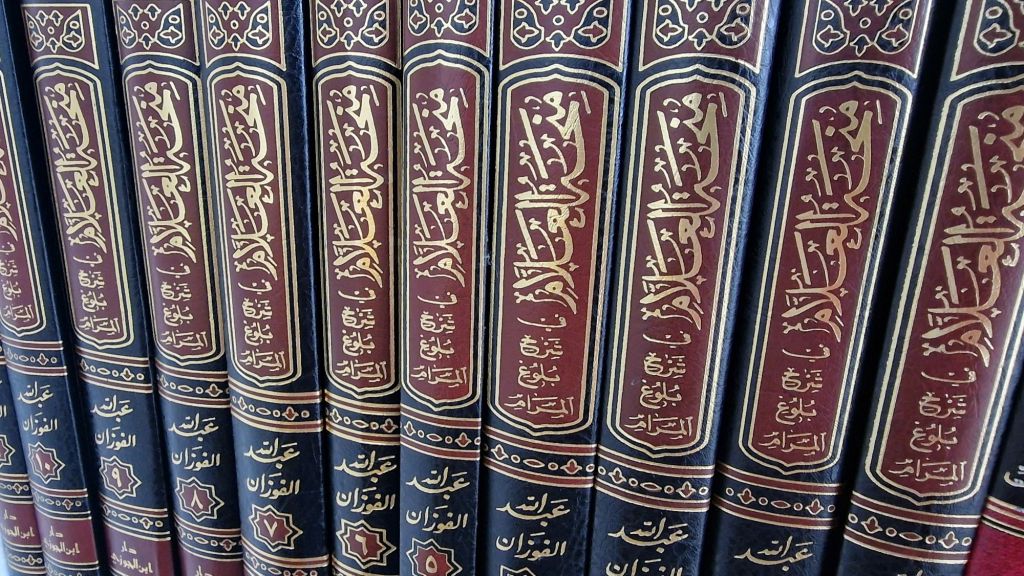
The name of Allāh – 4) al-Qarīb & Affirming the attribute of nearness (al-qurb/al-taqarrub) – Ibn Taymiyyah, al-‘Uthaymīn, Al-Albānī, al-Humaydī

بسم الله الرحمن الرحيم

Shaykh ‘Abdul-‘Azīz al-Humaydī said: “And al-Qarīb (The Near) among the names of Allāh The Most-High: (means) the Near One who is neither absent nor distant. (It is) a magnificent name from among the names of our Lord, radiating upon the souls of the believers blessing, comfort, bliss and peace. Indeed, their Lord in whom they have believed, and whom they have worshipped alone without partner, is near to them. He hears their intimate conversation, knows the stirrings of their hearts, draws them close to Him, envelops them in His mercy, supports them with His victory, removes their afflictions, and fulfills their need and poverty.”  (Rawāih al-Husnā pg. 252)

Abū Mūsā al-‘Ash’arī narrated:

كُنَّا مَعَ رَسُولِ اللهِ صَلَّى اللهُ عَلَيْهِ وَسَلَّمَ فِي غَزَاةٍ، فَجَعَلْنَا لَا نَصْعَدُ شَرَفًا، وَلَا نَعْلُو شَرَفًا، وَلَا نَهْبِطُ فِي وَادٍ إِلَّا رَفَعْنَا أَصْوَاتَنَا بِالتَّكْبِيرِ. قَالَ: فَدَنَا مِنَّا رَسُولُ اللهِ صَلَّى اللهُ عَلَيْهِ وَسَلَّمَ فَقَالَ: ” أَيُّهَا النَّاسُ ارْبَعُوا عَلَى أَنْفُسِكُمْ؛ فَإِنَّكُمْ مَا تَدْعُونَ أَصَمَّ وَلَا غَائِبًا، إِنَّمَا تَدْعُونَ سَمِيعًا بَصِيرًا[قريبا] إِنَّ الَّذِي تَدْعُونَ أَقْرَبُ إِلَى أَحَدِكُمْ مِنْ عُنُقِ رَاحِلَتِهِ

We were with the Messenger of Allāh (ﷺ) in a ghazāh (military expedition), and we would not ascend a sharaf (height), nor go up a sharaf, nor descend into a valley except that we raised our voices with the takbīr. He said: Then the Messenger of Allāh (ﷺ) drew near to us and said: “O people, be easy on yourselves; for indeed you are not calling upon one who is deaf nor one who is absent. Rather, you are calling upon the All-Hearing (Samī’), the All-Seeing (Basīr), The Near (Qarīb). Indeed, the One whom you call upon is nearer to one of you than the neck of his riding camel.” (Musnad Imām Ahmad 19599. Sahīh al-Bukhārī 2992)

Allāh says:

وَإِذَا سَأَلَكَ عِبَادِي عَنِّى فَإِنِّي قَرِيبٌ أُجِيبُ دَعْوَةَ الدَّاعِ إِذَا دَعَانِ فَلْيَسْتَجِيبُوا لِي وَلْيُؤْمِنُوا بِي لَعَلَّهُمْ يَرْشُدُونَ

And when My servants ask you concerning Me, then indeed I am Qarīb (Near). I answer the supplication of the supplicant when he calls upon Me. So let them respond to Me and believe in Me that they may be rightly guided.” [al-Baqarah:186]

Shaykh ibn al-‘Uthaymīn said:

“(From the) benefits (of the verse):

Establishing the nearness of Allāh, The Perfect and Most-High; and what is intended (is) the nearness of His Self; because the pronouns in this verse all return to Allāh; and accordingly, it is not valid to interpret the nearness in it as the nearness of His mercy or His angels; because that is contrary to the apparent (meaning) of the wording, and necessitates scattering the pronouns without evidence.

Then (regarding) the nearness of Allāh, The Mighty and Majestic—is it specific to whoever worships Him or supplicates to Him, or is it general?

There are two views; and the more correct (view is): that it is specific to whoever worships Him or supplicates to Him; because Allāh has not been described with it in an absolute/unrestricted manner; and it is not like al-ma’iyyah (being with), which (is) divided into general and specific.

If someone were to say: How is (the combining) between His nearness—may He be removed from all imperfection and Most-High —and His ‘Ulū’ (Highness above the creation) (reconciled)?

The answer is: that Allāh has affirmed that for Himself—I mean the nearness and the highness; and it is not possible for Allāh to combine for Himself two contradictory attributes; and because Allāh—there is nothing like unto Him in all of His attributes; so He is near in His highness, lofty/high in His nearness.” (Tafsīr al-Thamīn 1/336)

Shaykh ibn al-‘Uthaymīn also said: “When the Messenger was saying that He: “is nearer to one of you than the neck of his riding camel,” it does not imply that Allah, The Mighty and Majestic, is Himself on the earth between the man and the neck of his riding camel…His Nearness does not imply that He is on the earth, because there is nothing like Allāh, Exalted is He, in all His Attributes.” (Sharh ‘Aqīdah al-Wāsitiyyah 2/130)


Shaykh ul-Islām ibn Taymiyyah said: “Included in that [i.e. what Allāh has described Himself with] is the belief that He is Near His creation, and responds. As He combined between that in His statement:

And when My servants ask you concerning Me, then indeed I am Qarīb (Near). I answer the supplication of the supplicant when he calls upon Me

Indeed, the One whom you call upon is nearer to one of you than the neck of his riding camel.

And what is mentioned in the Book and the Sunnah regarding His Nearness and His Ma’iyyah, is not negated by what is mentioned about His ‘Ulū (Highness) and His Fawqiyyah (Being above his creation), for He, Perfect is He, nothing is like unto Him in all of His descriptions (i.e. attributes). He is High in His Nearness; He is Near in His Highness.” (Sharh Aqīdah al-Wāsitiyyah of al-‘Uthaymīn 2/134)


Narrated by Abū Hurayrah:

قال : قال رسول الله ﷺ: «يقول الله أنا عند ظن عبدي بي، وأنا معه إذا ذكرني، فإن ذكرني في نفسه ذكرته في نفسي، وإن ذكرني في ملا ذكرته في ملا خير منهم، وإن تقرب إلي شبراً تقربت إليه ذراعاً، وإن تقرب إلي ذراعاً تقربت إليه باعاً، وإن أتاني يمشي أتيته هرولة.

On the authority of Abū Hurayrah (رضي الله عنه) who said: The Messenger of Allāh (ﷺ) said: “Allāh says: I am as My servant thinks of Me, and I am with him when he remembers Me. So if he remembers Me in himself, I remember him in Myself, and if he remembers Me in a gathering, I remember him in a gathering better than it. And if he draws near to Me a hand span, I draw near (taqarrub) to him a forearm’s length, and if he draws near to Me a forearm’s length, I draw near to him an arm’s length, and if he comes to Me walking, I come to him running.” (Sahīh – Al-Albānī)

Shaykh Al-Albānī said: “I say: It has become widespread among the later scholars of ‘ilm al-kalām (speculative theology)—contrary to the Salaf—(the practice of) interpreting figuratively these attributes mentioned in this hadīth, such as (al-nafs, the Self) and (al-taqarrub, drawing near) and…

And that is only due to the narrowness of their understanding, and the extent of their being influenced by the doubts of the Mu’tazilah and their likes from the people of desires and innovations. Hardly does one of them hear these attributes except that what first comes to their hearts is that they are like the attributes of created beings, so they fall into al-tashbīh (anthropomorphism), then they flee from it to figurative interpretation seeking al-tanzīh (to exalt and free Allāh from imperfection) according to their claim.

If only they had received the (attributes mentioned in the texts) when hearing them while recalling His statement, The Most-High:

ليس كَمِثْلِهِ شَيْءٌ وَهُوَ السَّمِيعُ الْبَصِيرُ

There is nothing like unto Him, and He is the All-Hearing, the All-Seeing” [al-Shūrā: 11]

they would not have inclined to figurative interpretation, and they would have believed in their realities in the manner that befits Him, The Most-High —their affair in that being like their affair in believing in the two attributes of hearing and seeing and others from His attributes, the Mighty and Majestic, while declaring Him exalted from resembling created things.

If they had (also applied) that here, they would have found rest and given rest (to others), and they would have been saved from their contradiction in their belief in their Lord and His attributes.” (Jāmi’ Turāth Fī al-‘Aqīdah 6/240-241)


Shaykh ‘Abdul-‘Azīz al-Humaydī said: “The name of Allāh “al-Qarīb” (The Near) indicates two meanings of nearness:

1) His nearness, by His Self, as He wills, to whomever He wills from His creation and His servants, and this is of two types:

(A) It is an action from Him and an attribute of action, such as His descent (nuzūl) to the lowest heaven every night, His drawing near (dunūw) to the people of the standing place on the afternoon of ‘Arafah, and His coming (majī’) for the decisive judgment on the Day of Resurrection.

(B) His nearness to whomever He wills from His servants by means of drawing near (taqrīb) whomever He wills from His servants and raising them to Him. For indeed the noble angels have known stations in the highest realm (al-malakūt al-a’lā), each having known his station and rank, as (Allāh) The Most-High said in describing them:

وَمَا مِنَّا إِلَّا لَهُ مَقَامٌ مَّعْلُومٌ

And there is not among us except one who has a known position” [Al-Sāffāt: 164].

So the people of the seventh heaven are nearer to Allāh than the people of the sixth and fifth heavens.

And likewise the Final Prophet (ﷺ)—his Lord took him on the night journey (mi’rāj) to the highest heavens. He continued to draw nearer to his Lord, The Most-High, with each heaven he ascended.

2) That He, The Most-High, is near in the sense of the nearness of His (granting) preservation/security to His servants, the swiftness of His response to their supplication, and the nearness of His victory and mercy to them.

As (Allāh) The Most-High said:

إِنَّ رَحْمَتَ اللَّهِ قَرِيبٌ مِنَ الْمُحْسِنِينَ

Indeed, the mercy of Allāh is near to the doers of good” [Al-A’rāf: 56].


And (Allāh) The Most-High said:

أَلَا إِنَّ نَصْرَ اللَّهِ قَرِيبٌ

Unquestionably, the help of Allāh is near” [Al-Baqarah: 214].

And from this meaning (is) the drawing near (taqrīb) of His servants to Him in zulfā (nearness – i.e. rank/station). For indeed the one who draws near to Allāh The Most-High through faith and righteous deeds, his Lord The Most-High draws him near to Him in nearness (zulfā).

And as (Allāh) The Most-High said, refuting the disbelievers and transgressors, that neither their wealth nor their children will bring them near to Him in nearness:

وَمَا أَمْوَالُكُمْ وَلَا أَوْلَادُكُم بِالَّتِي تُقَرِّبُكُمْ عِندَنَا زُلْفَىٰ إِلَّا مَنْ ءَامَنَ وَعَمِلَ صَالِحًا فَأُولَيْكَ لَهُمْ جَزَاءُ الصِّعْفِ بِمَا عَمِلُوا وَهُمْ فِي الْعُرُفَاتِ وَامِنُونَ

And it is not your wealth or your children that bring you nearer to Us in position, but it is [by being] one who has believed and done righteousness. For them will be the double reward for what they did, and they will be in the upper chambers [of Paradise], secure” [Sabā’: 37].


And (Allāh) The Most-High said:

كَلَّا لَا تُطِعْهُ وَاسْجُدْ وَاقْتَرِب

No! Do not obey him. But prostrate and draw near [to Allāh]” [Al-‘Alaq: 19].” (Rawāhi al-Husnā pg. 255-256)